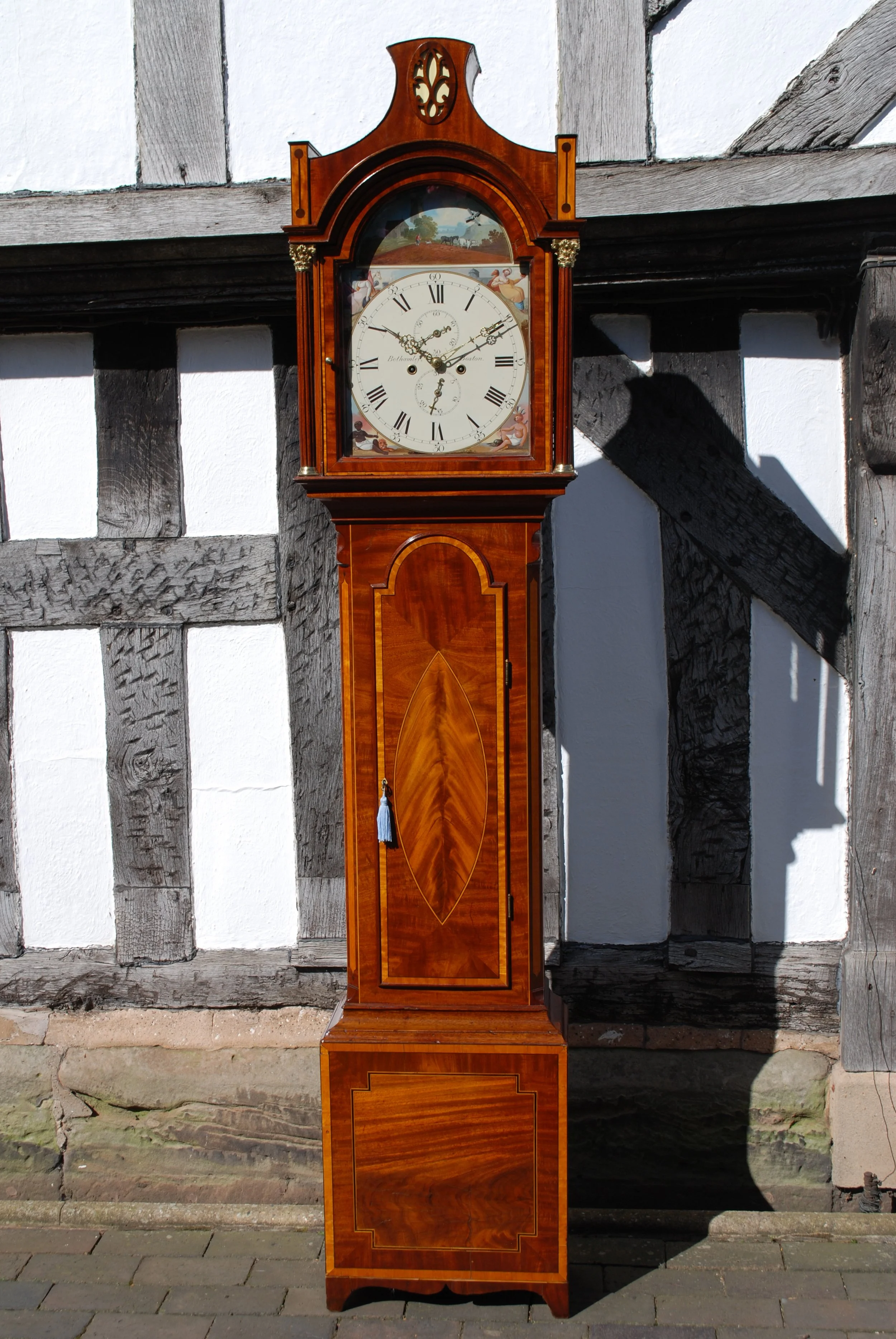
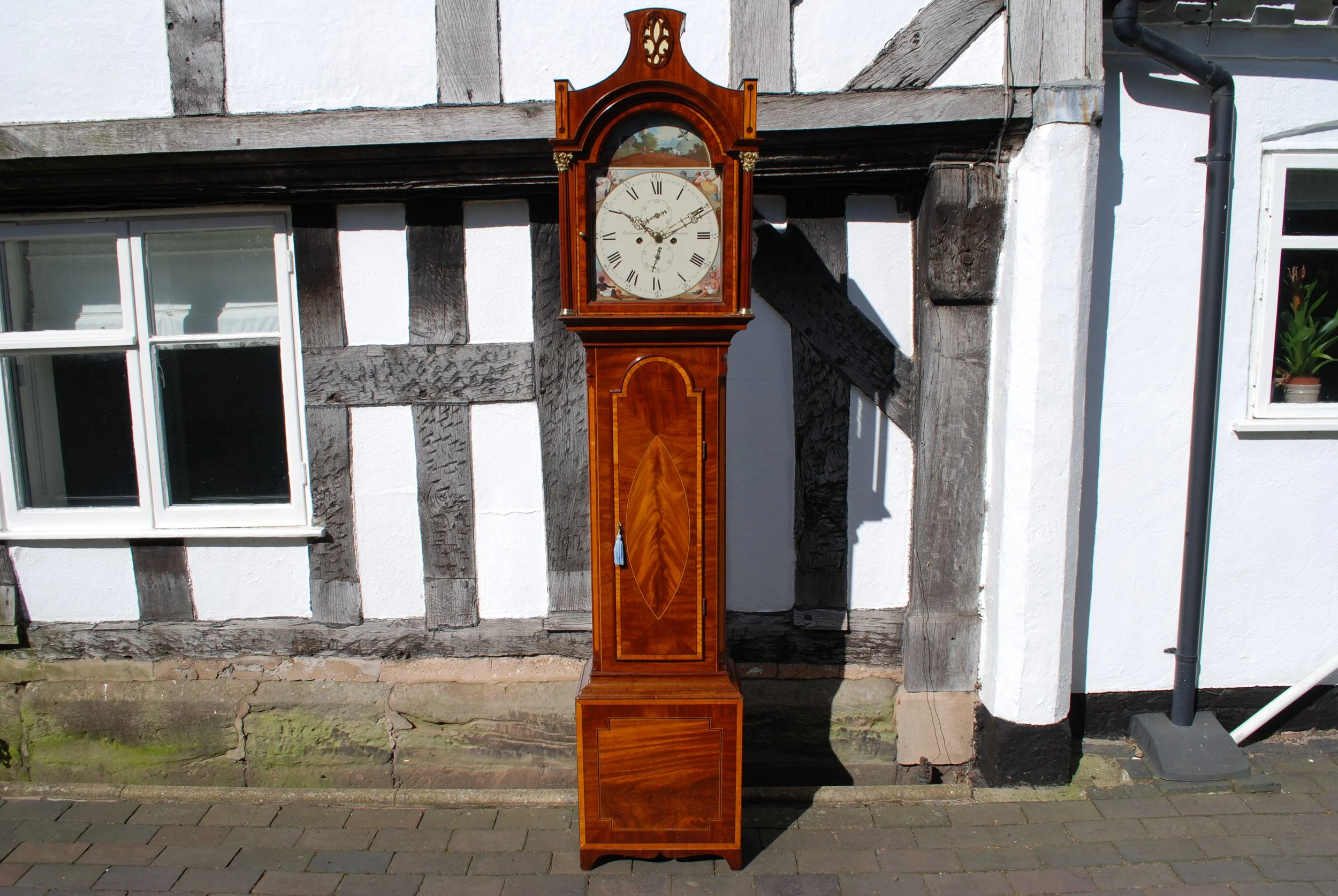
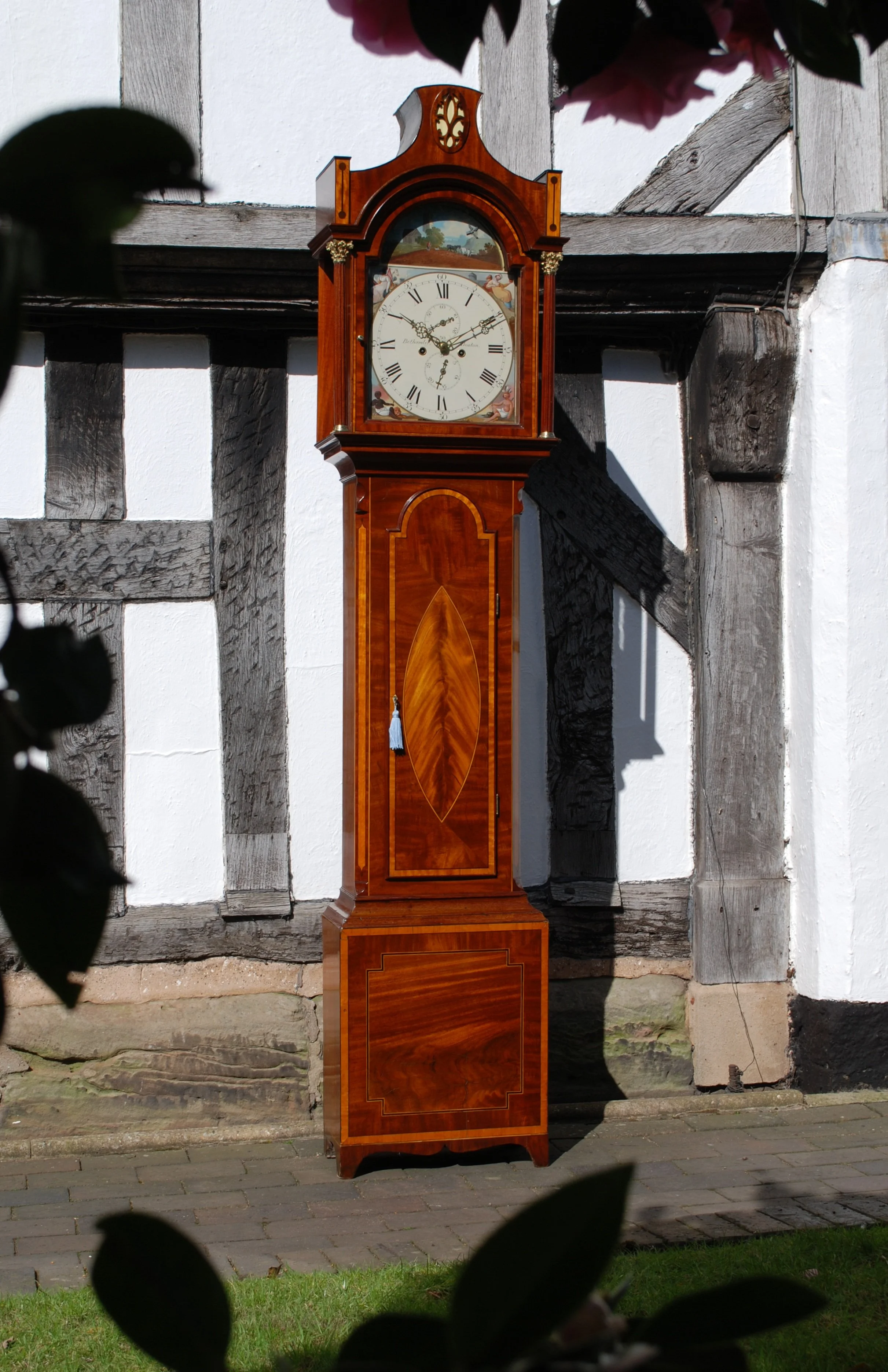
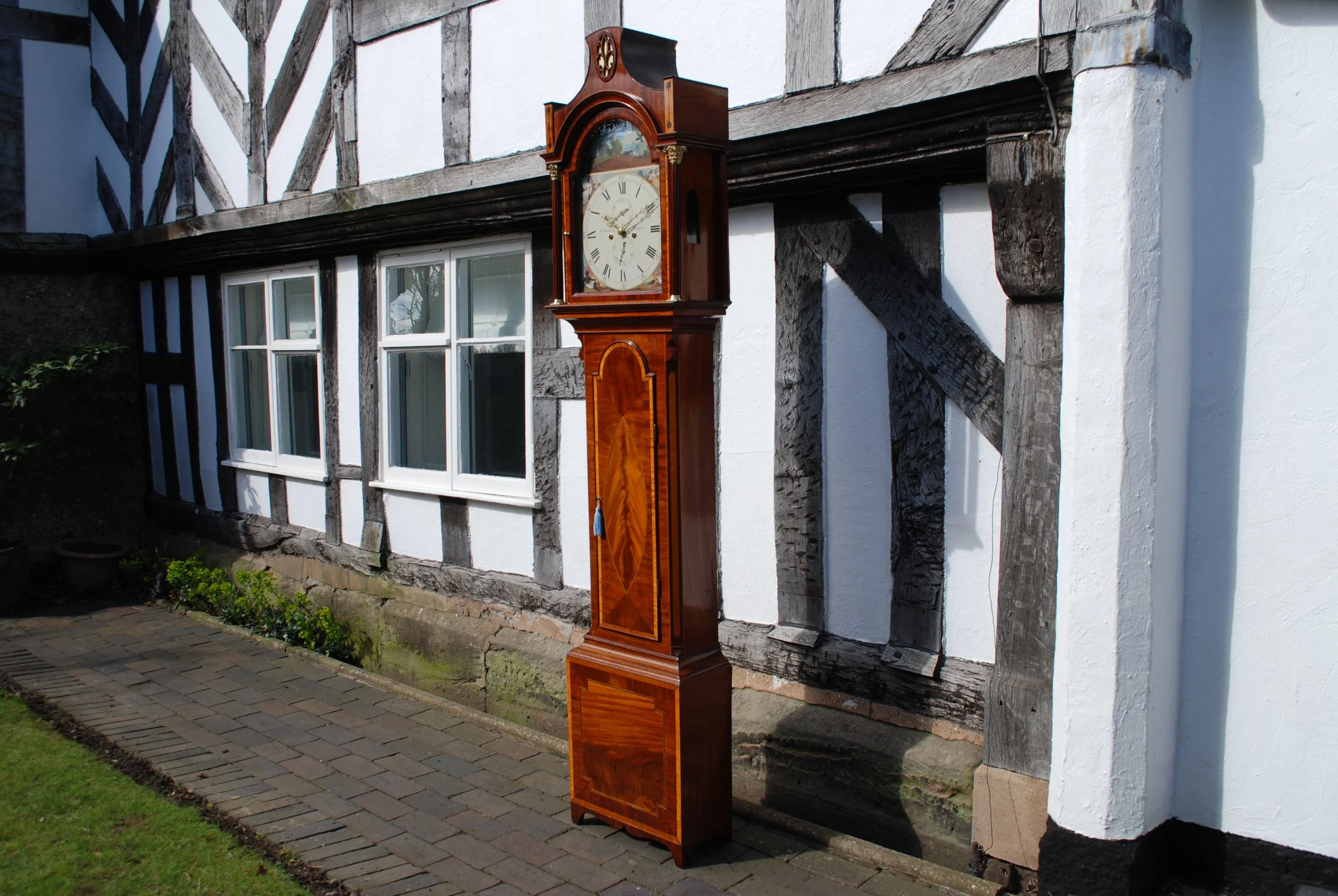
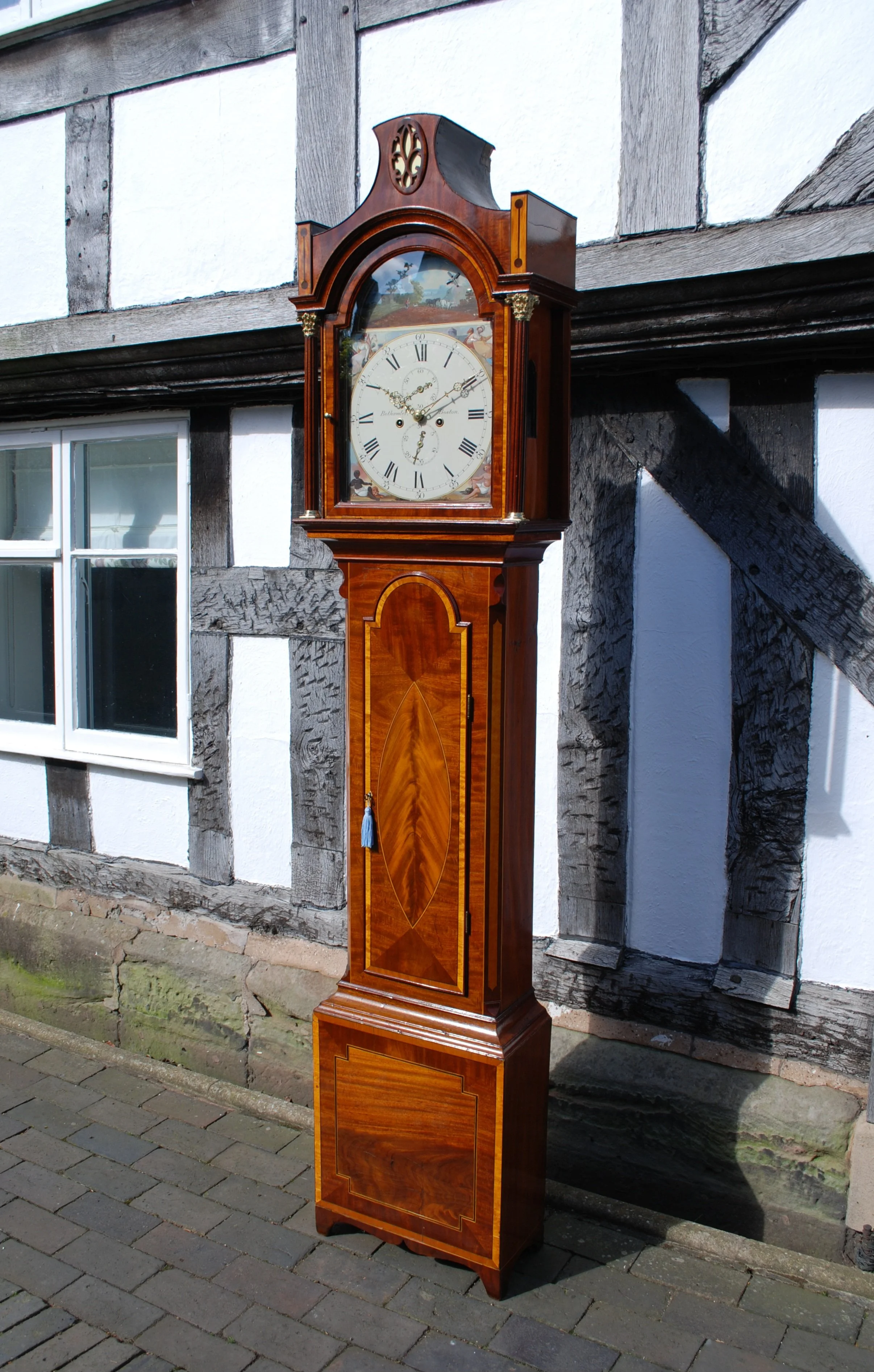
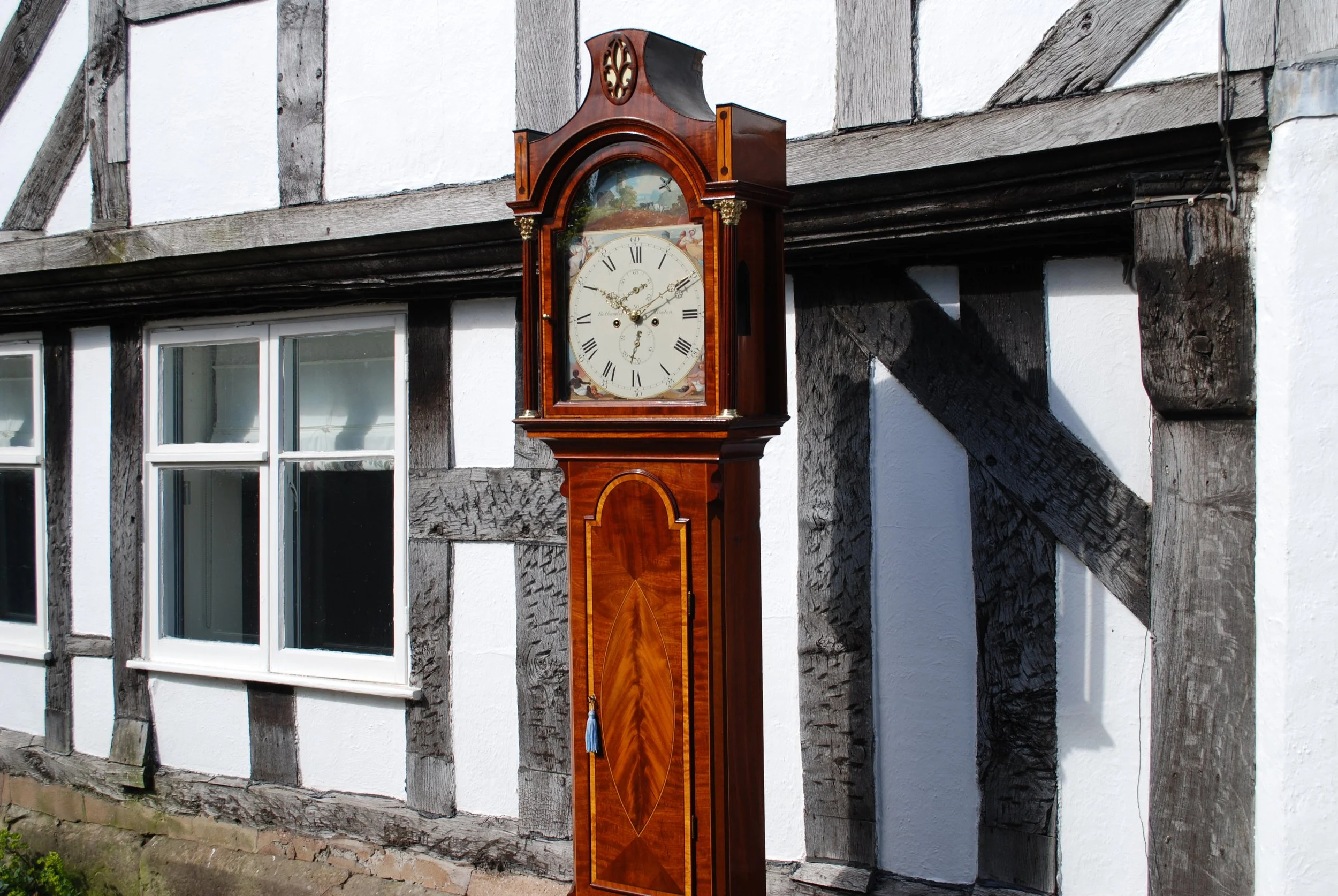
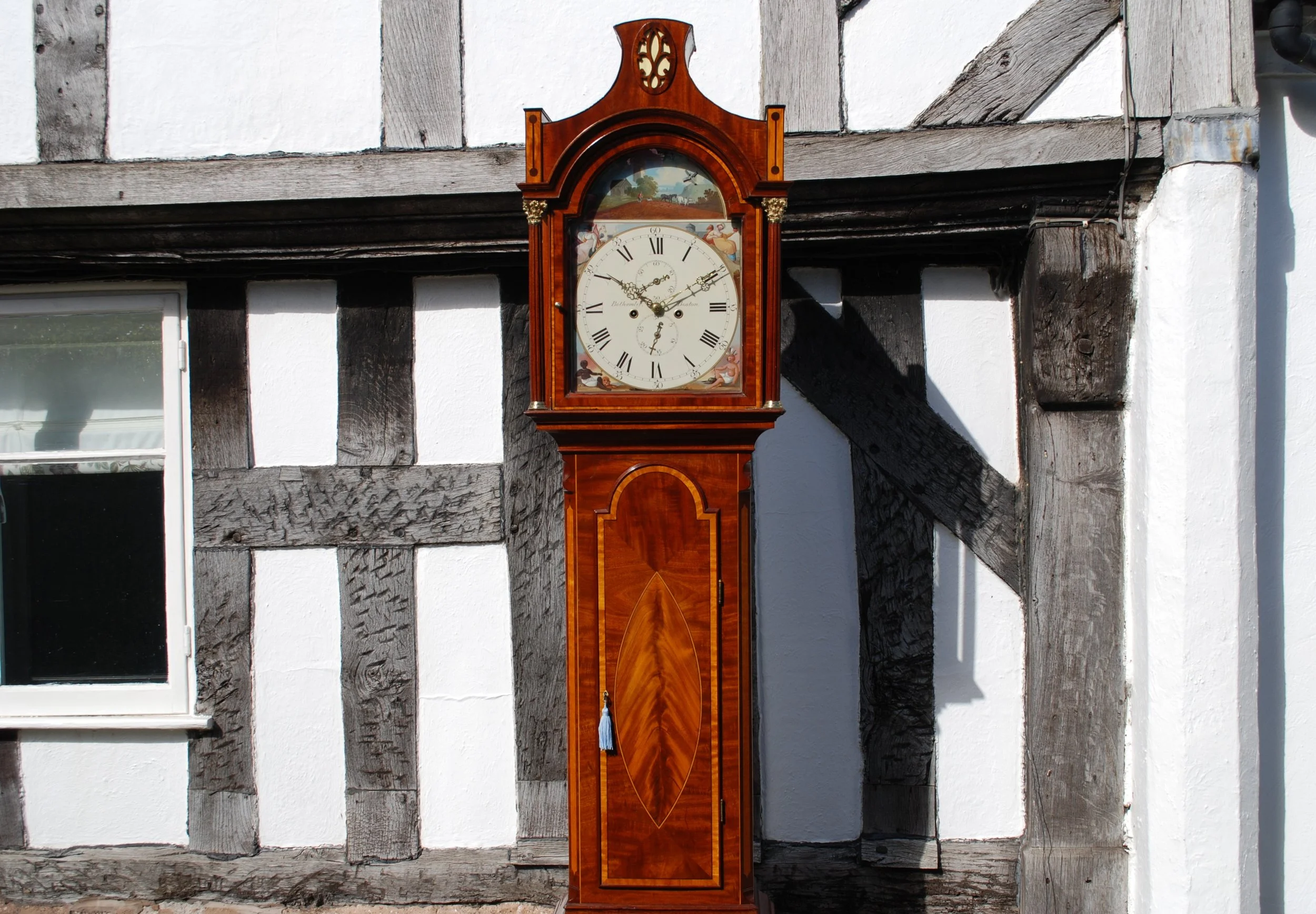
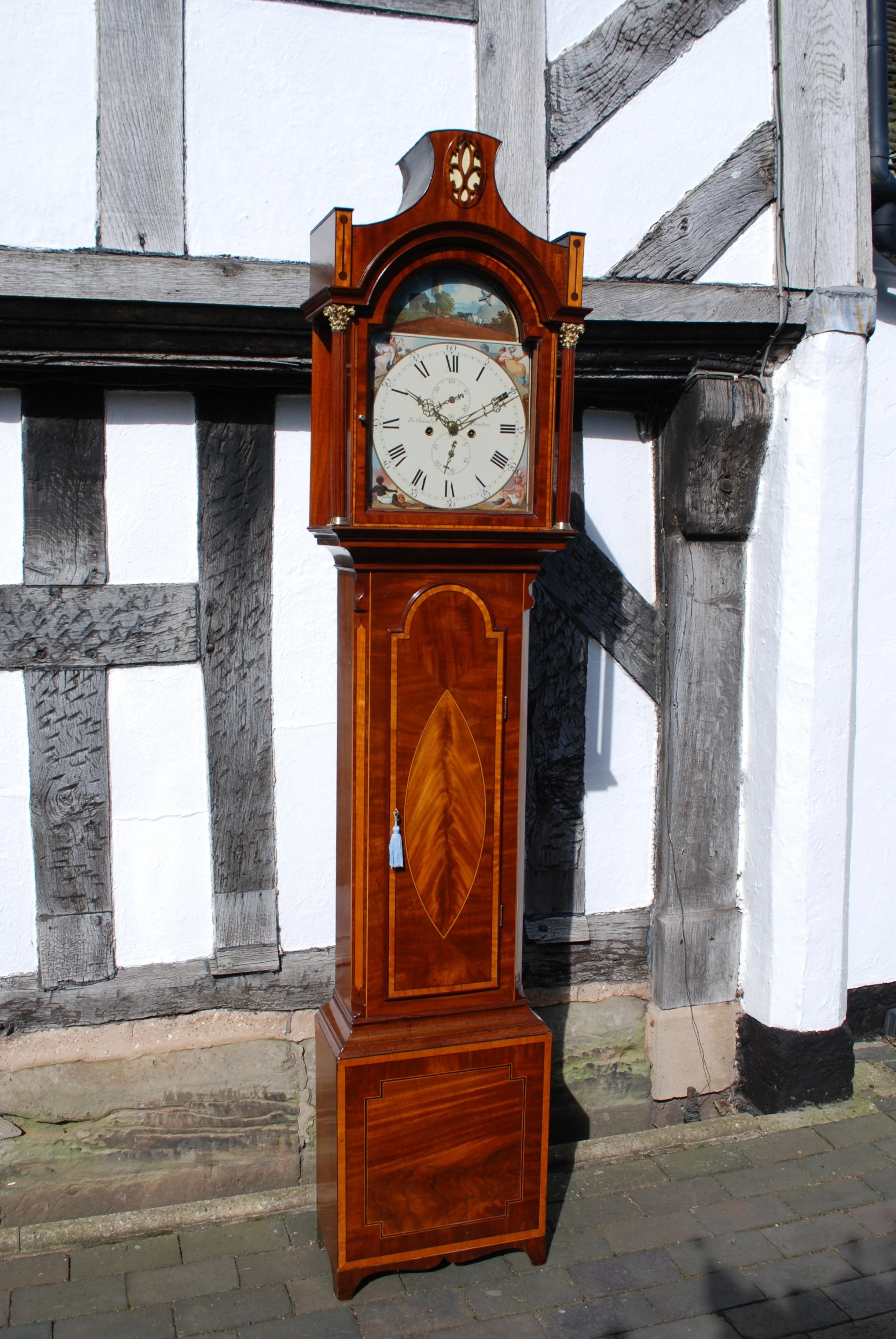
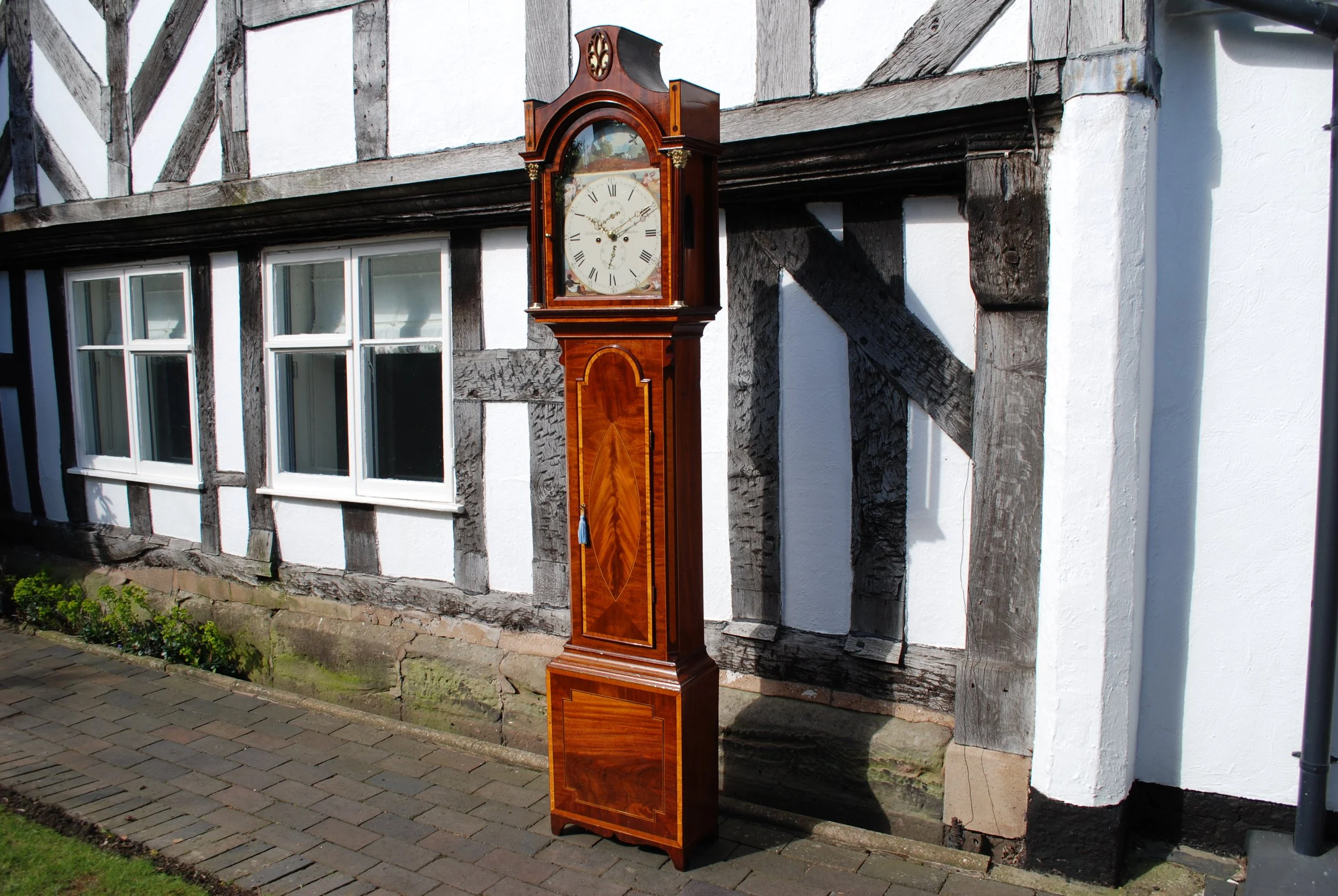
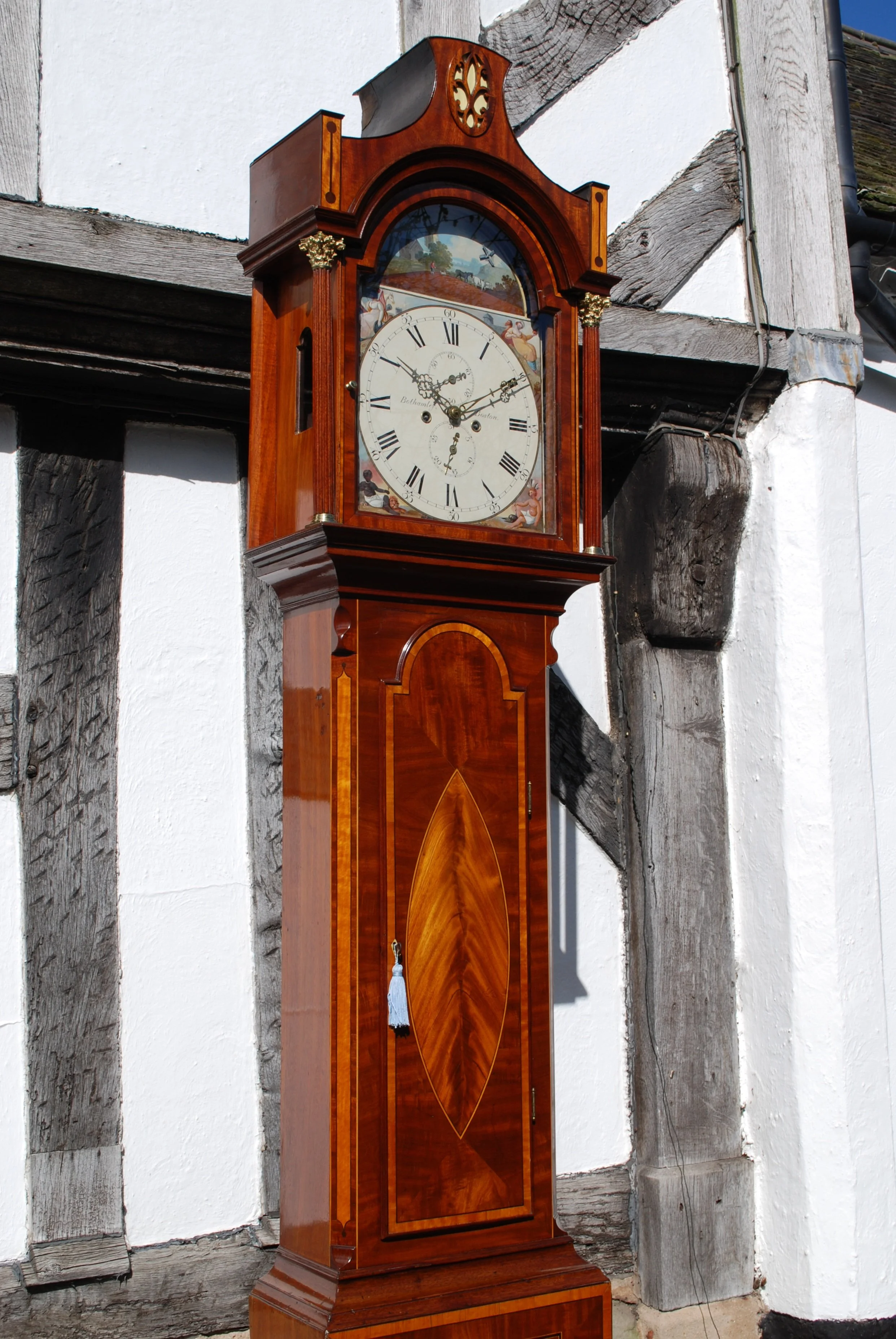
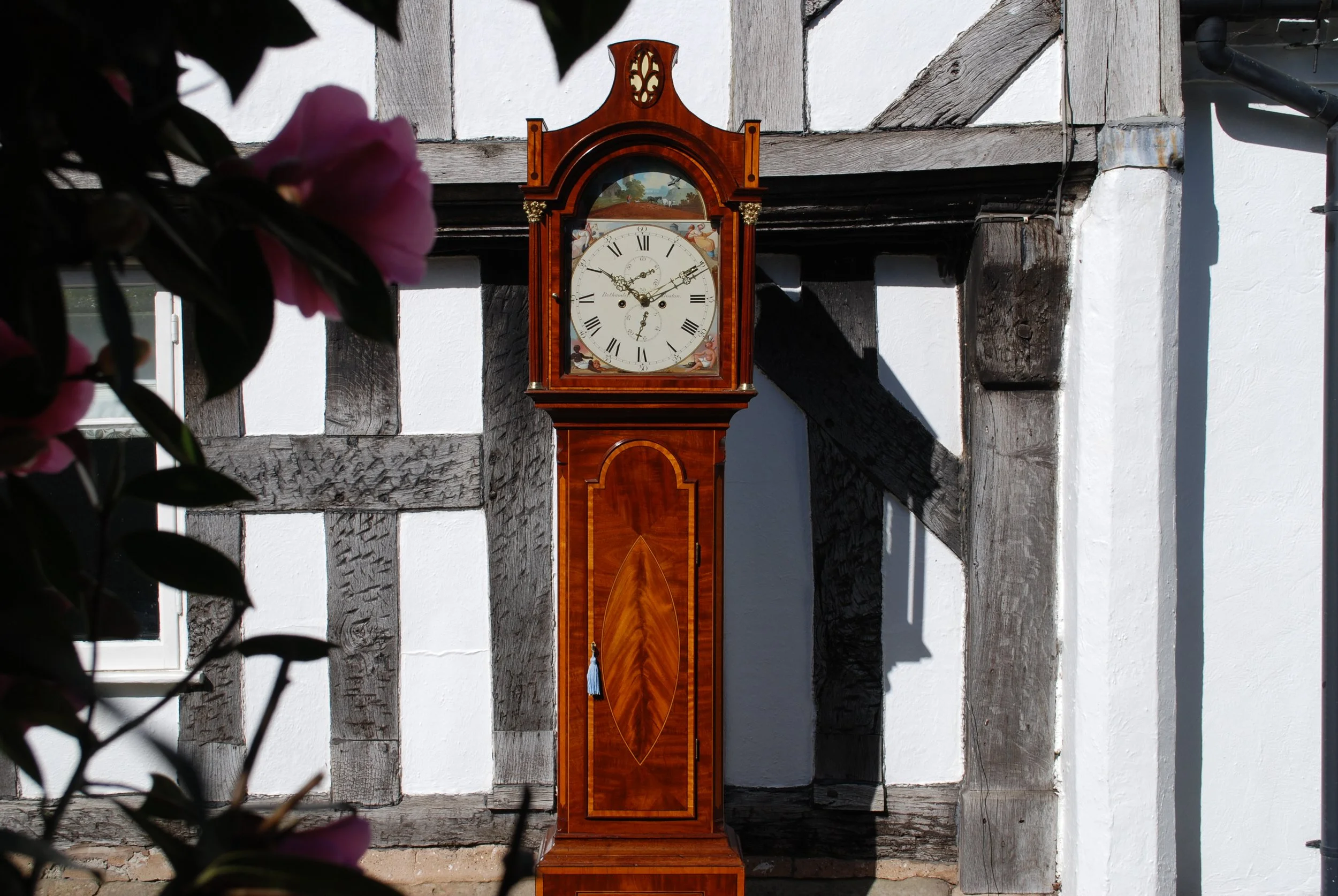
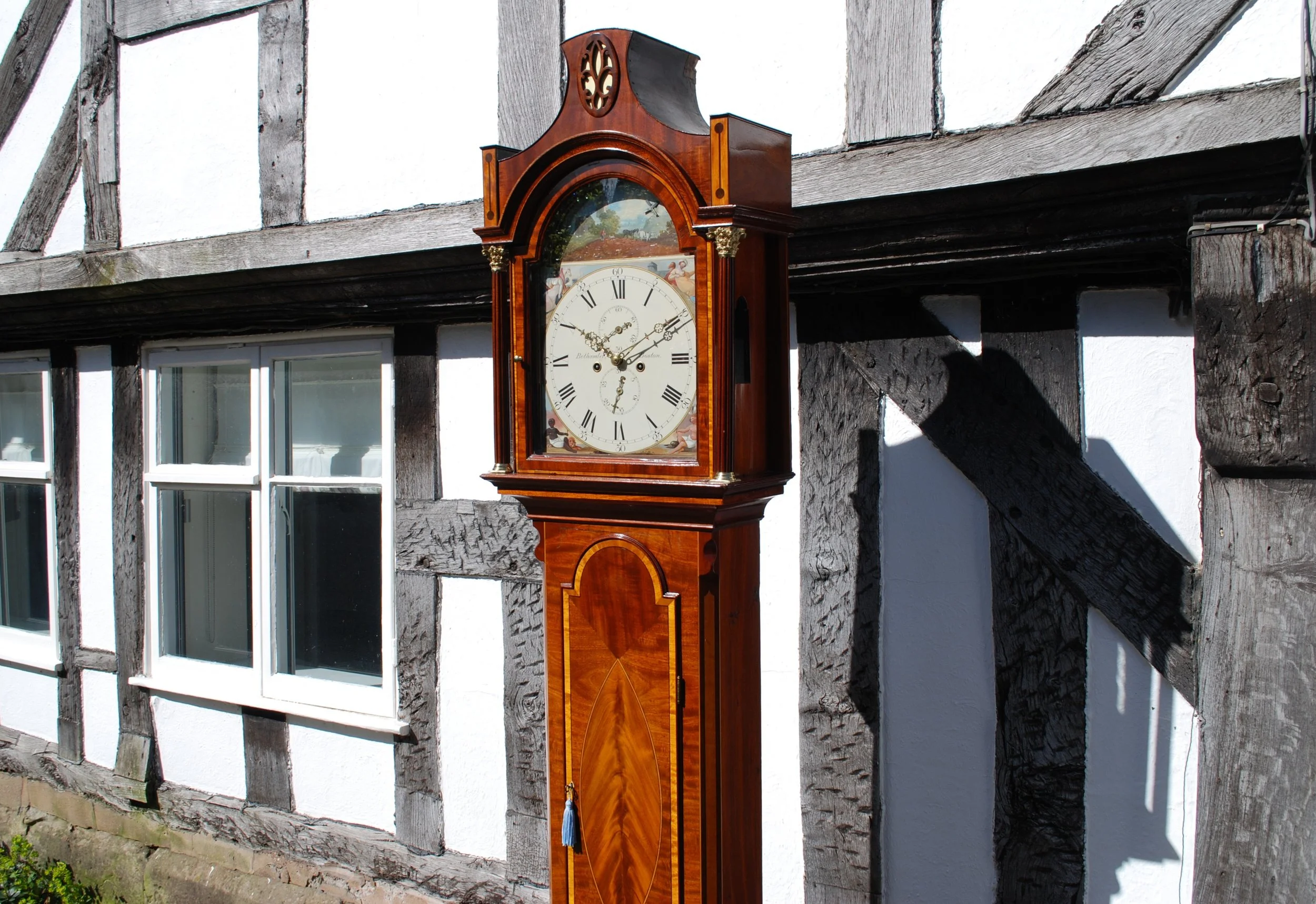
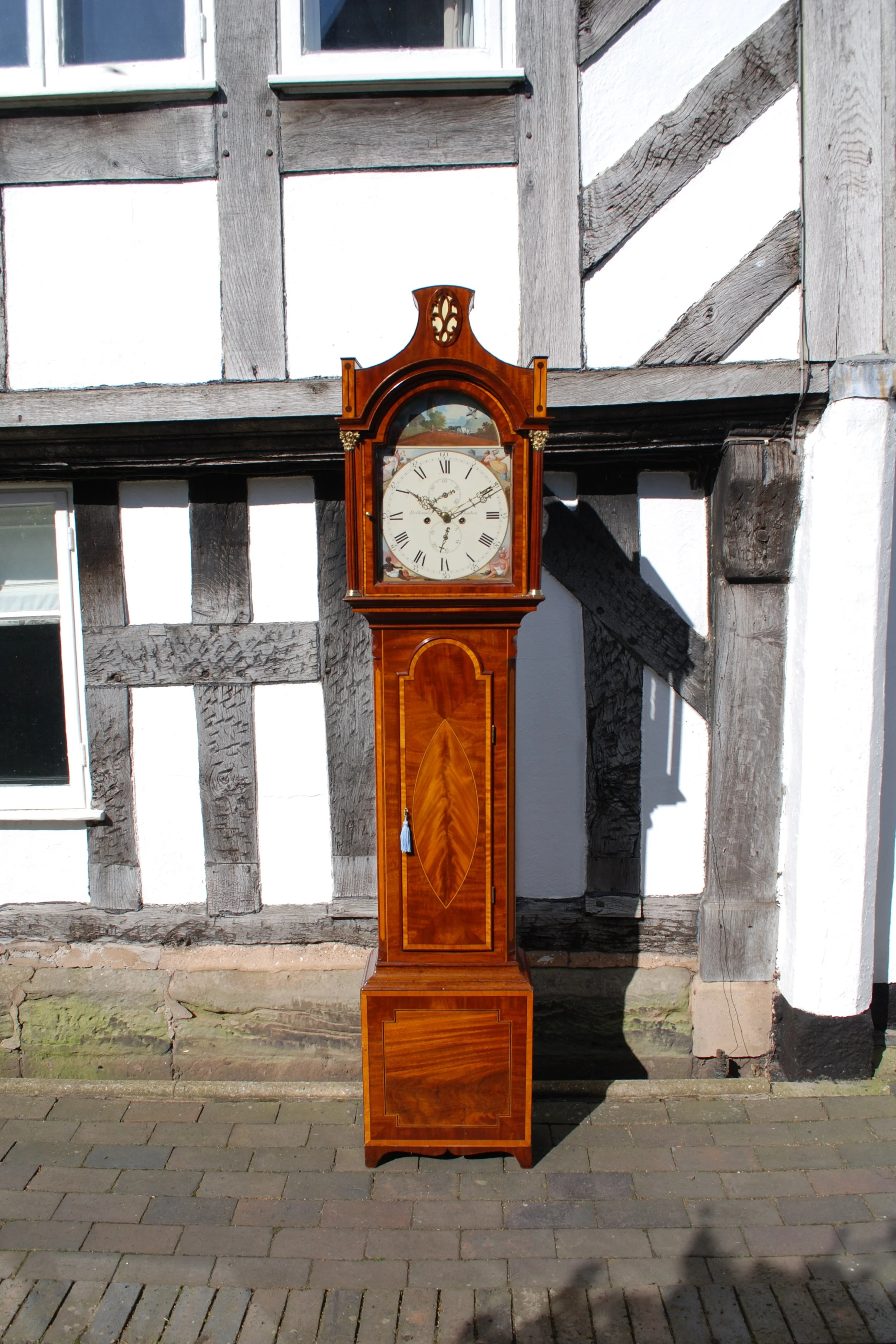
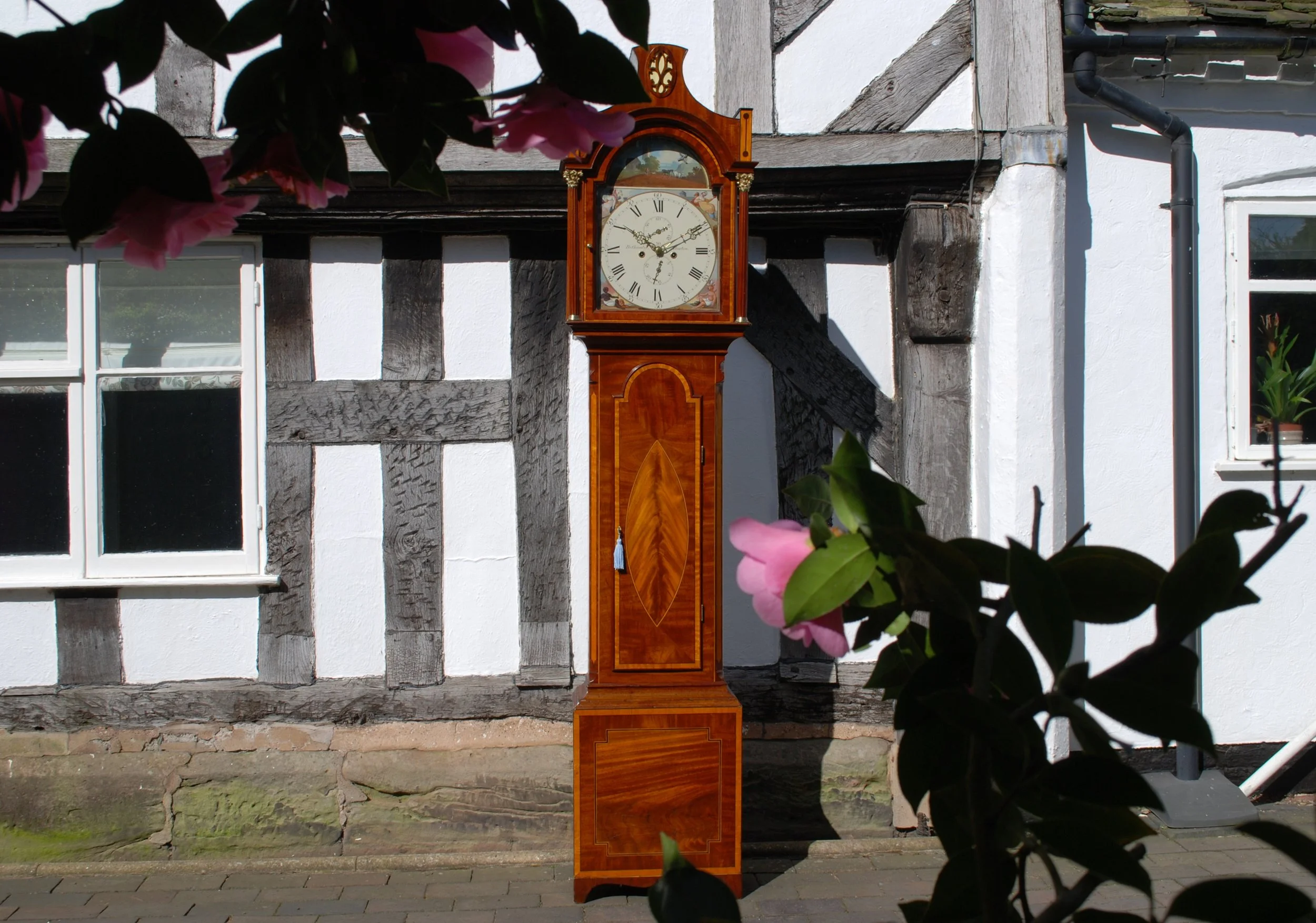
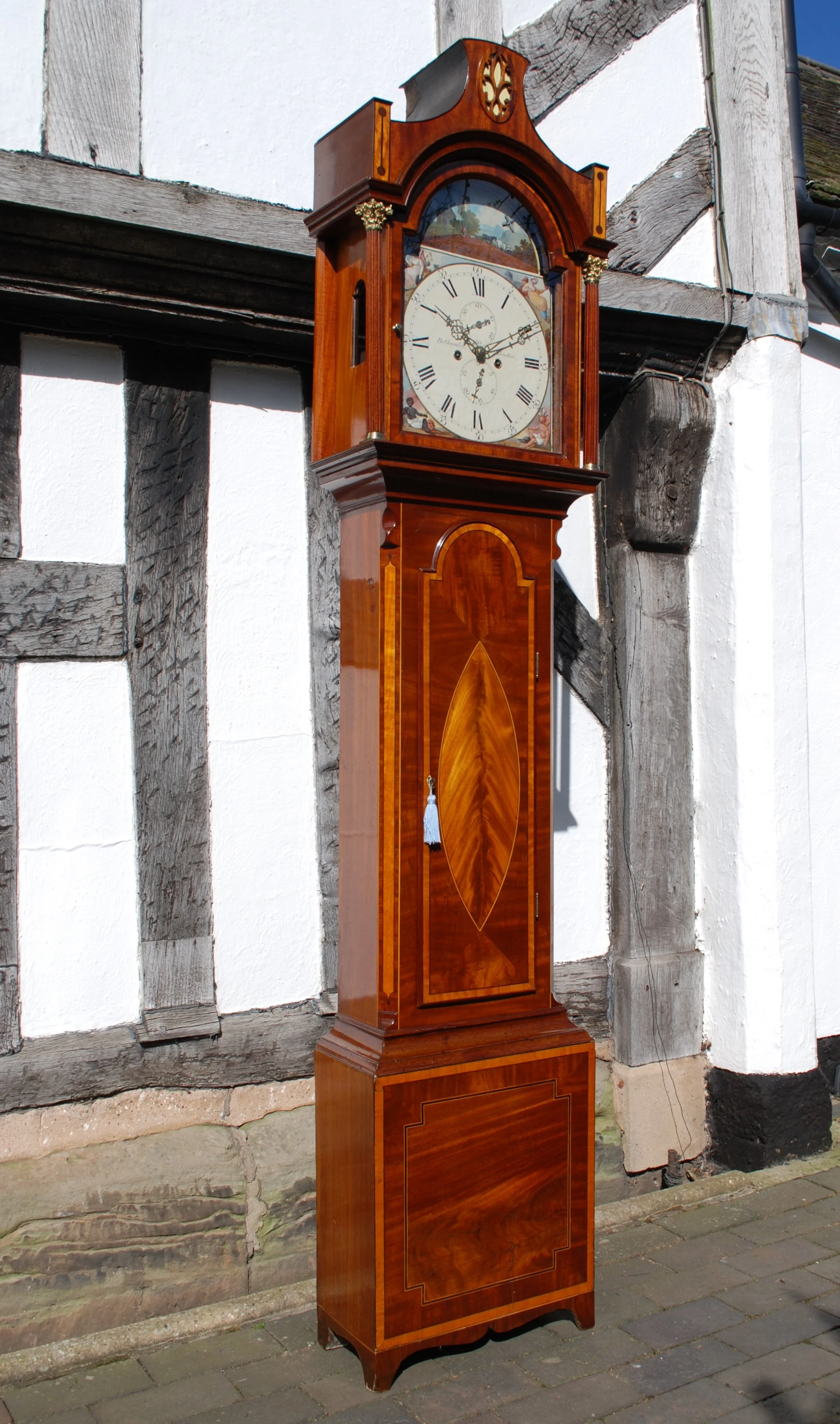
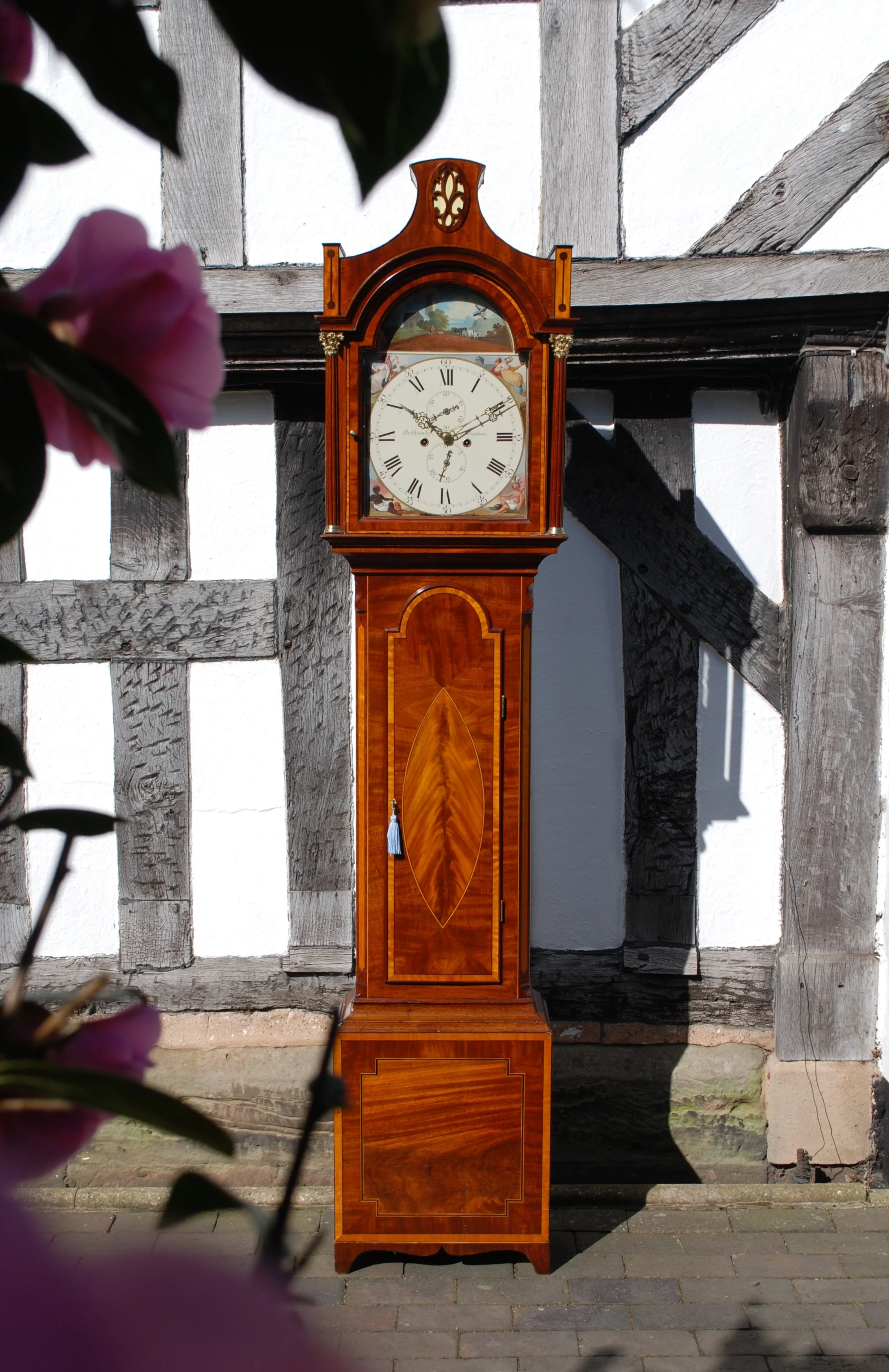
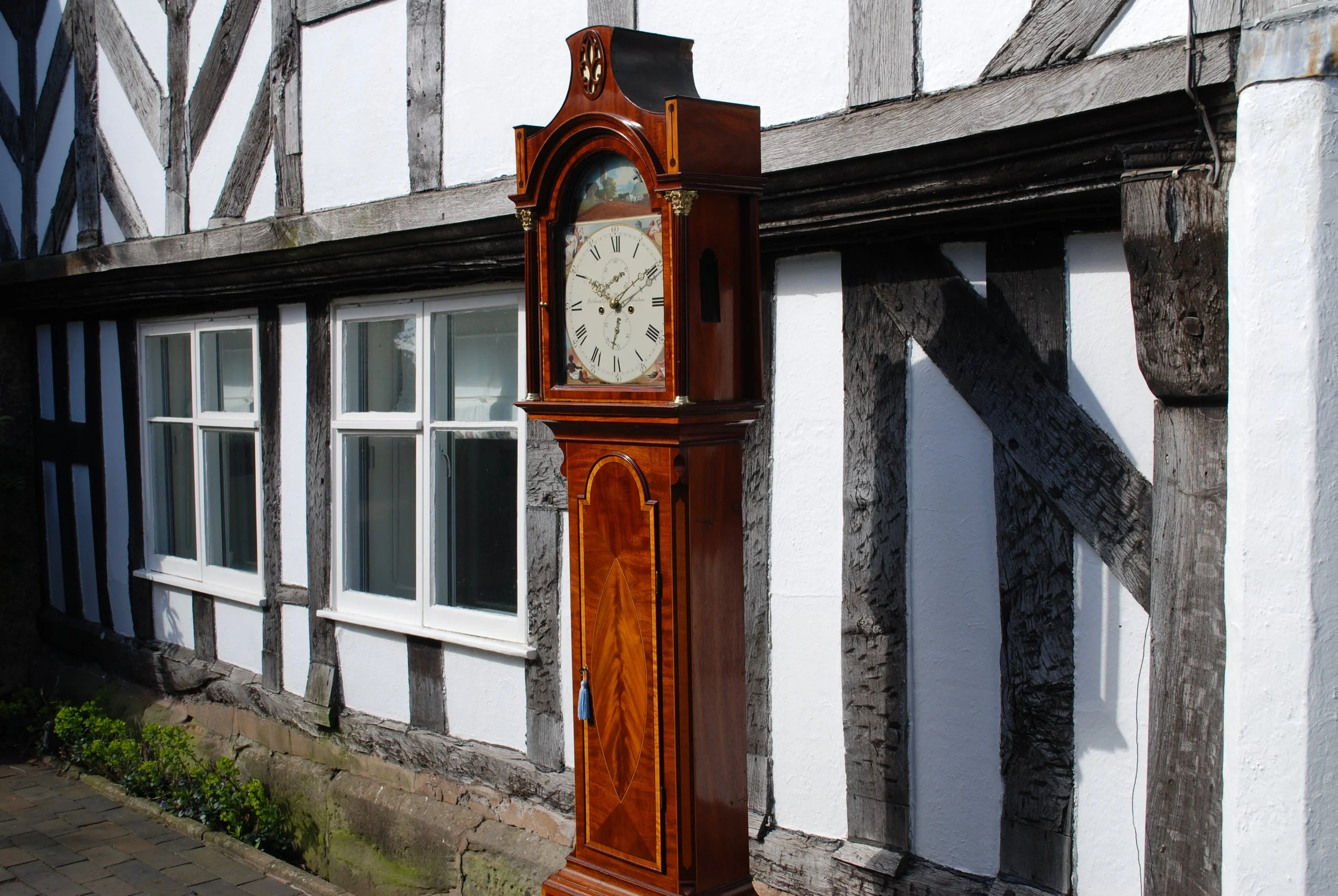
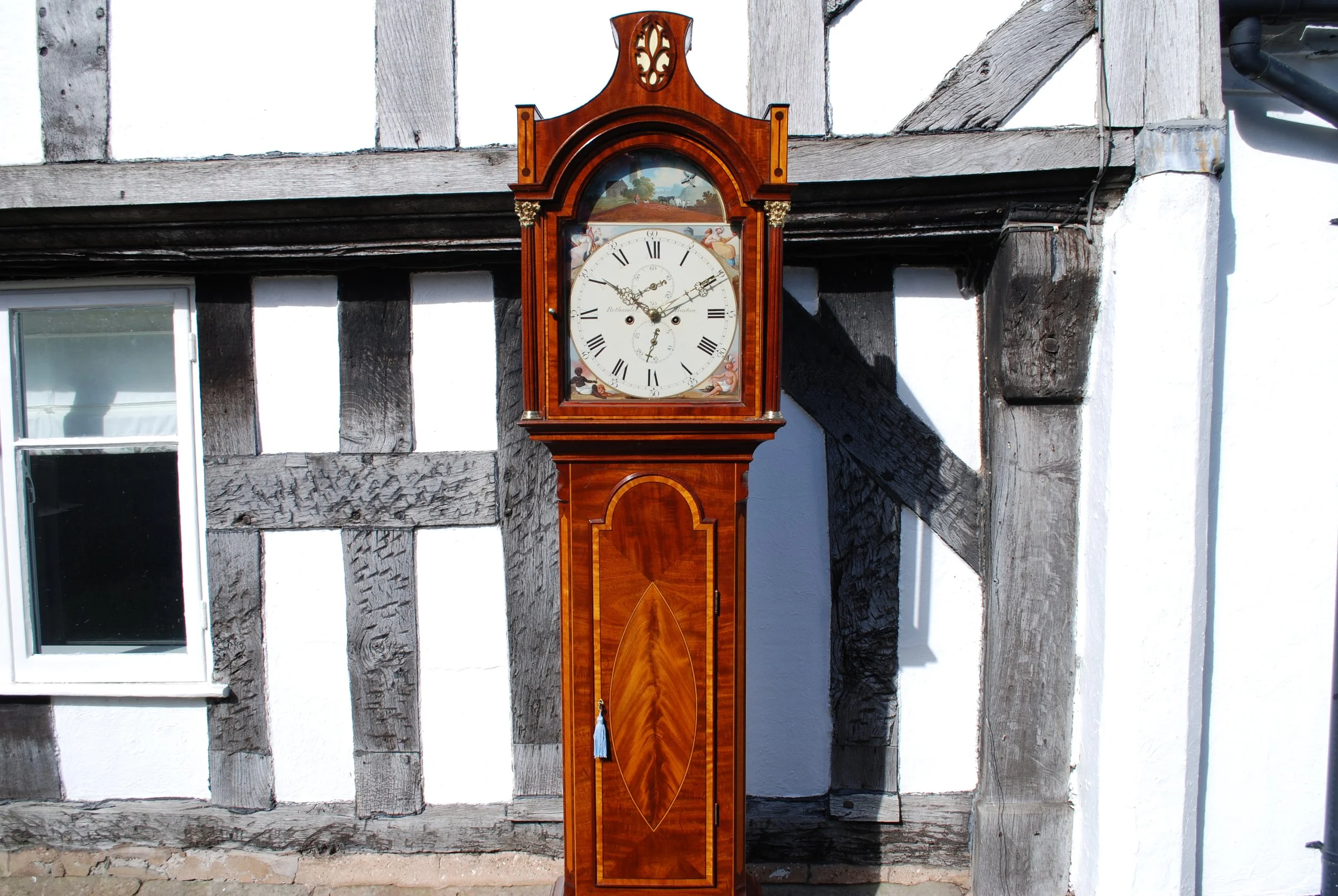
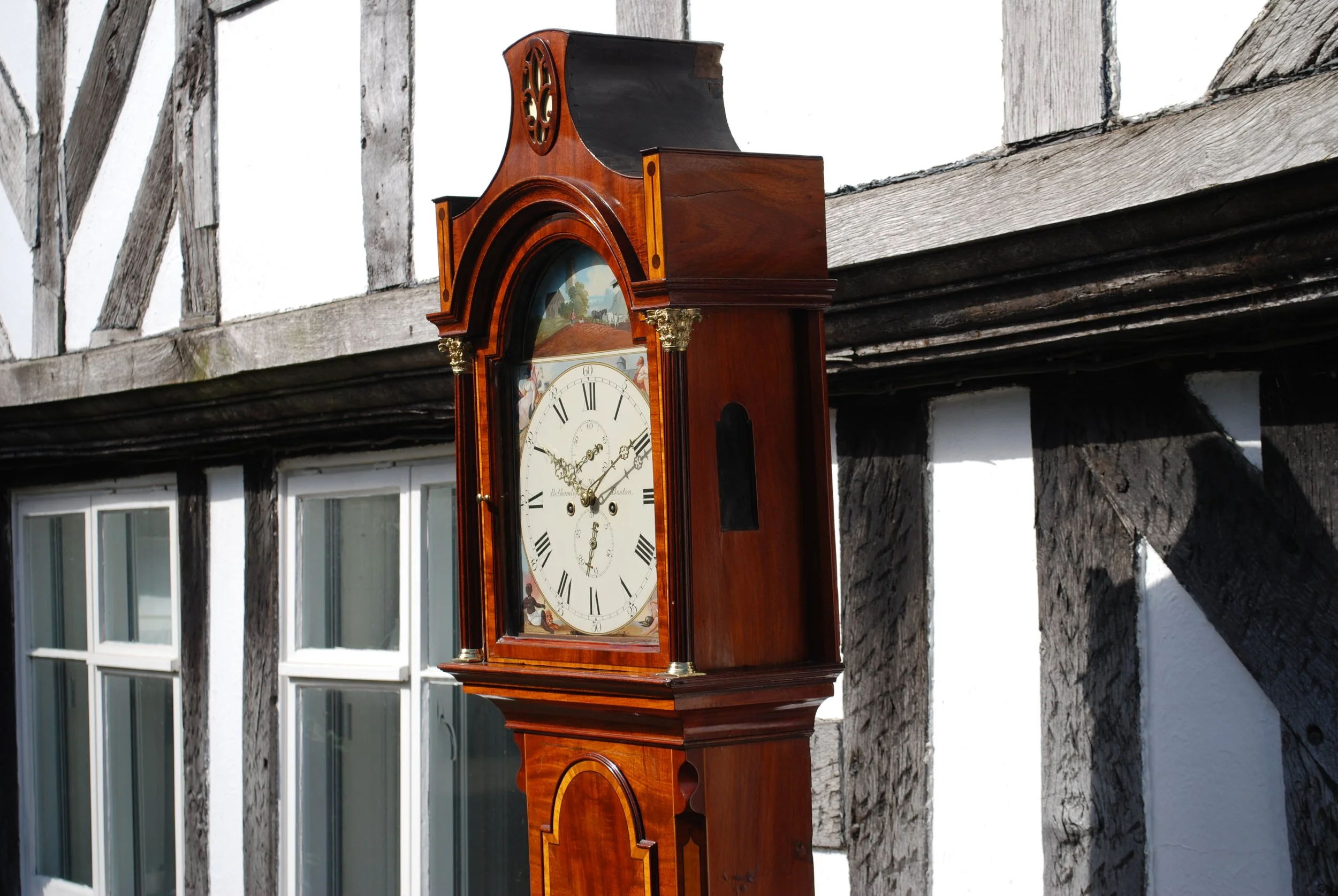
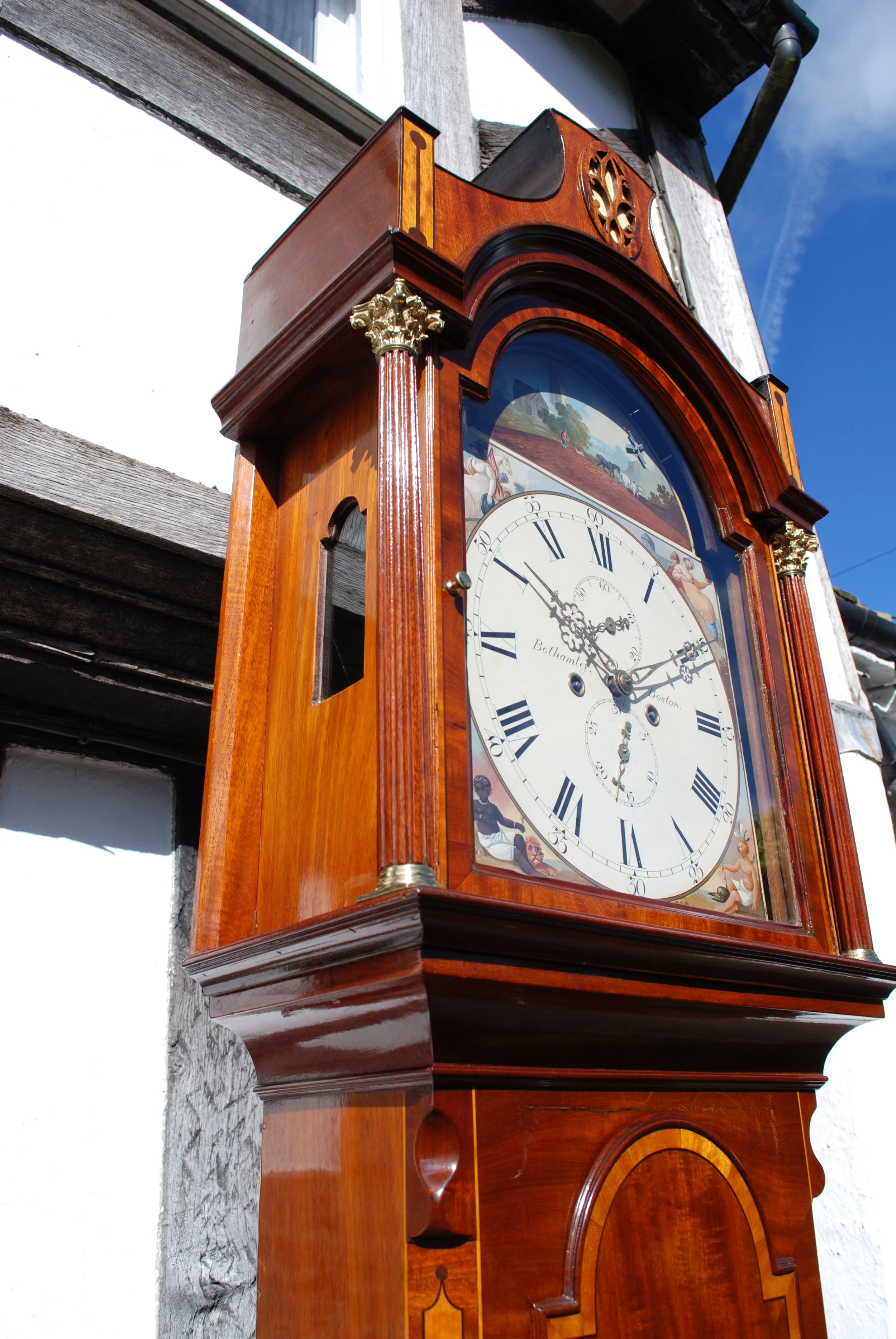
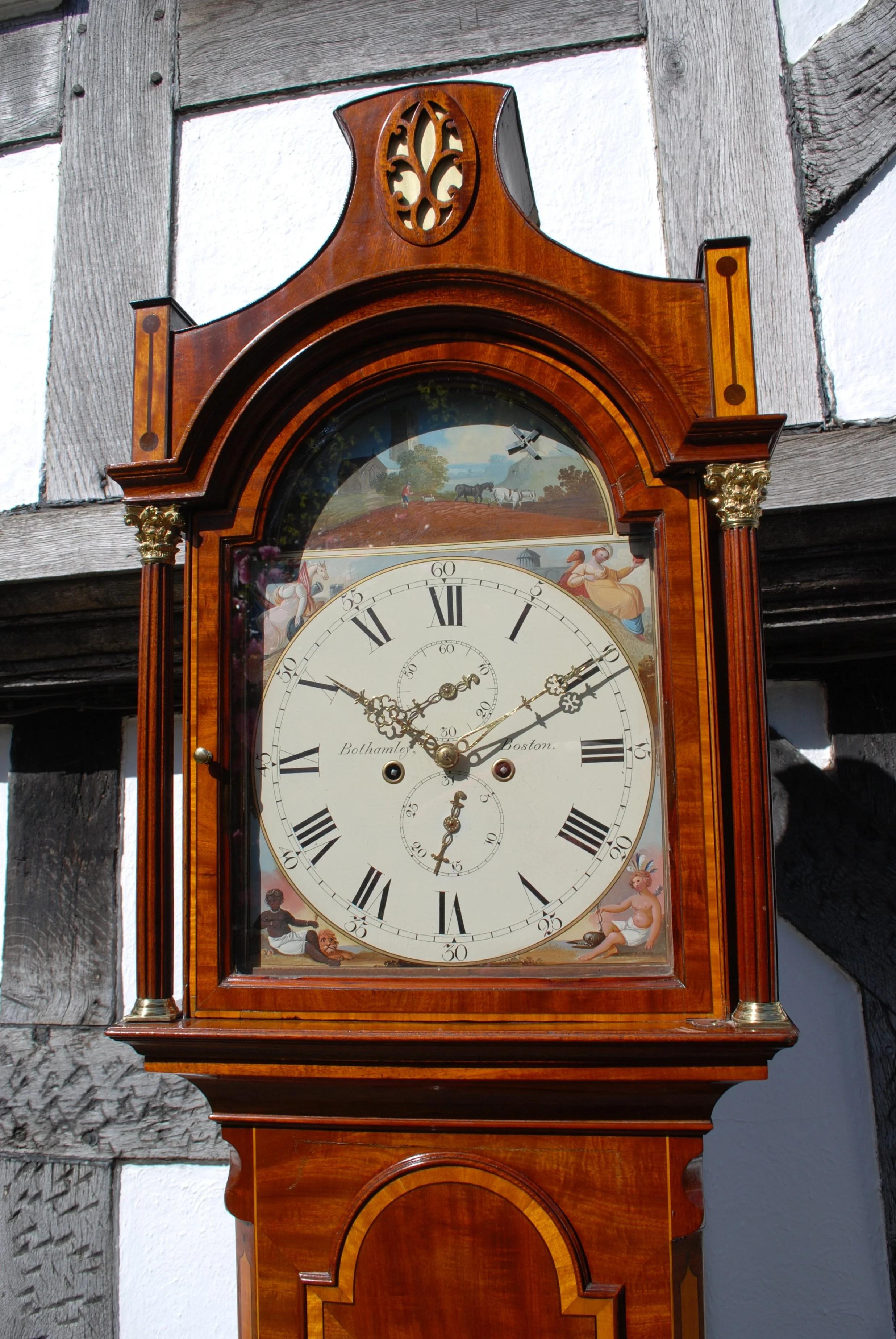
This is a handsome Victorian eight day clock made by the respected Lincolnshire clockmaking family Bothamley of Boston.
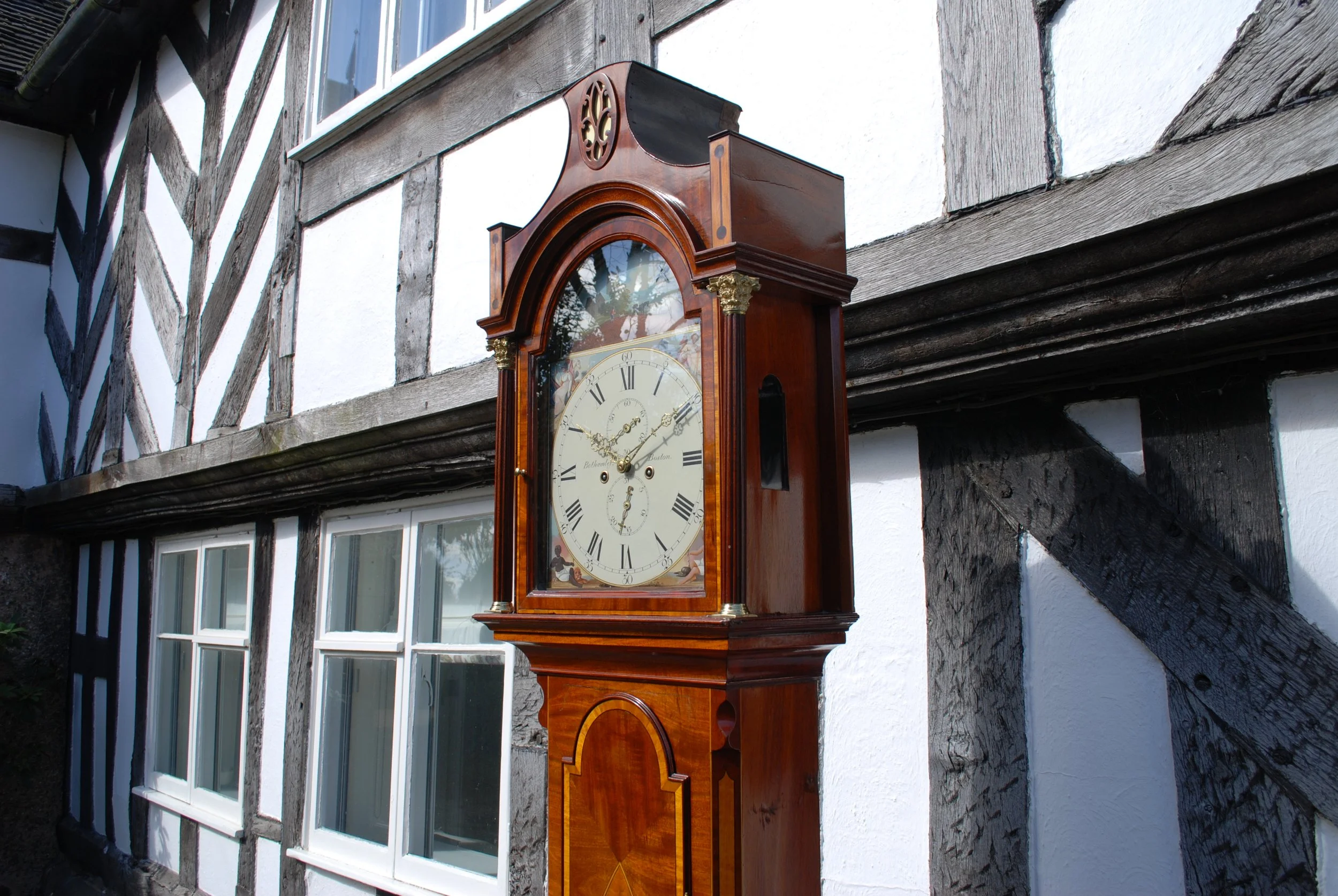
Case and Overall Design
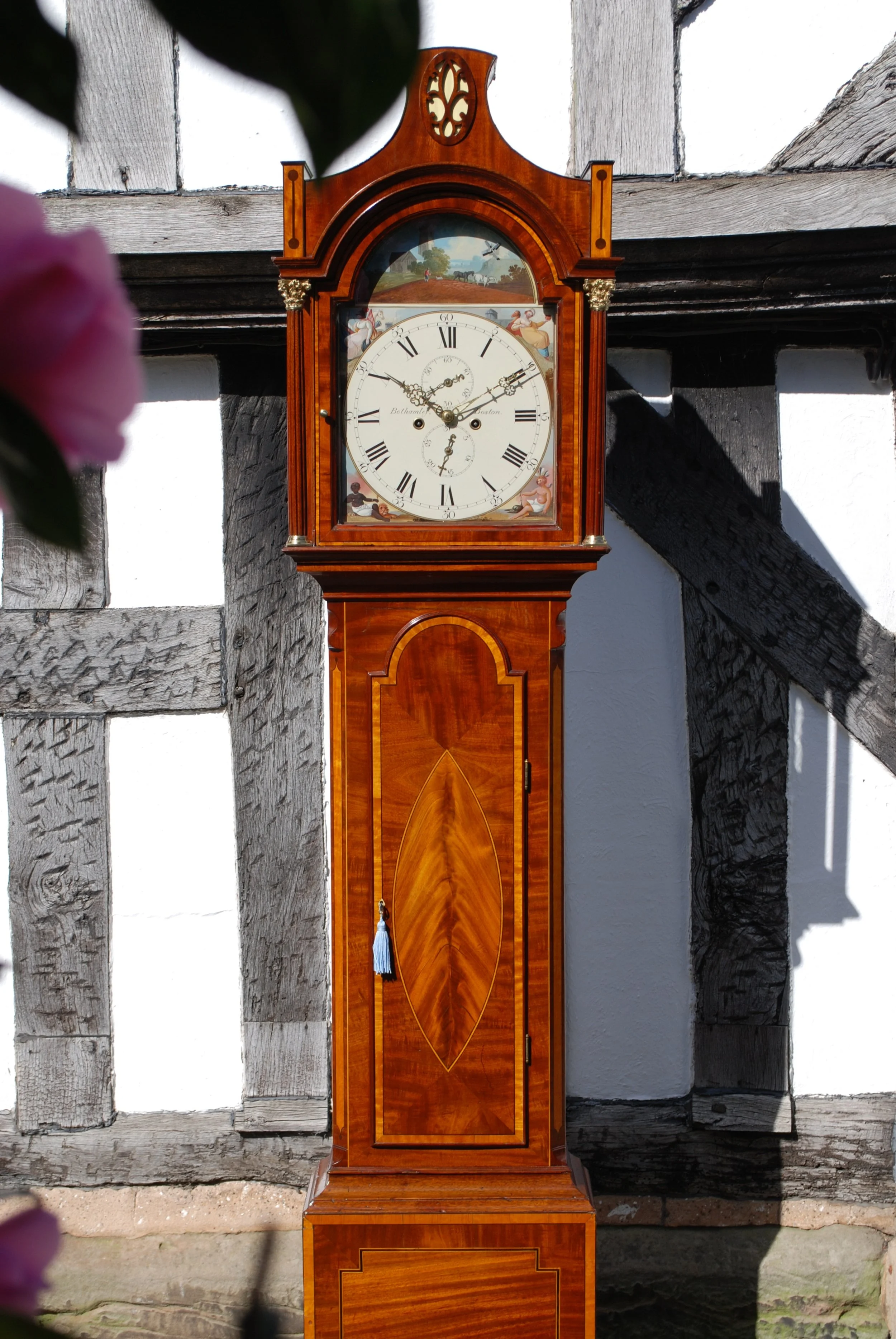
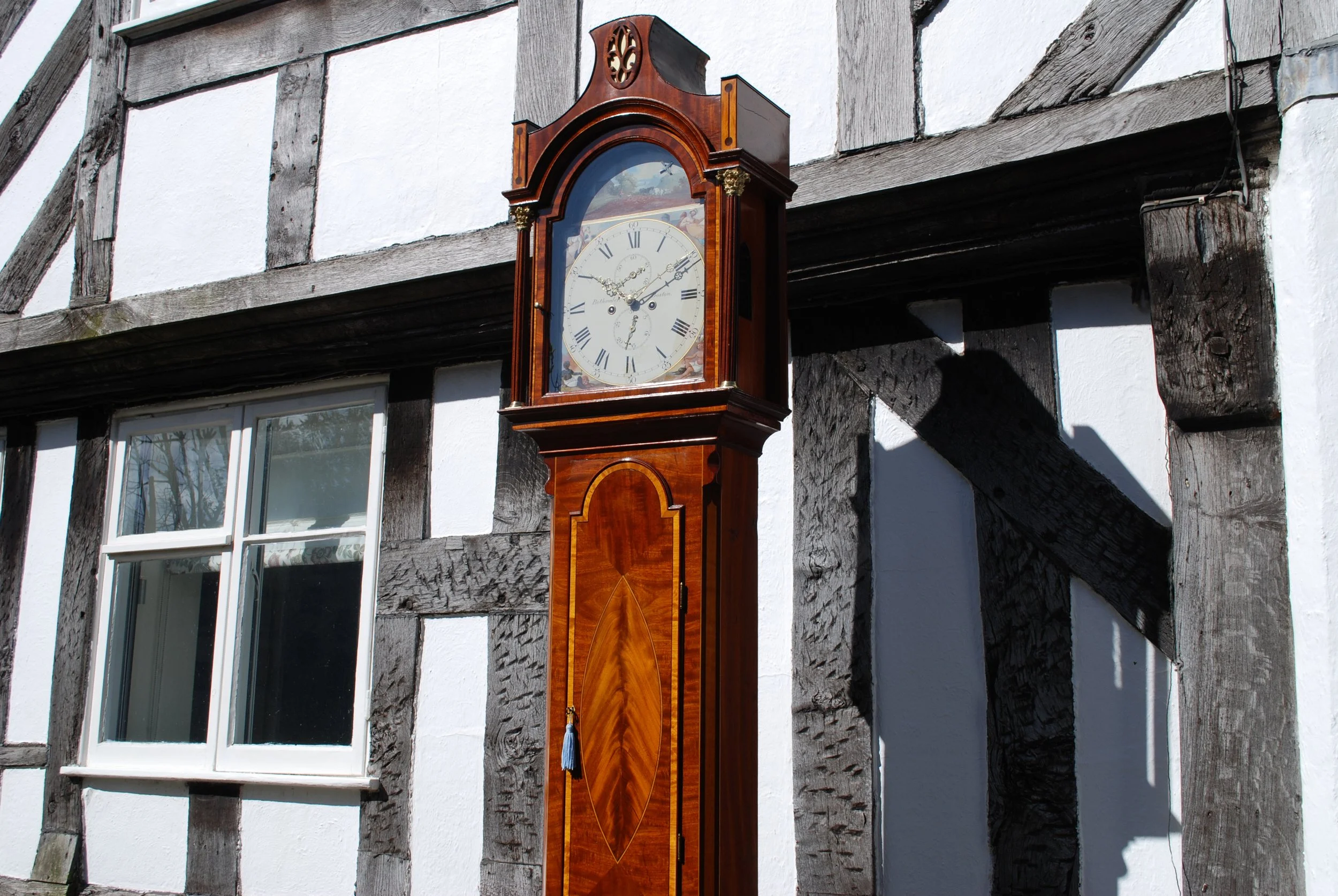
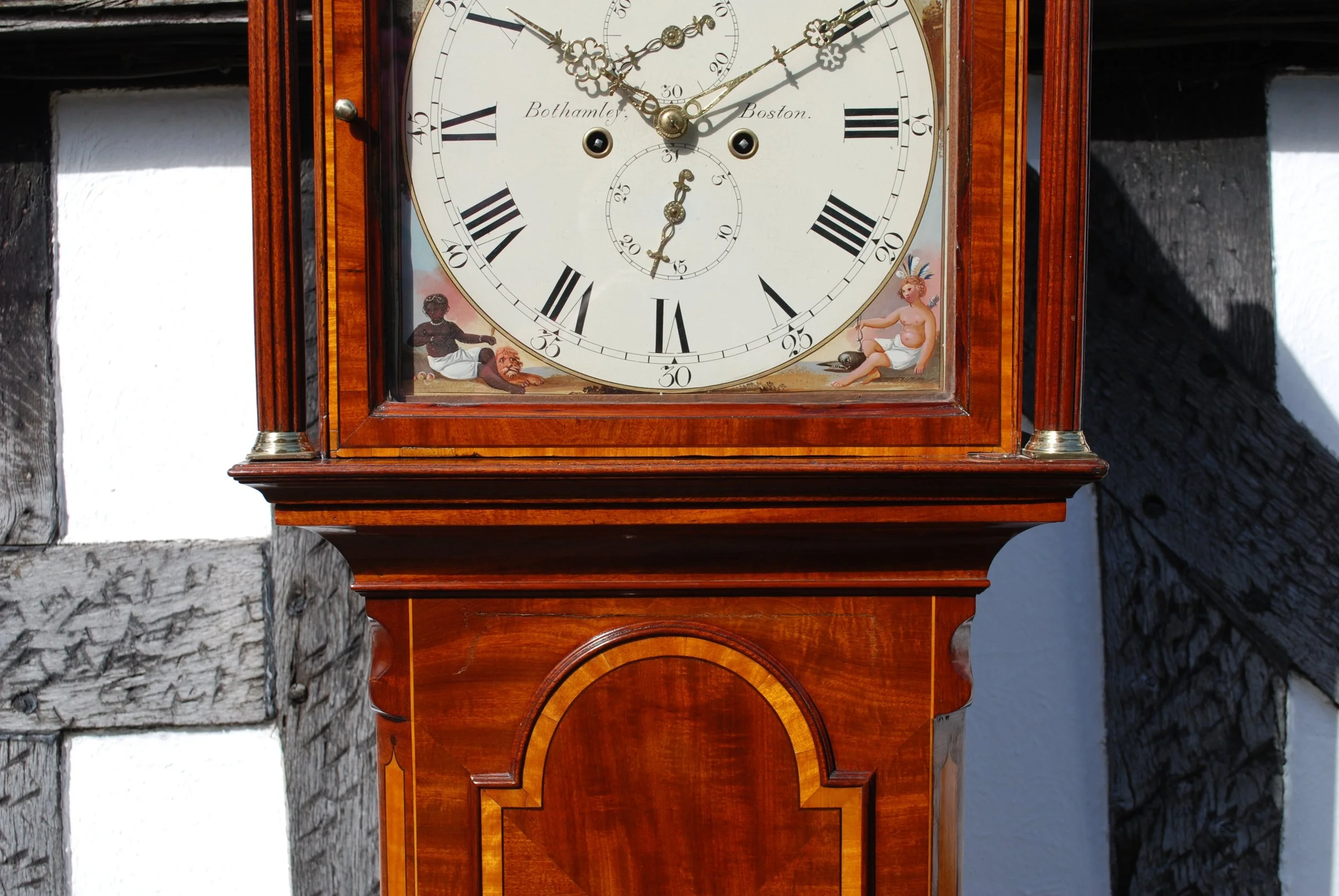
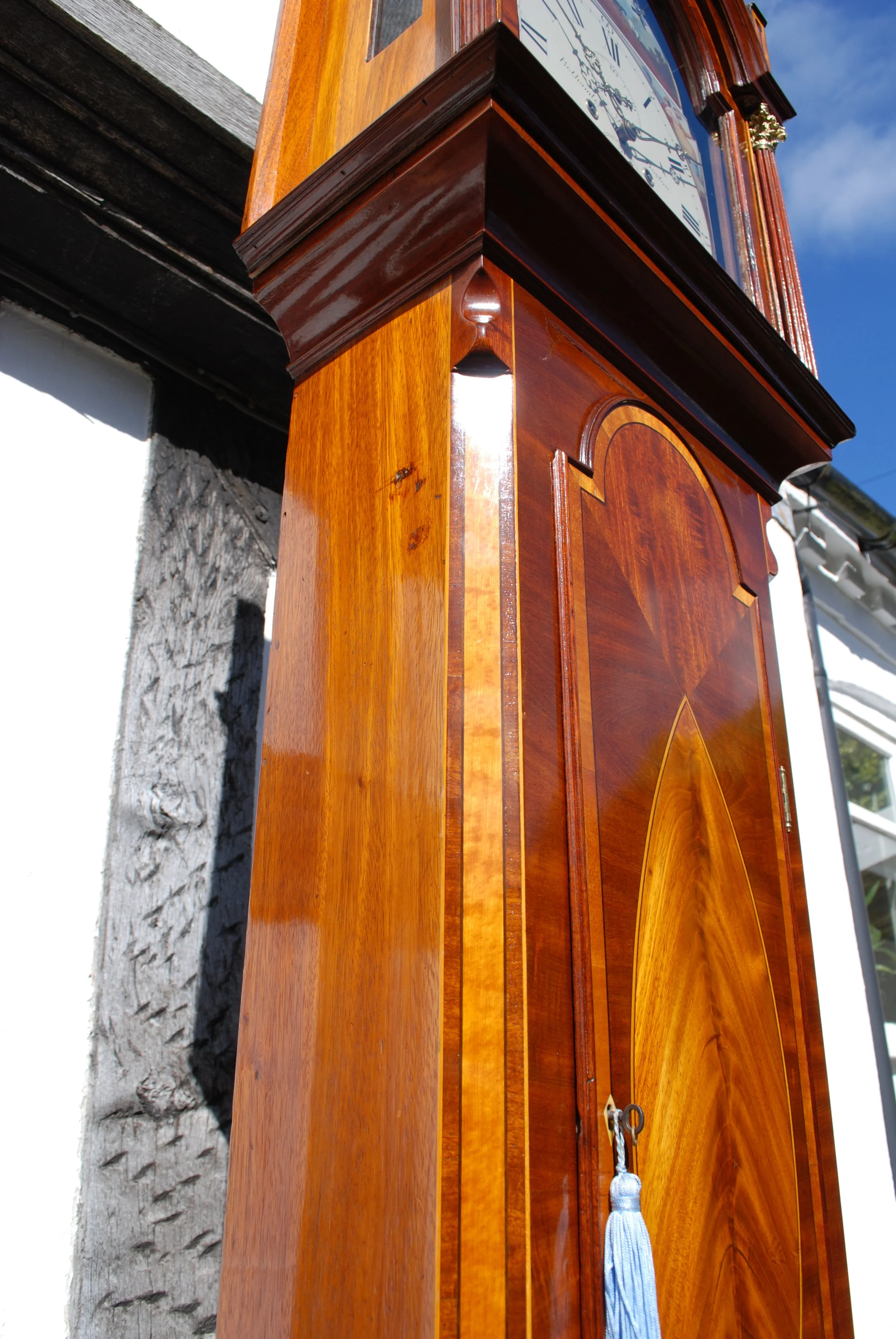
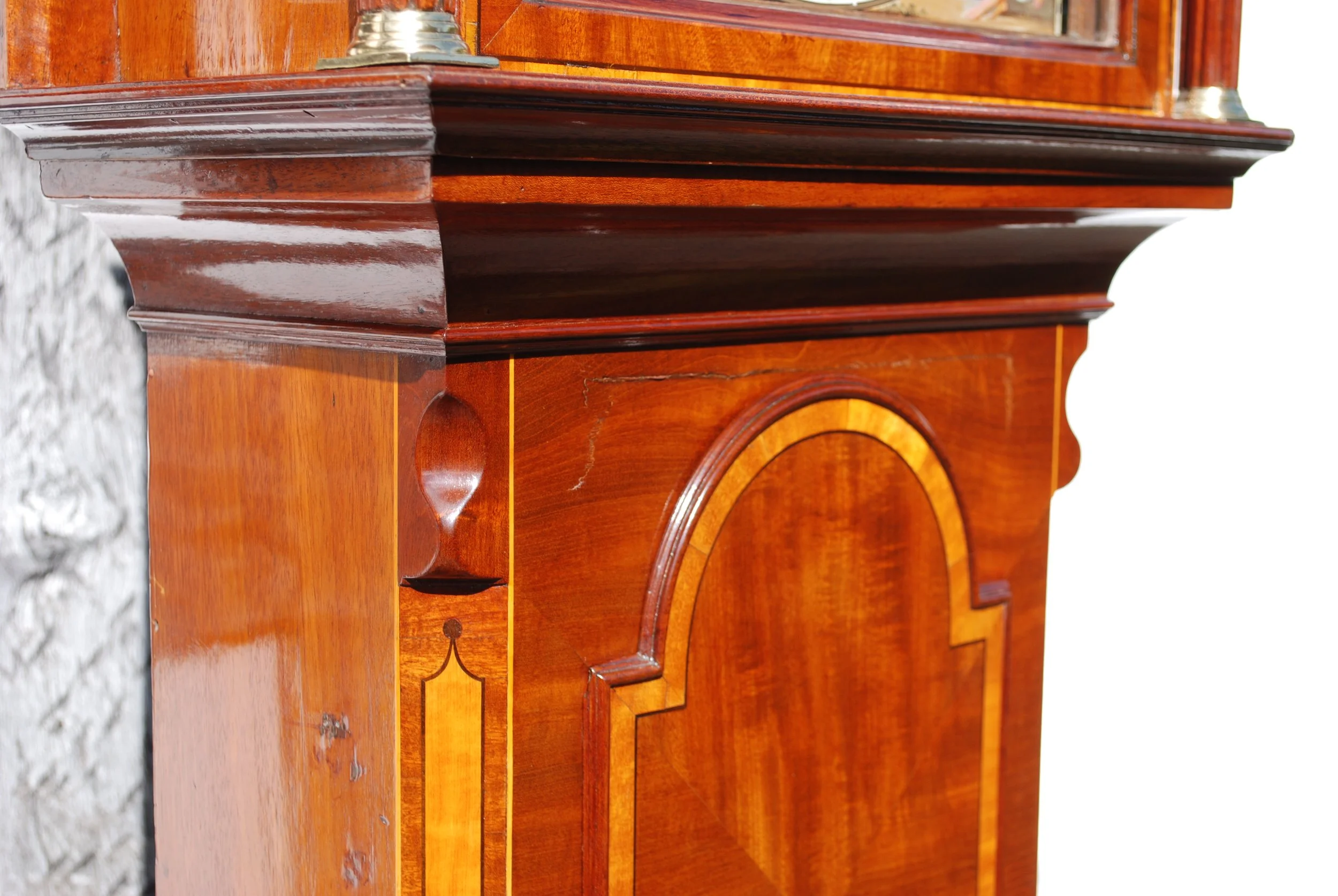
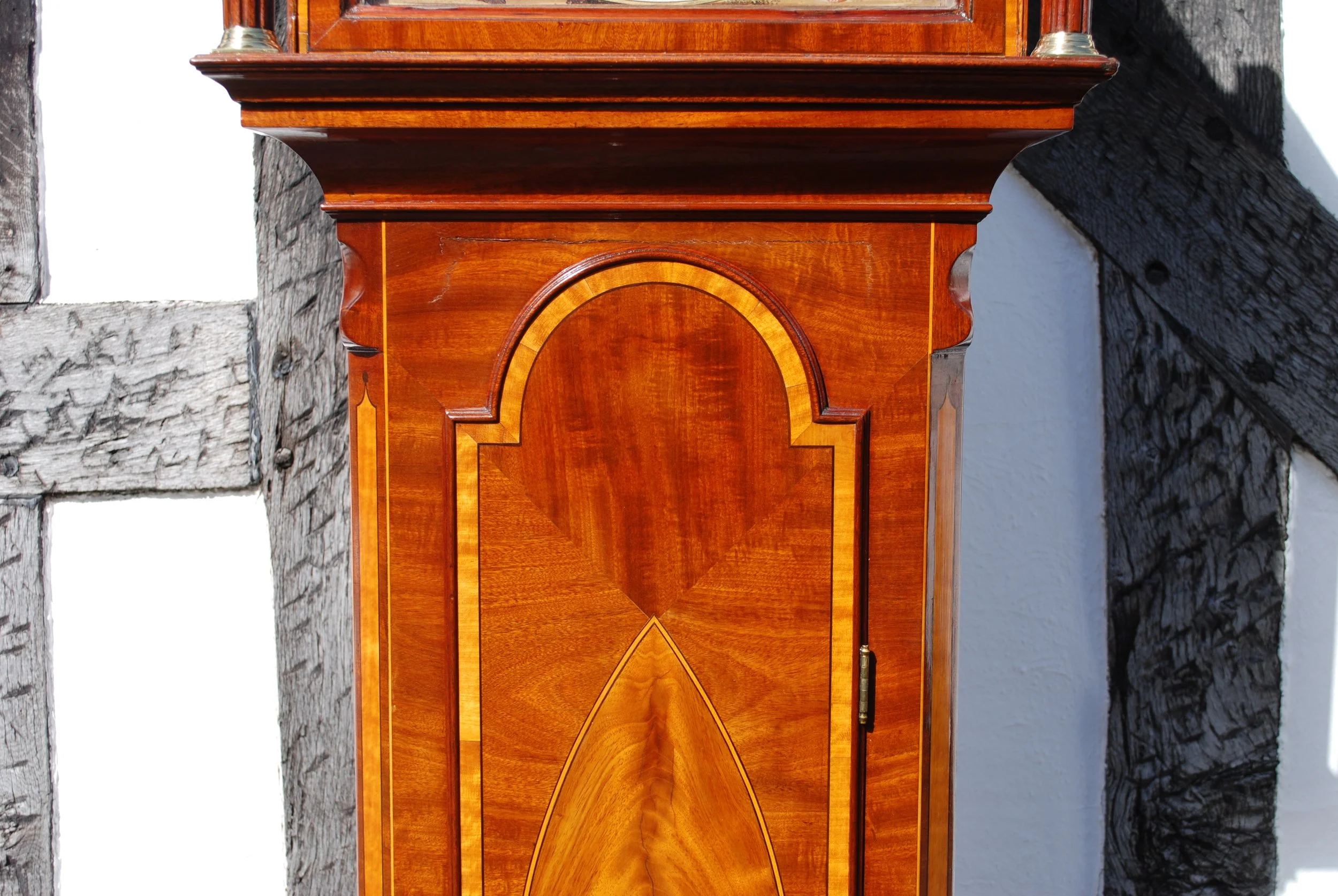
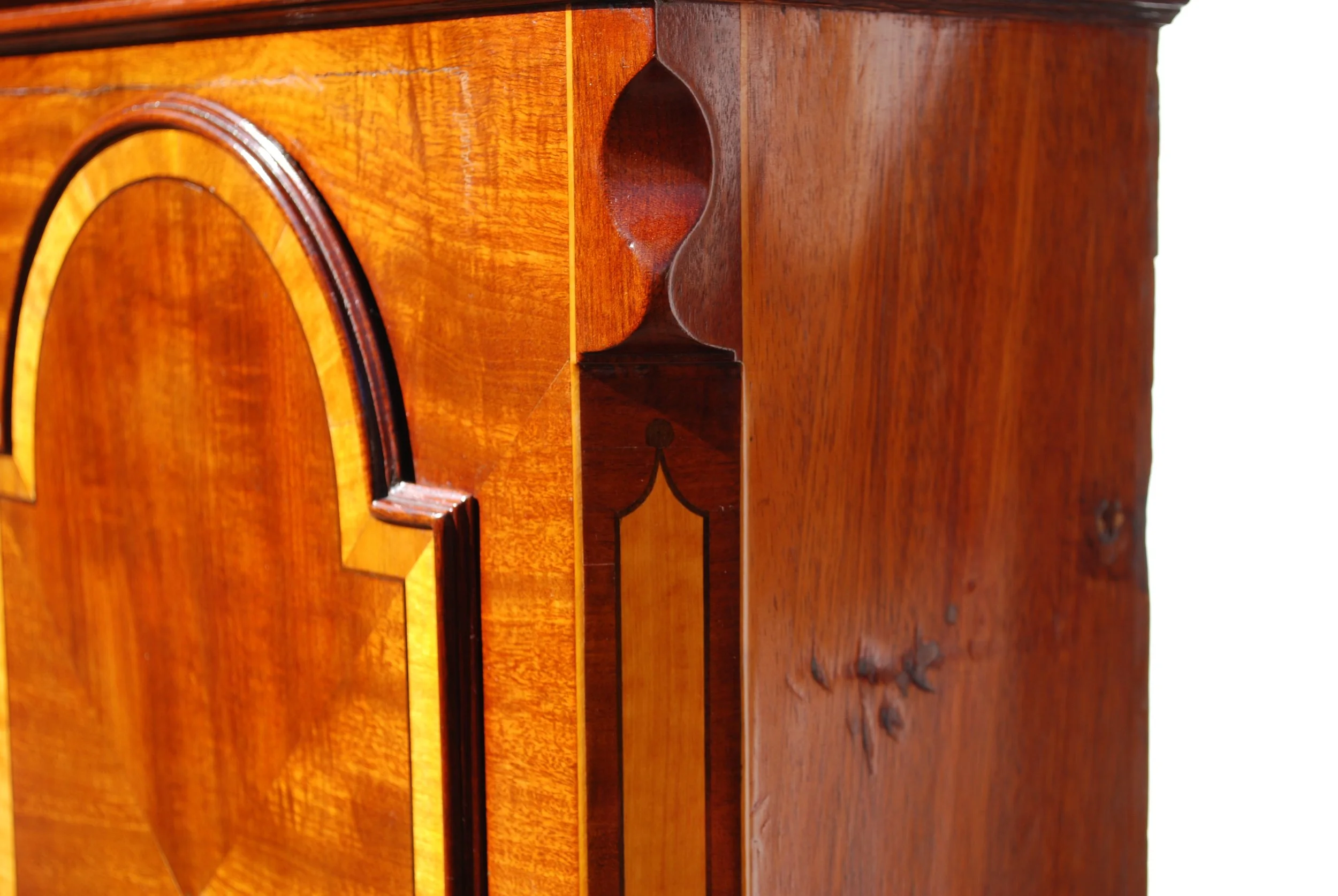
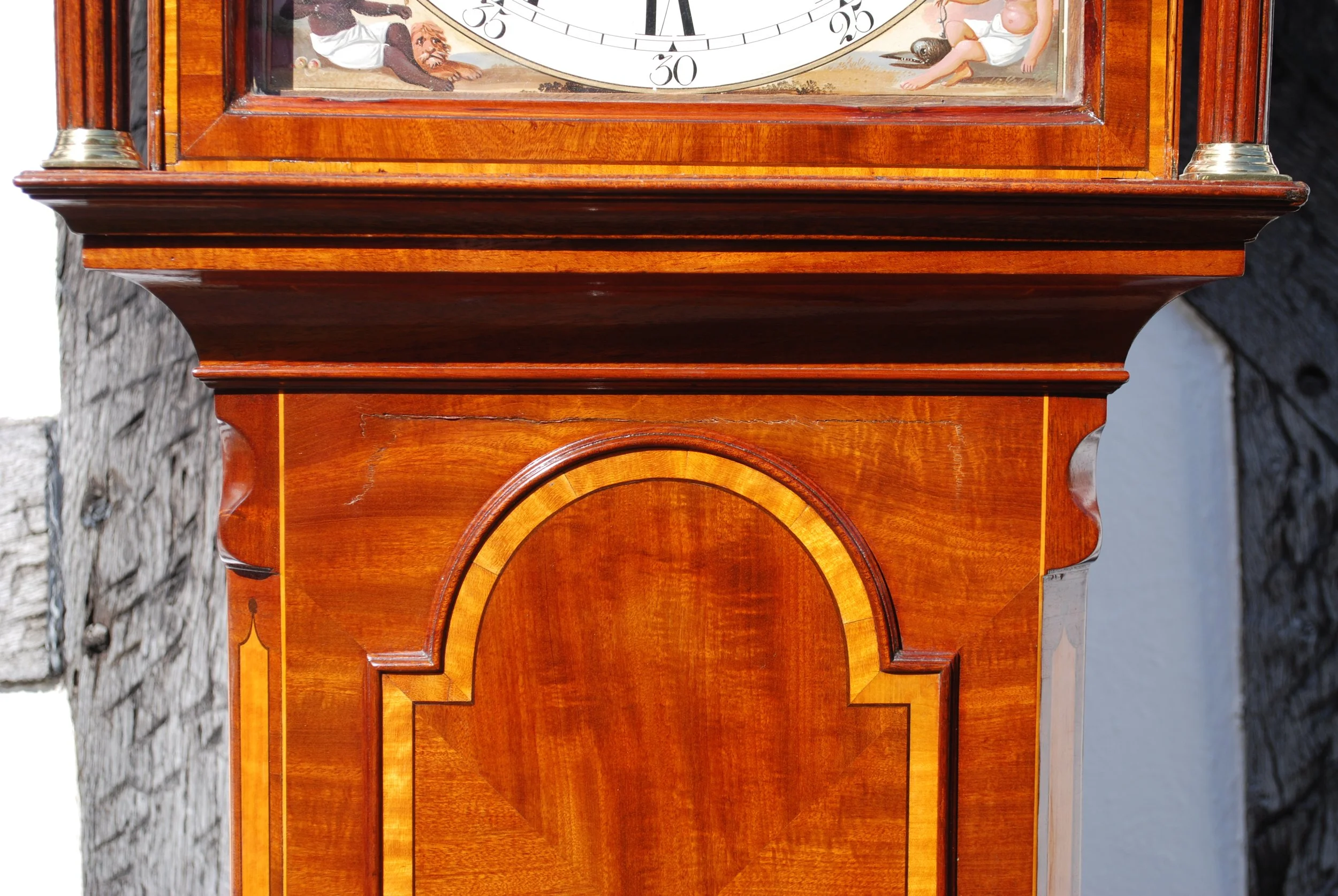
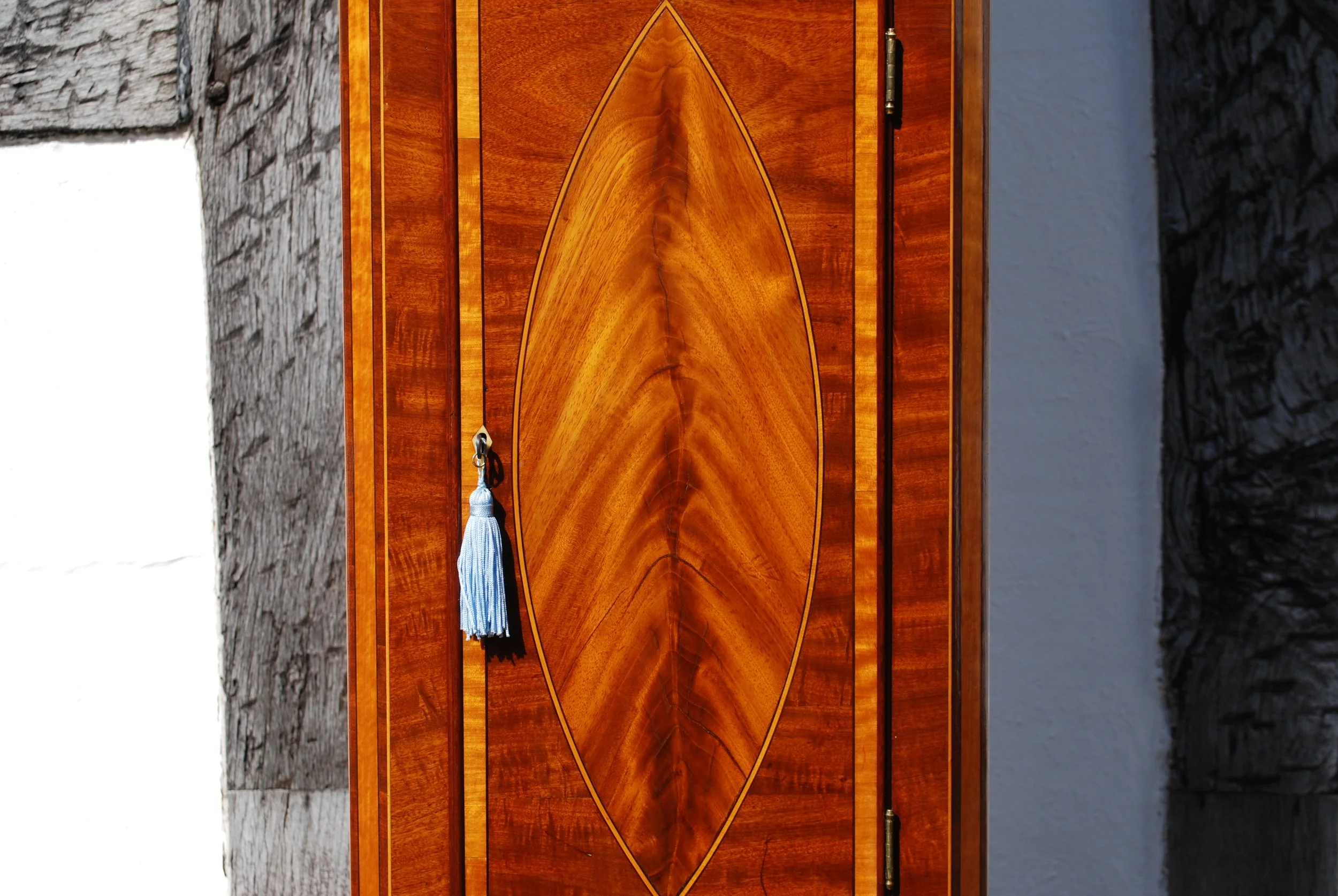
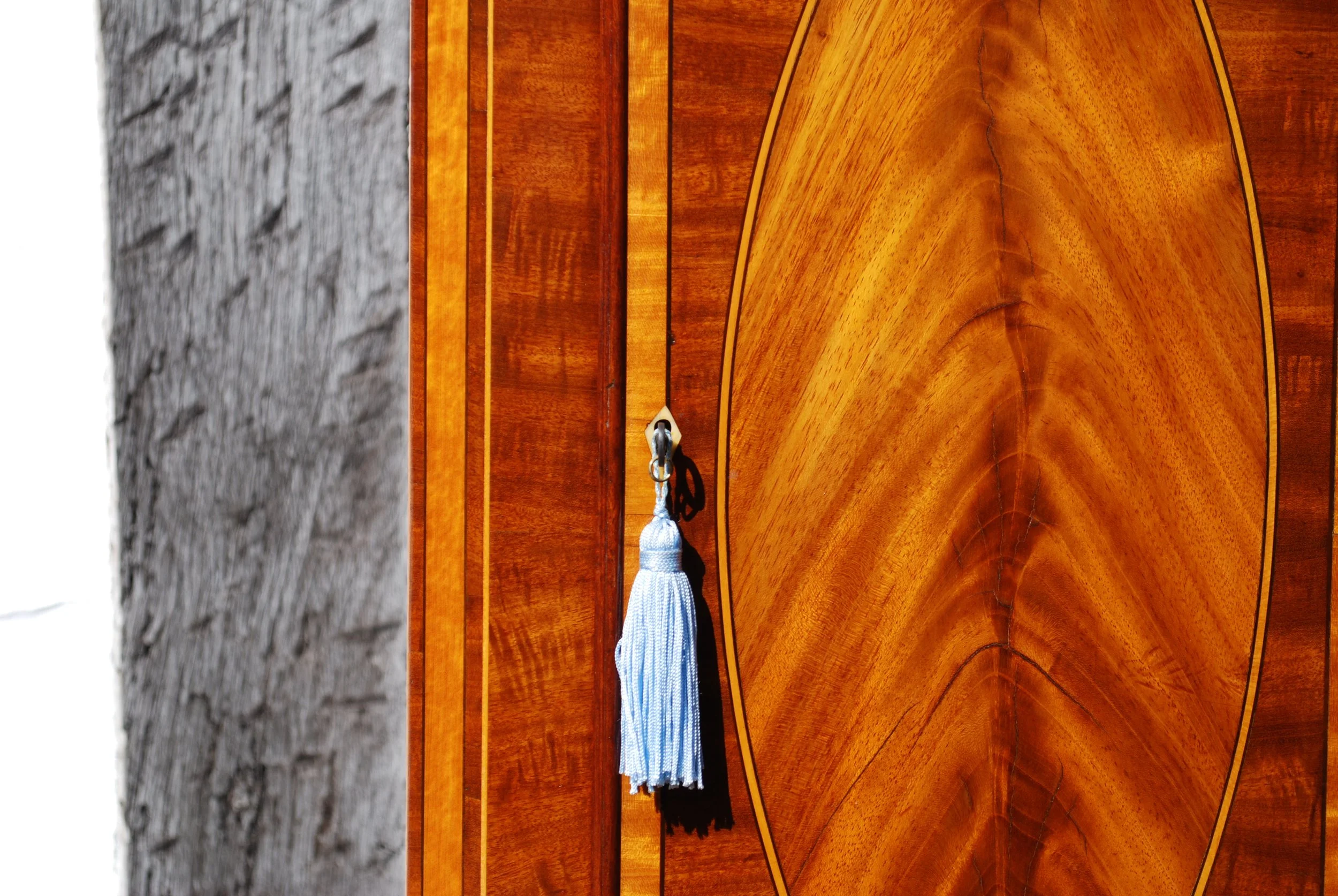
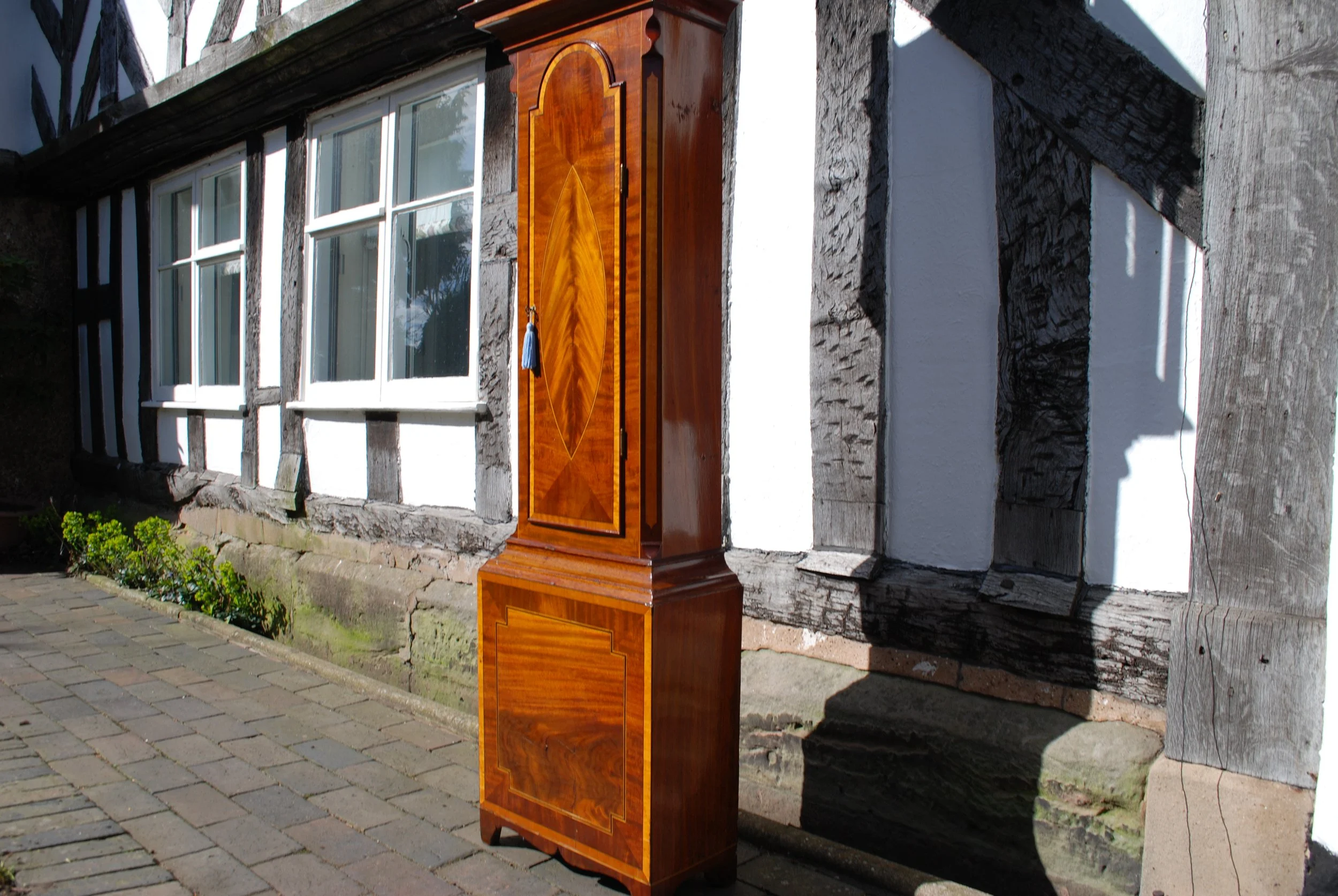
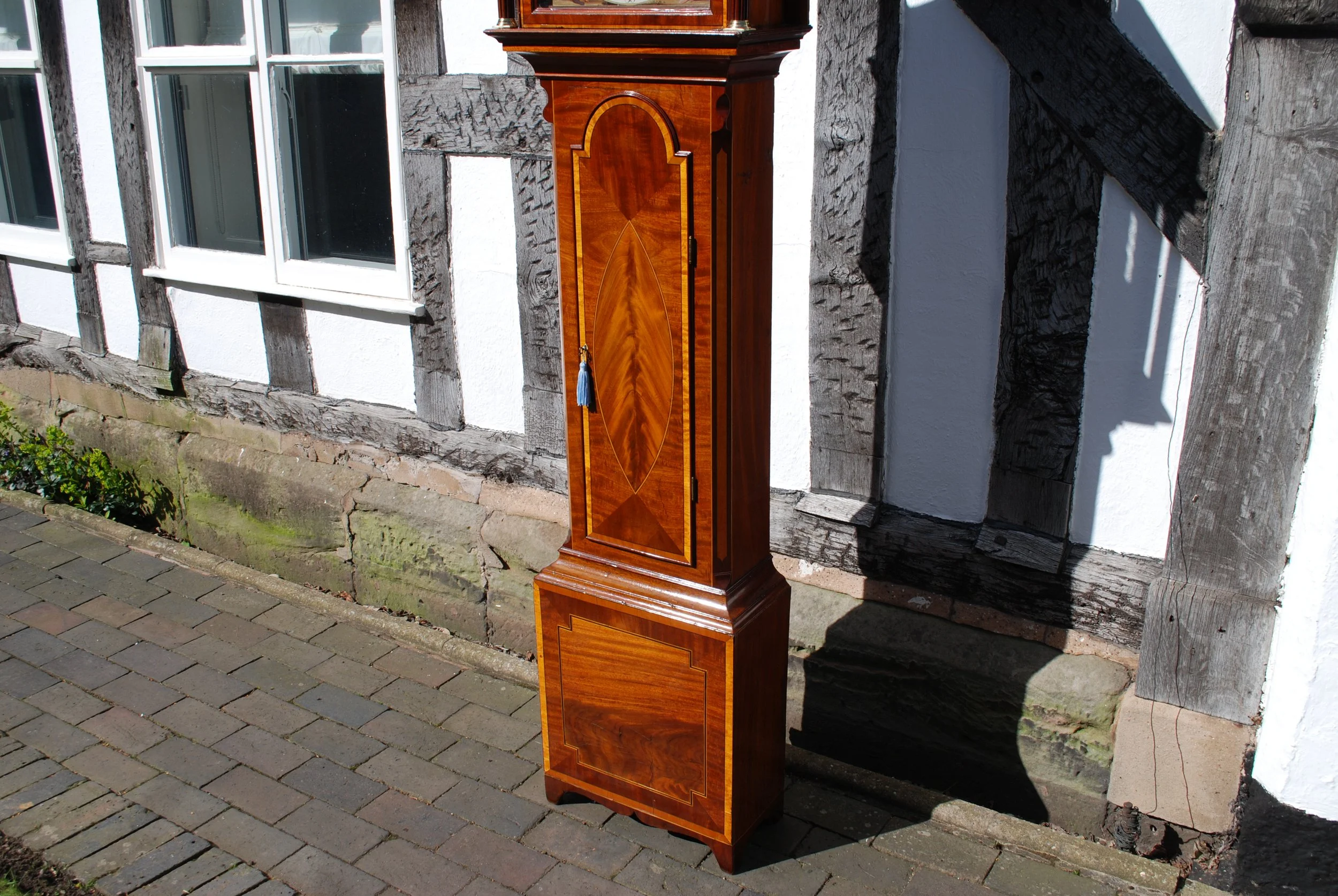
The clock features a classic tall, elegant form with a rich, warm mahogany case that displays beautiful figured grain, particularly in the central door panel with its striking flame or feather-pattern veneer in a large, pointed oval (leaf-shaped) inlay.
The case is divided into three main sections:
A substantial plinth base with simple panelled detailing.
A long trunk with a shaped, arched door.
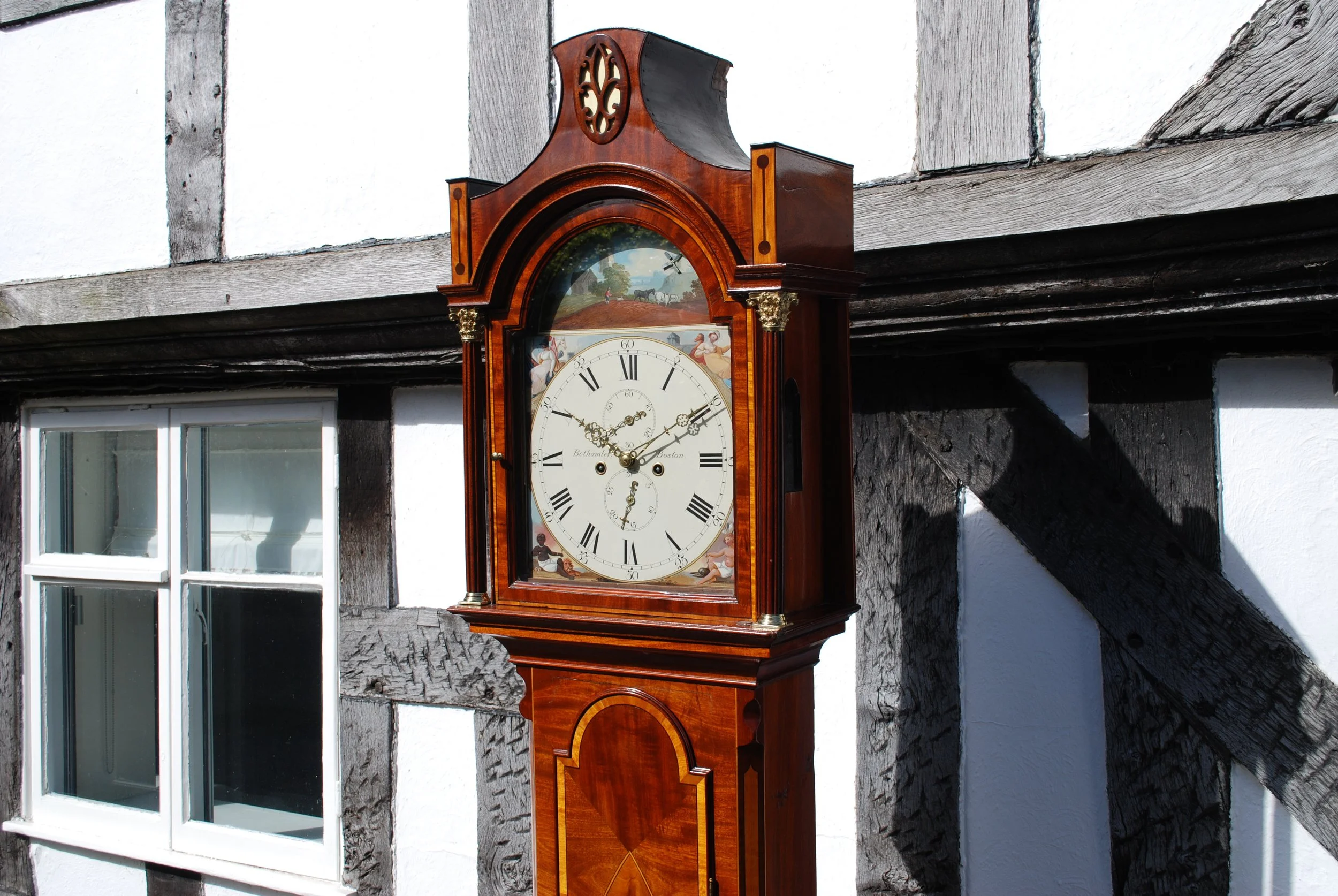
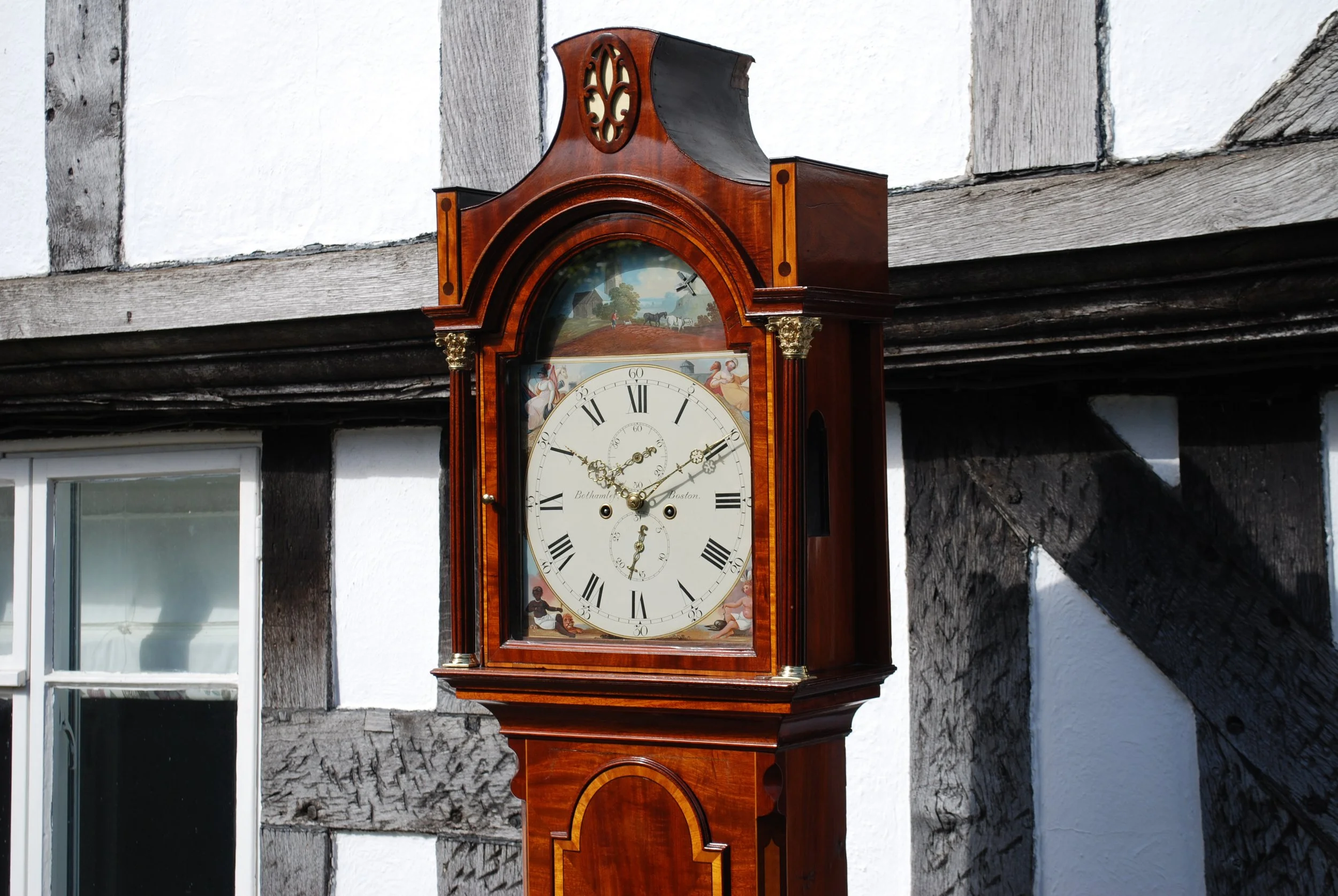
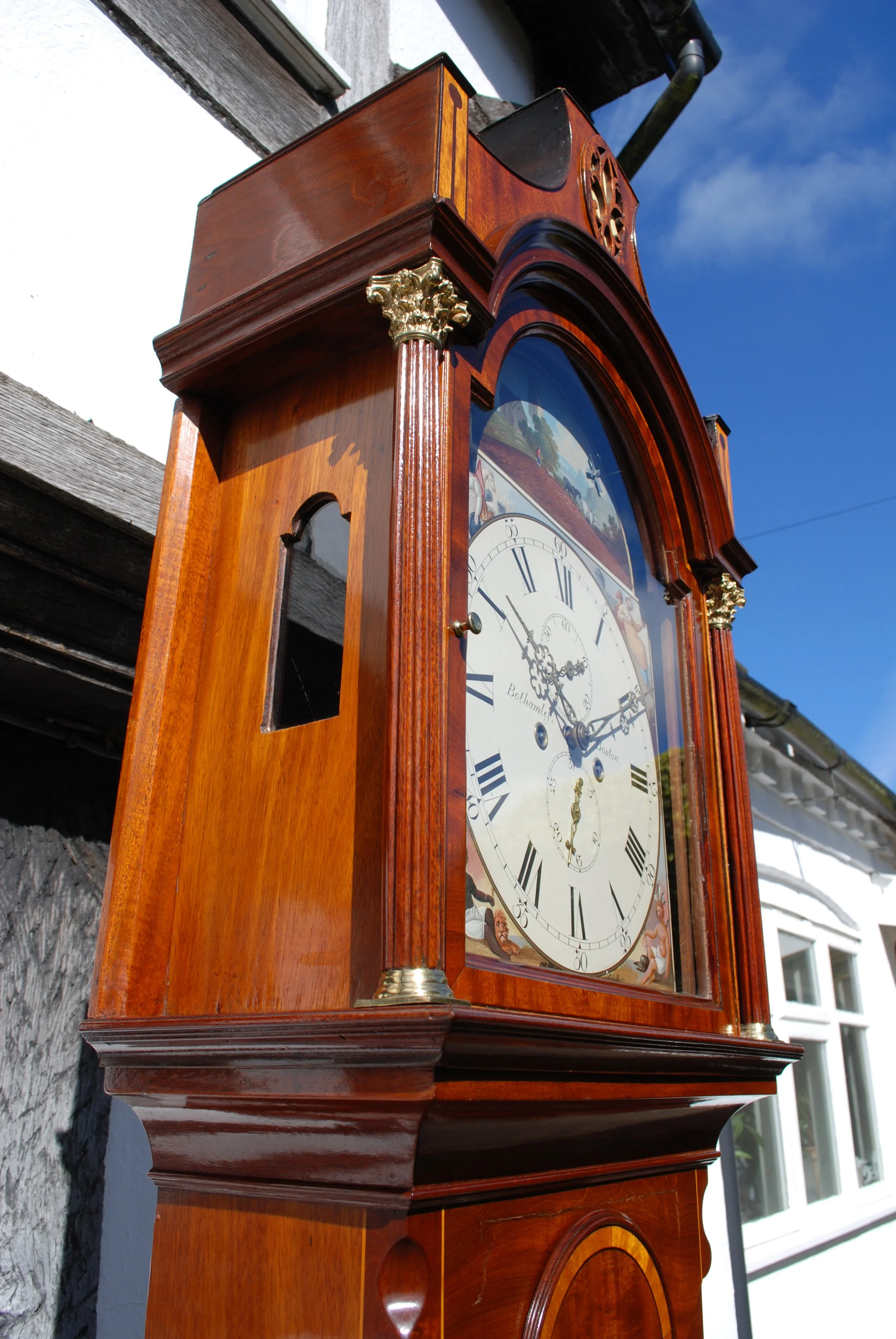
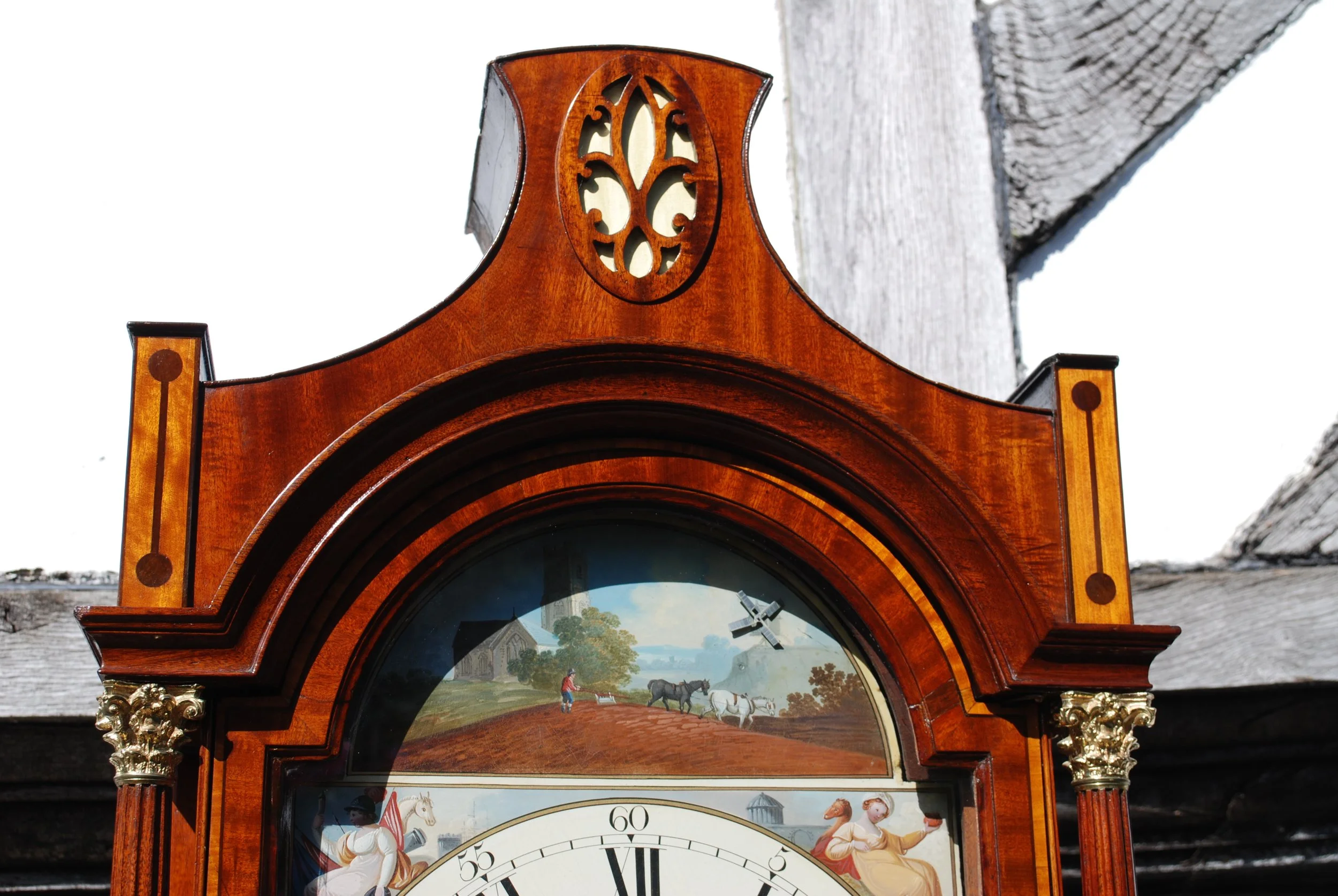
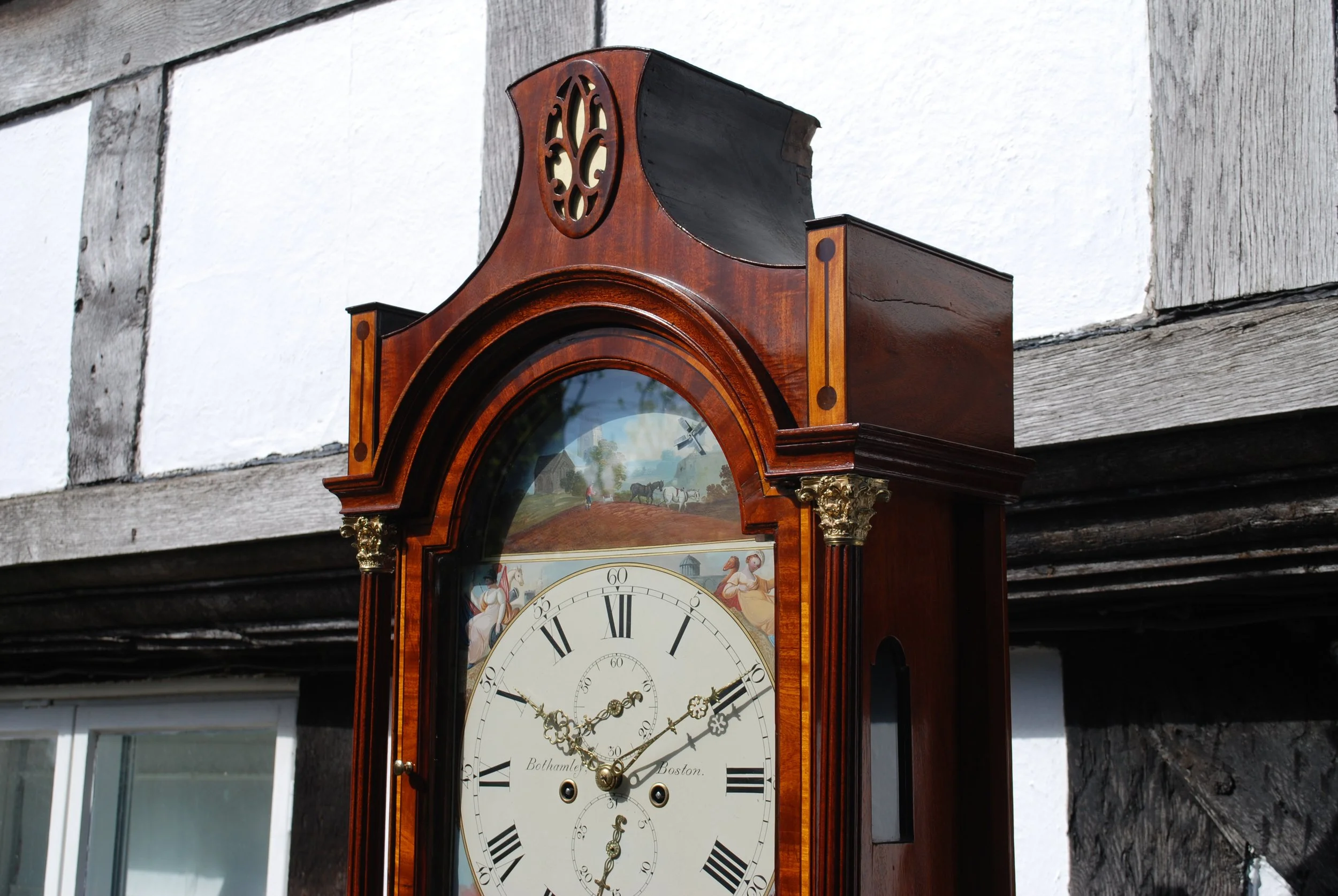
An ornate hood topped by a broken-arch pediment with a central decorative finial or carved motif (possibly a fleur-de-lis or similar) and small side finials.
The mahogany has a deep, polished reddish-brown tone that catches the light beautifully, highlighting the skilled cabinetry and inlay work typical of quality 19th-century provincial English clock cases.
Dial and Movement
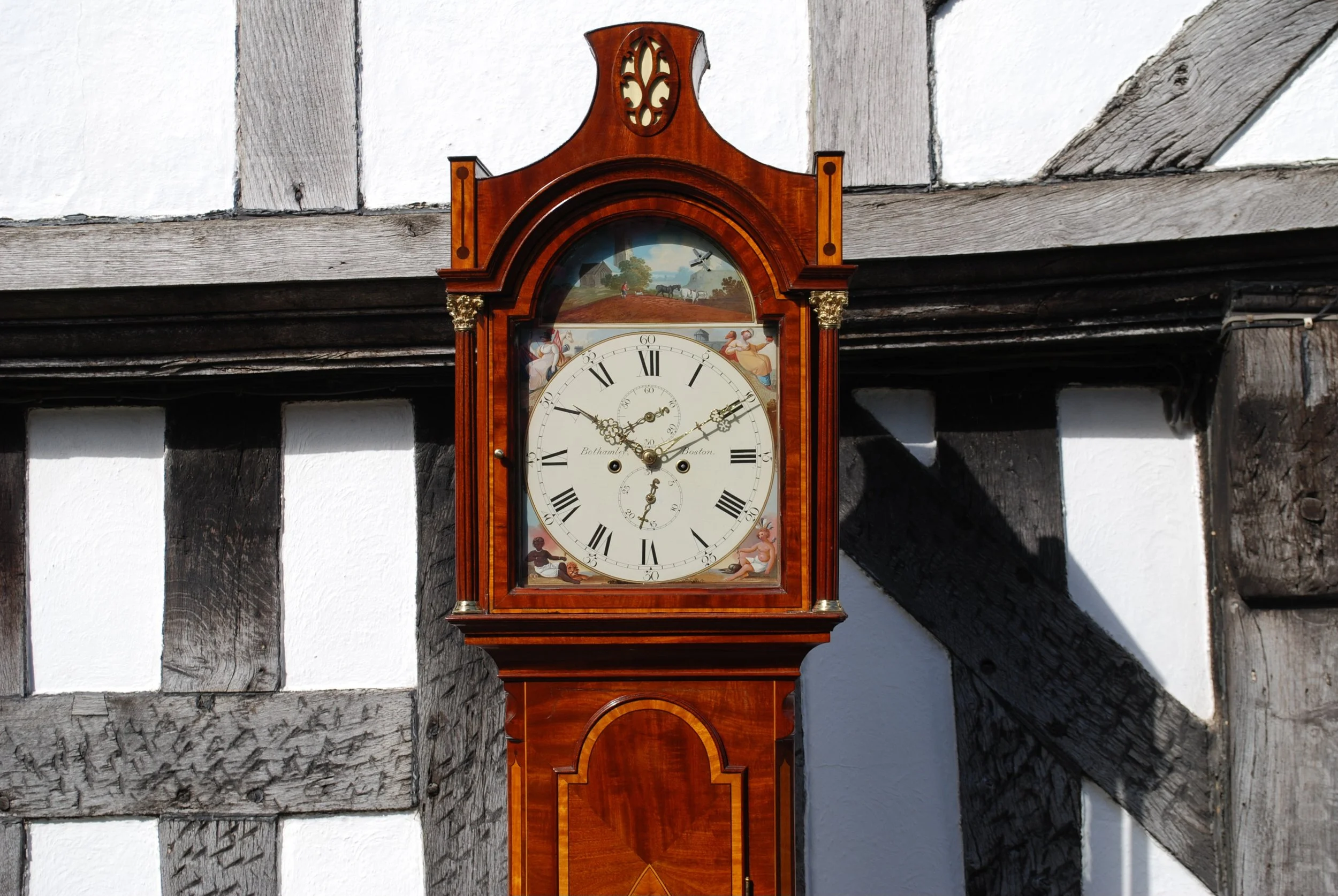
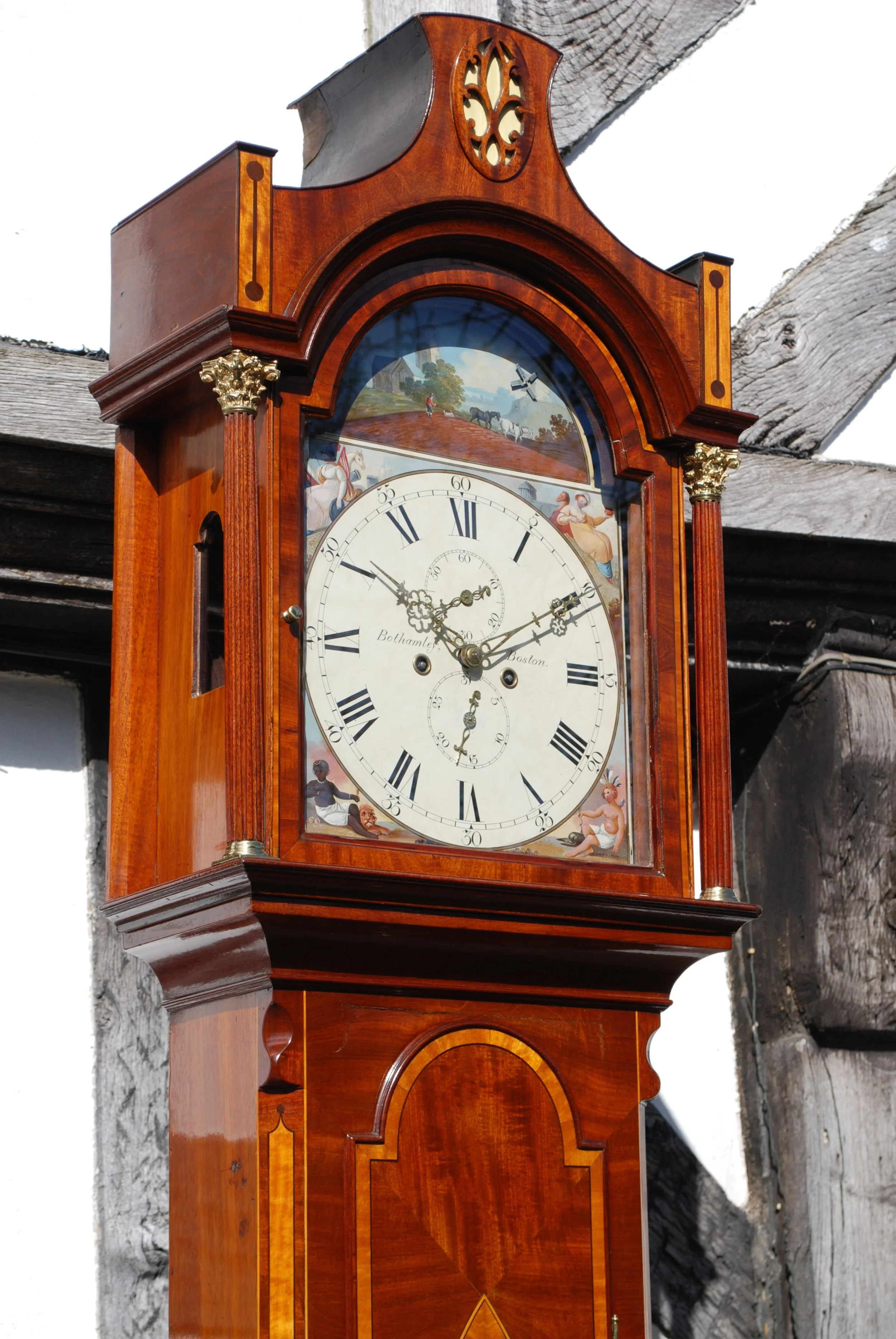
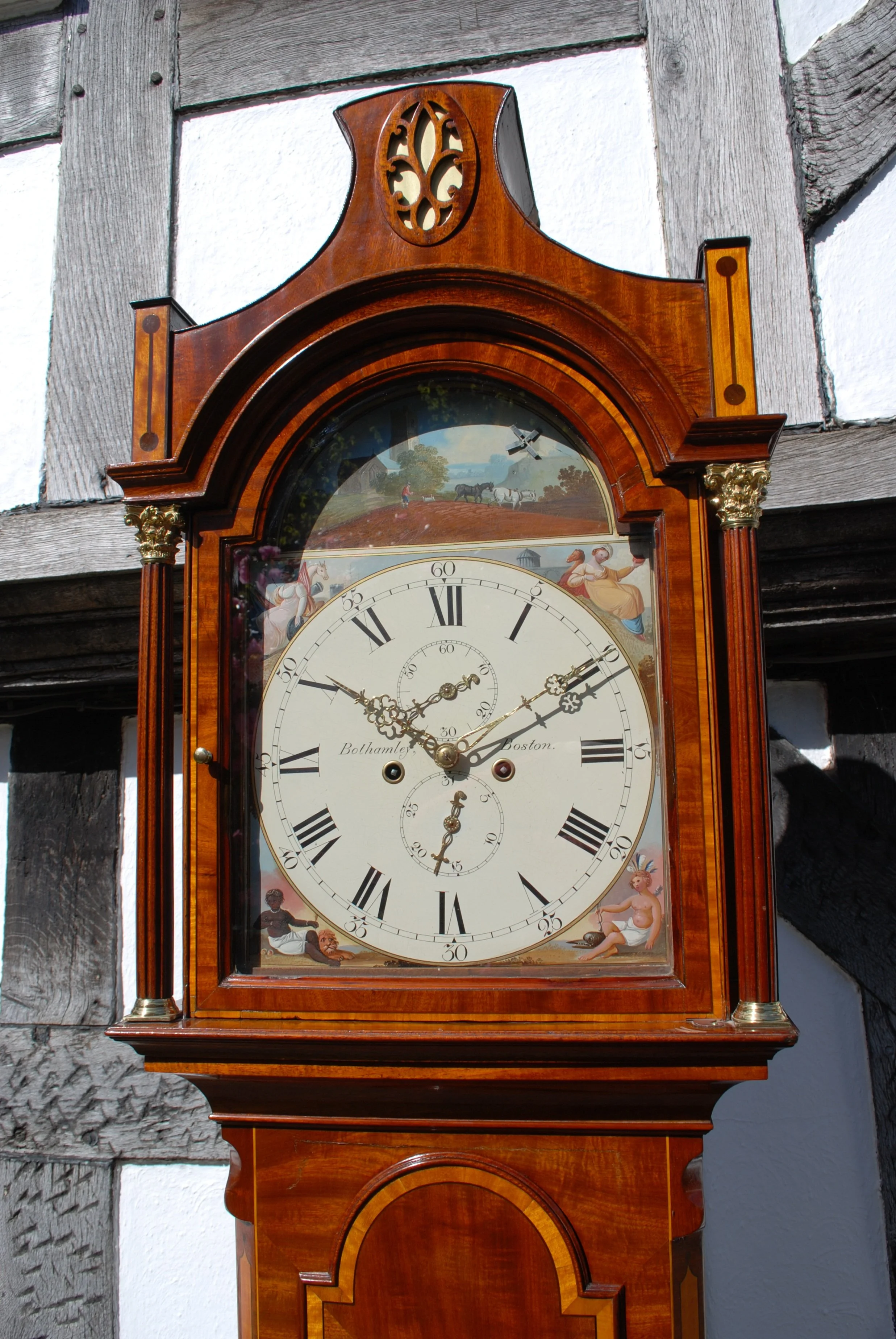
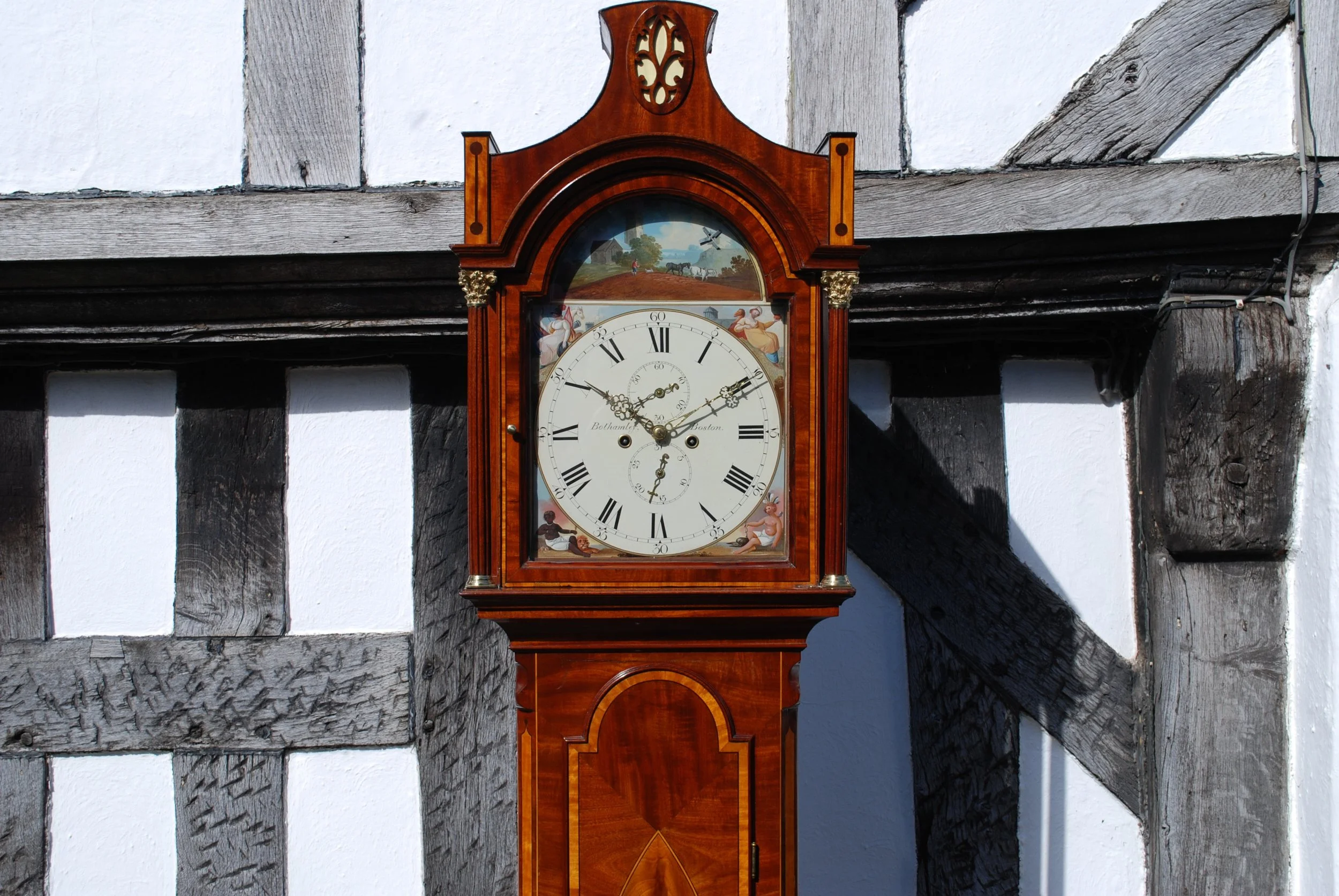
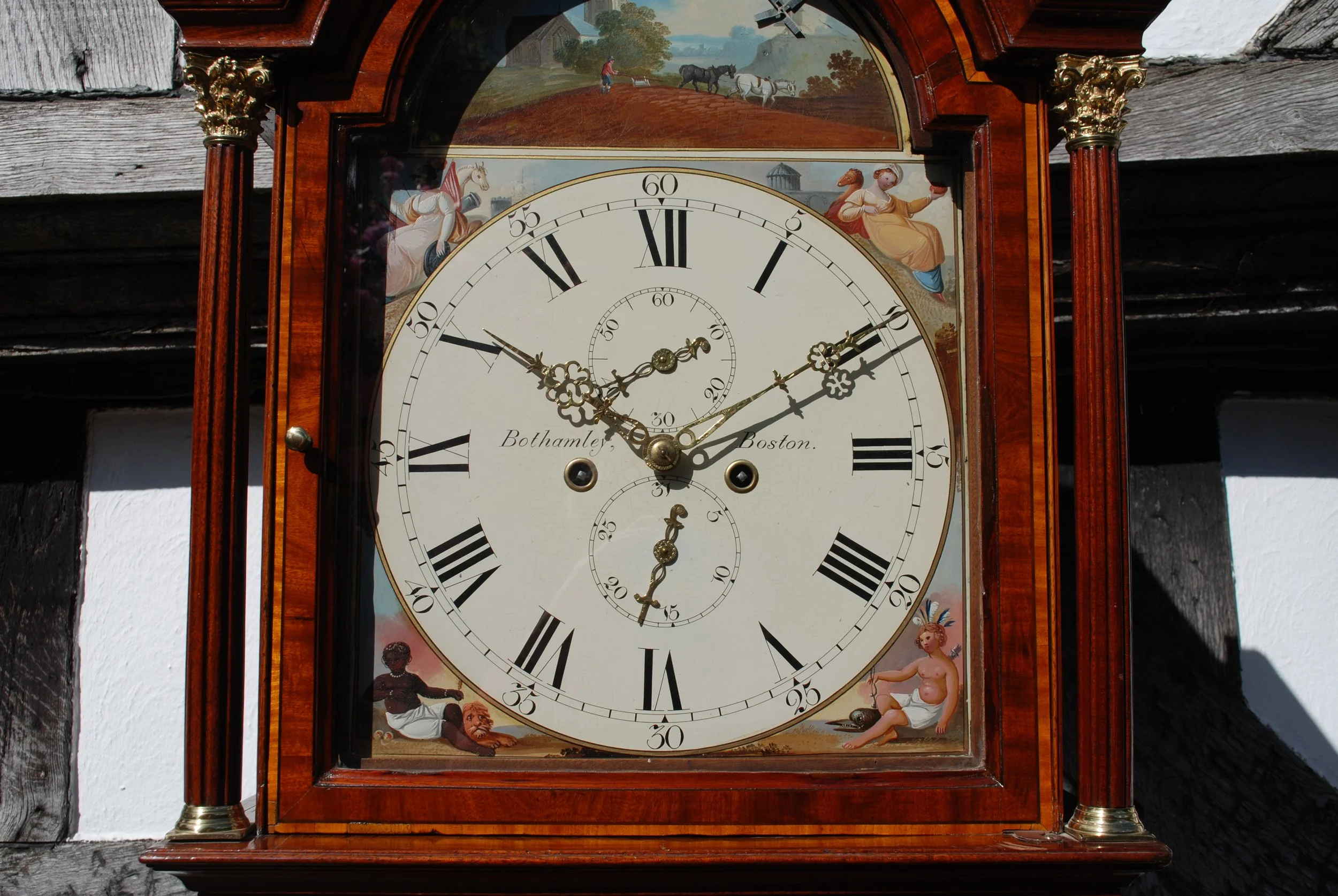
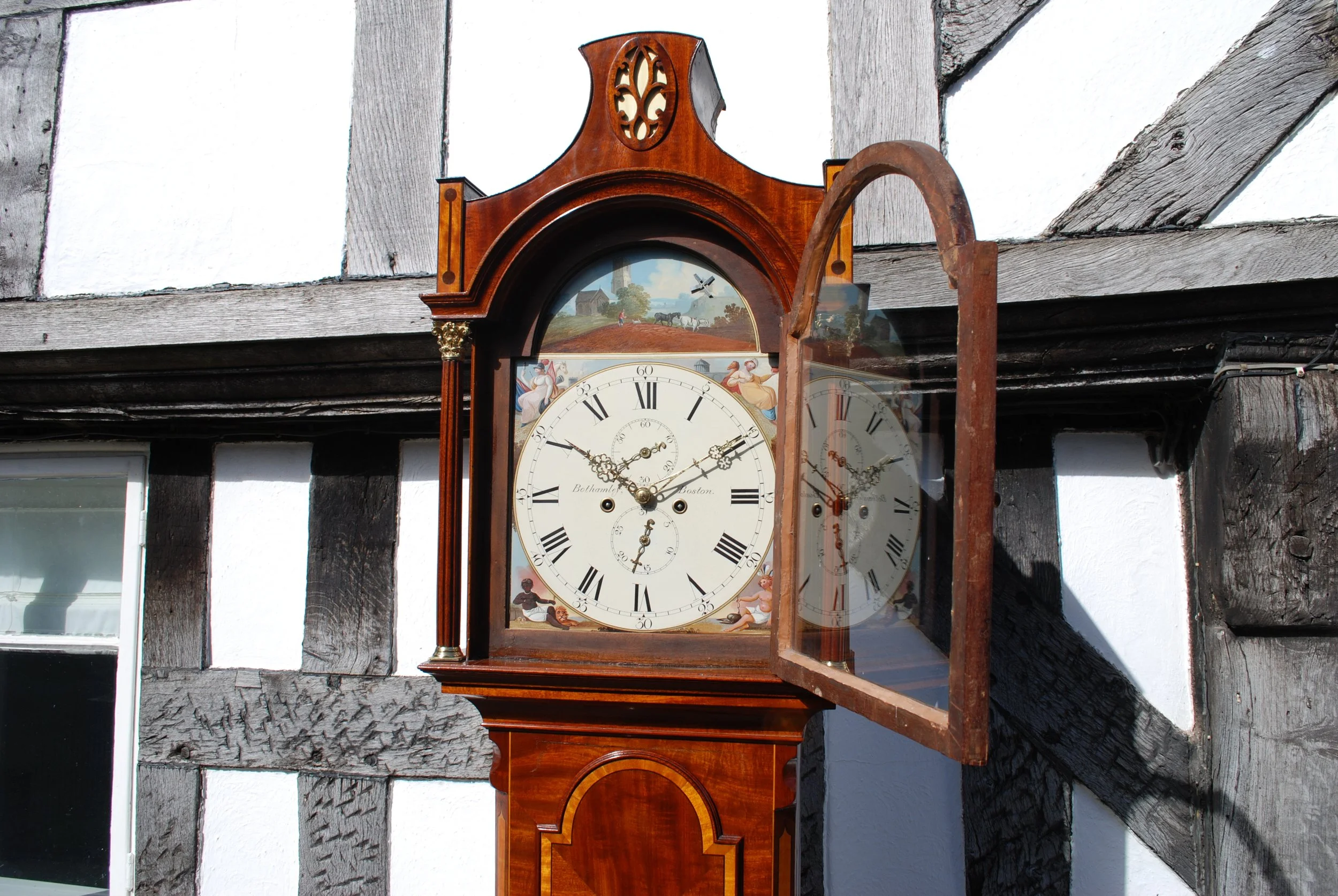
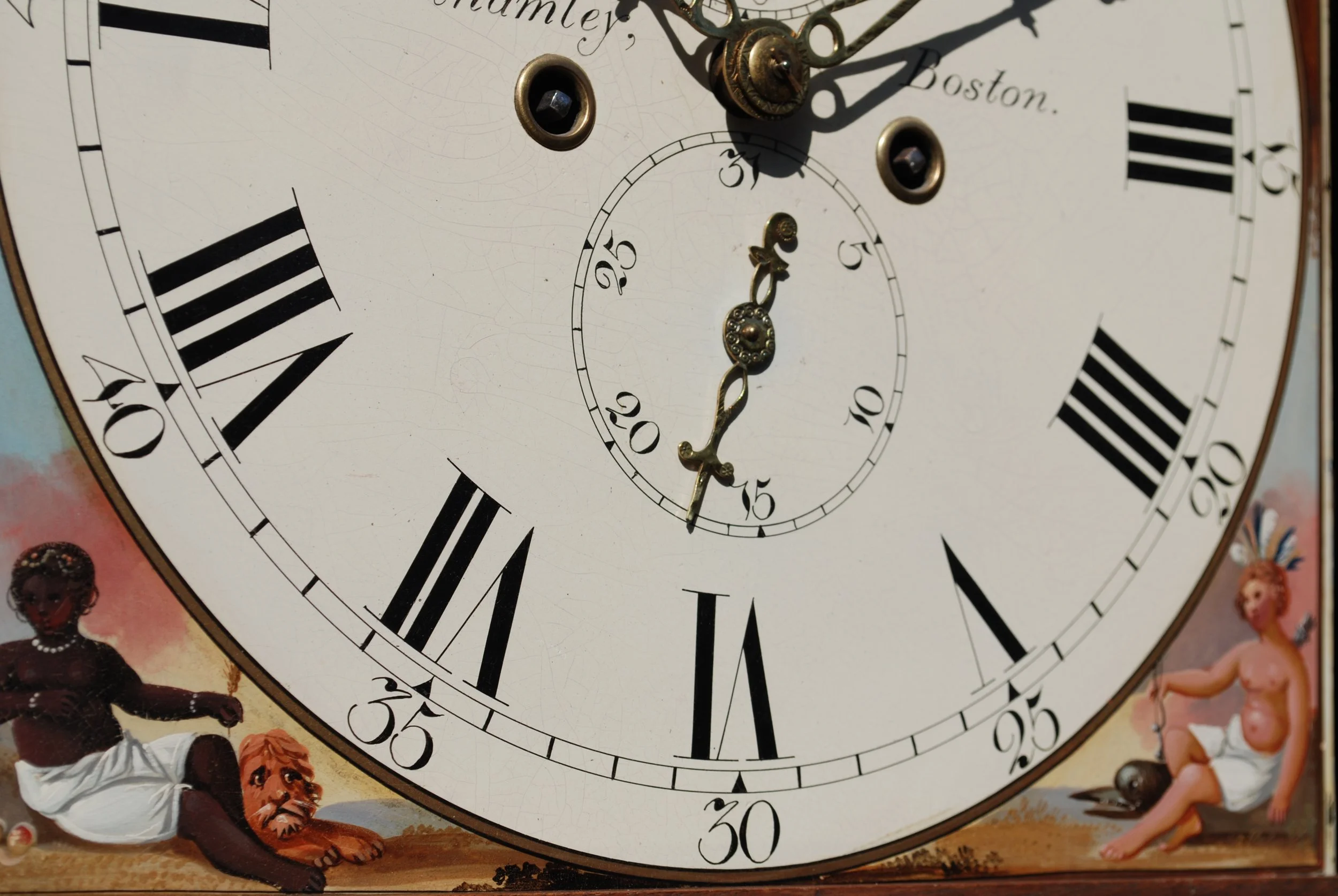
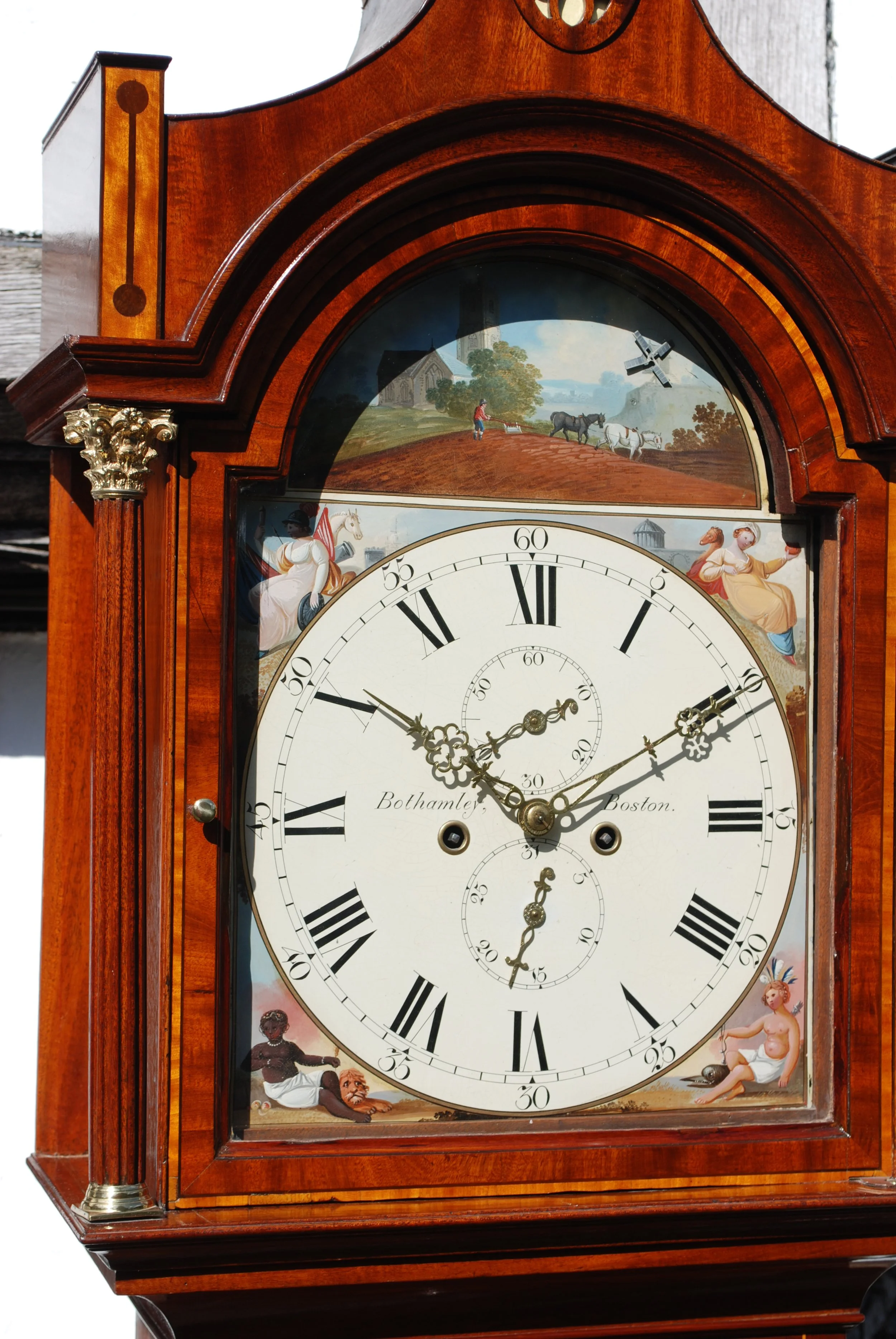
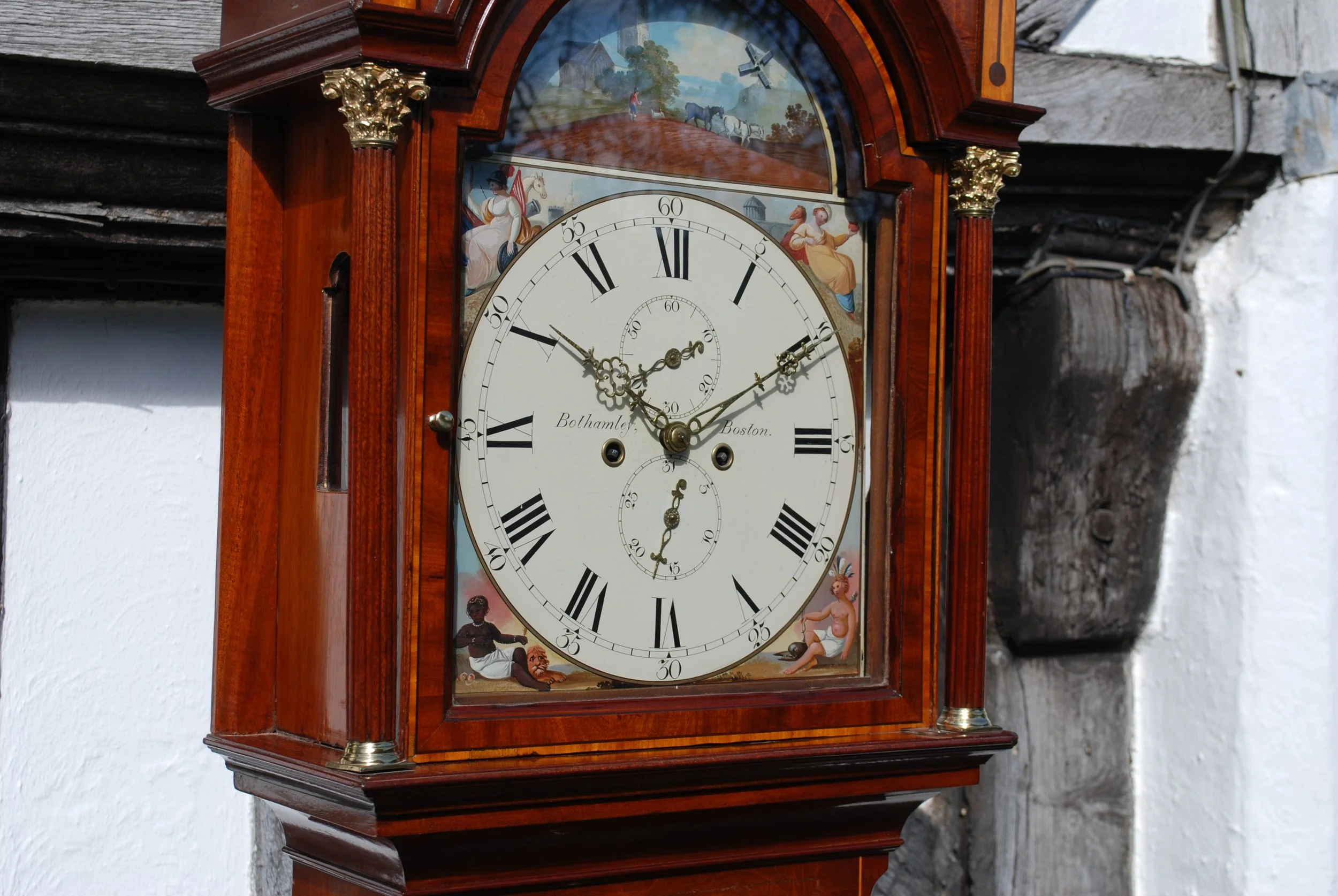
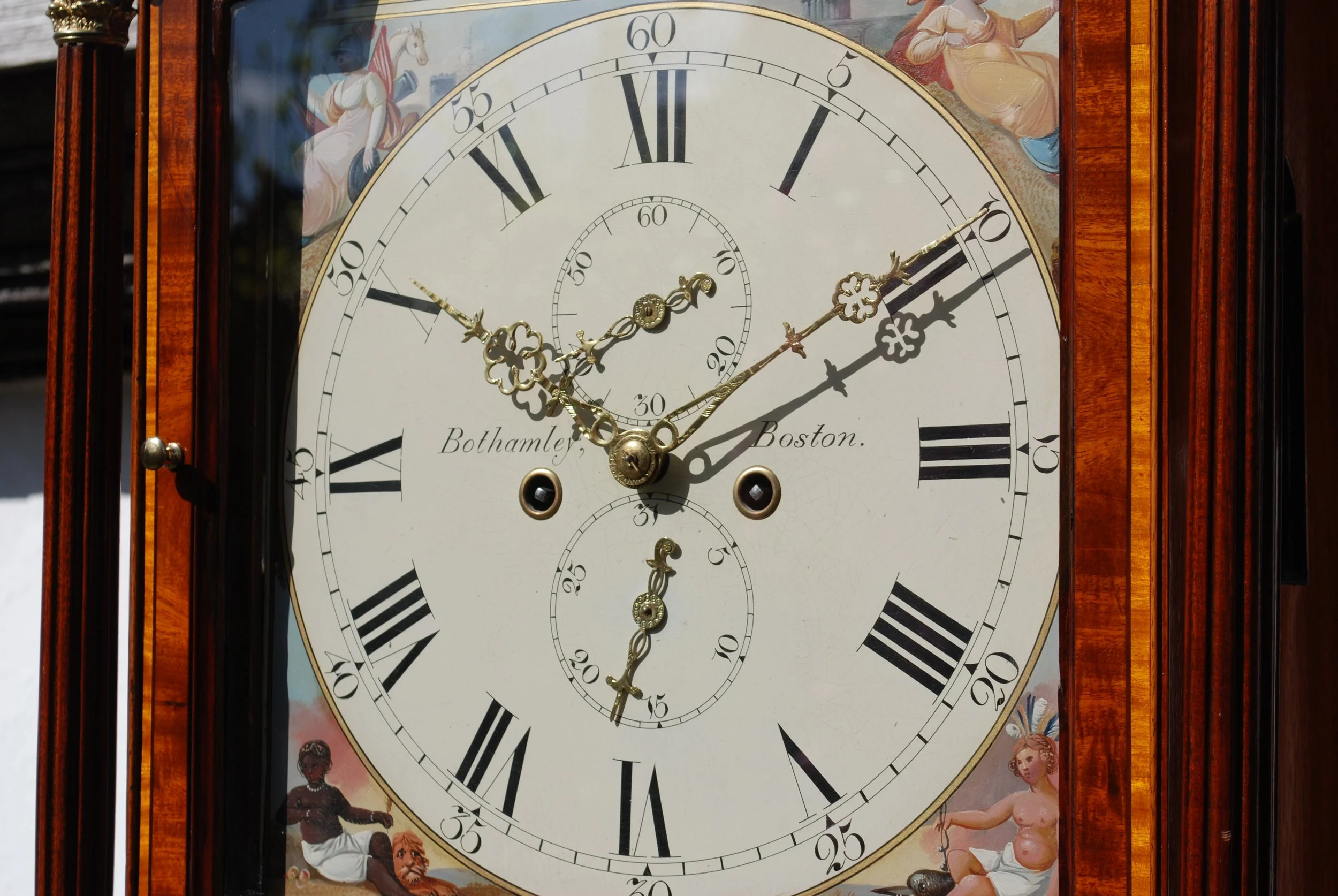
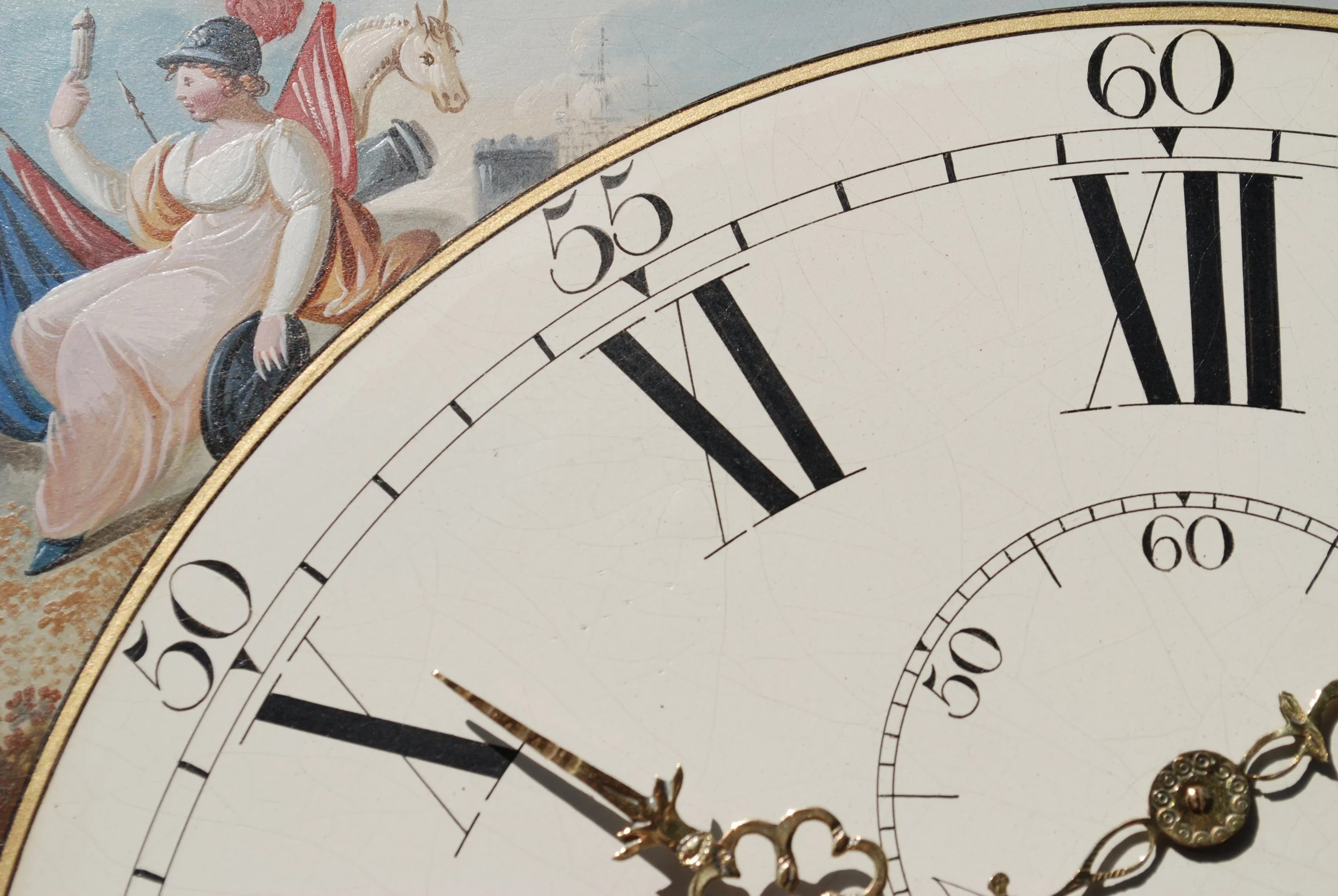
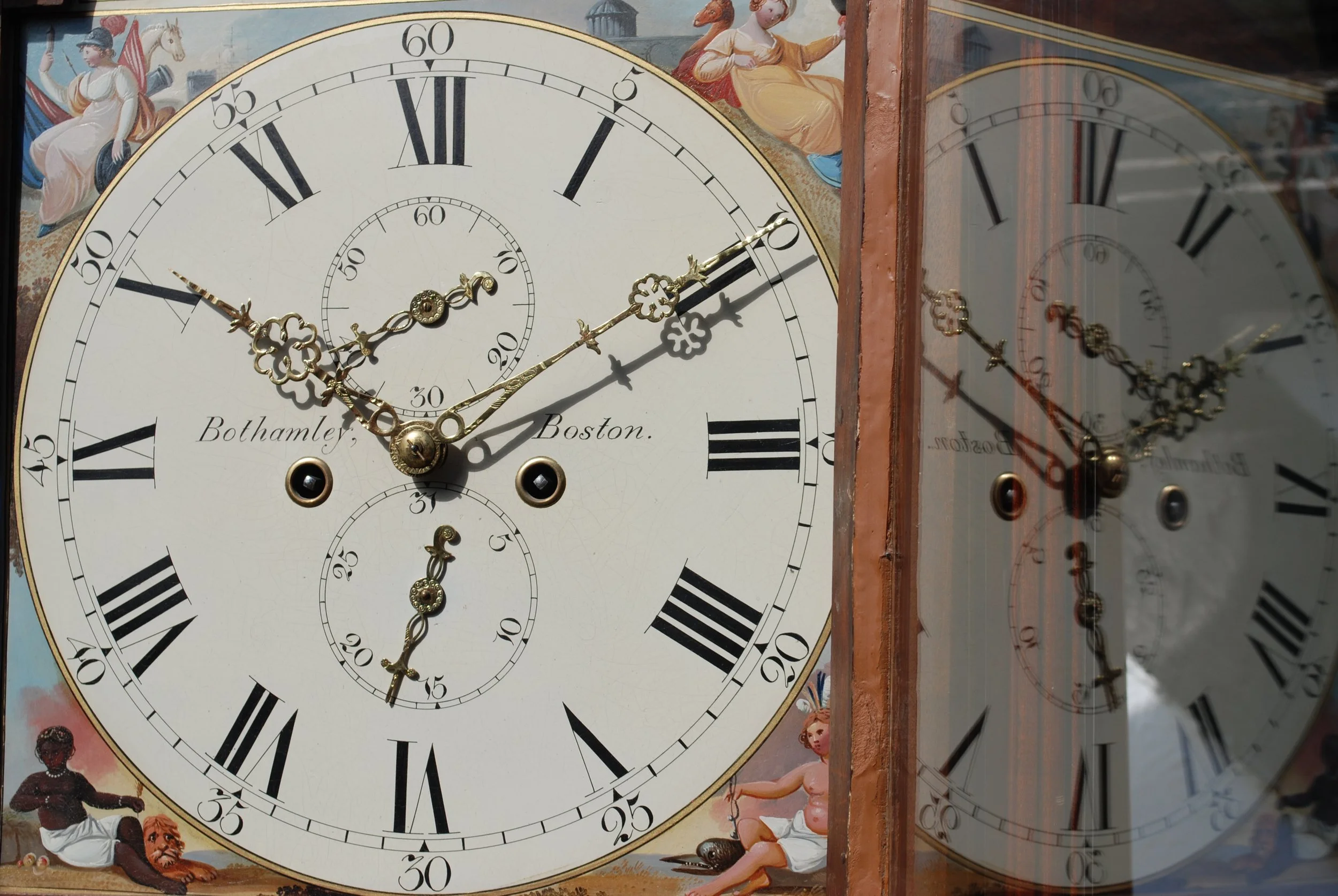
The white painted dial is framed within the hood and includes:
Roman numerals for the hours.
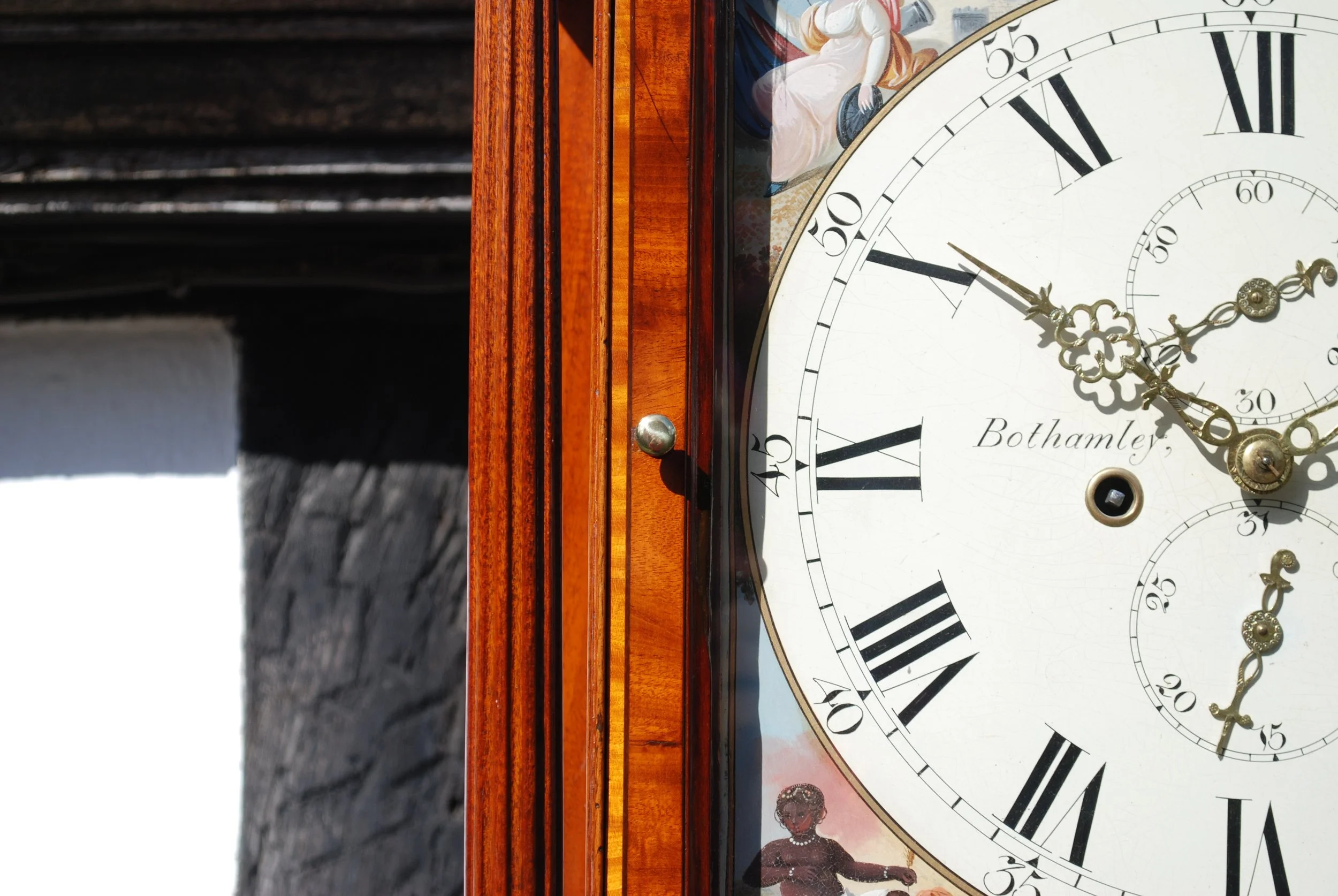
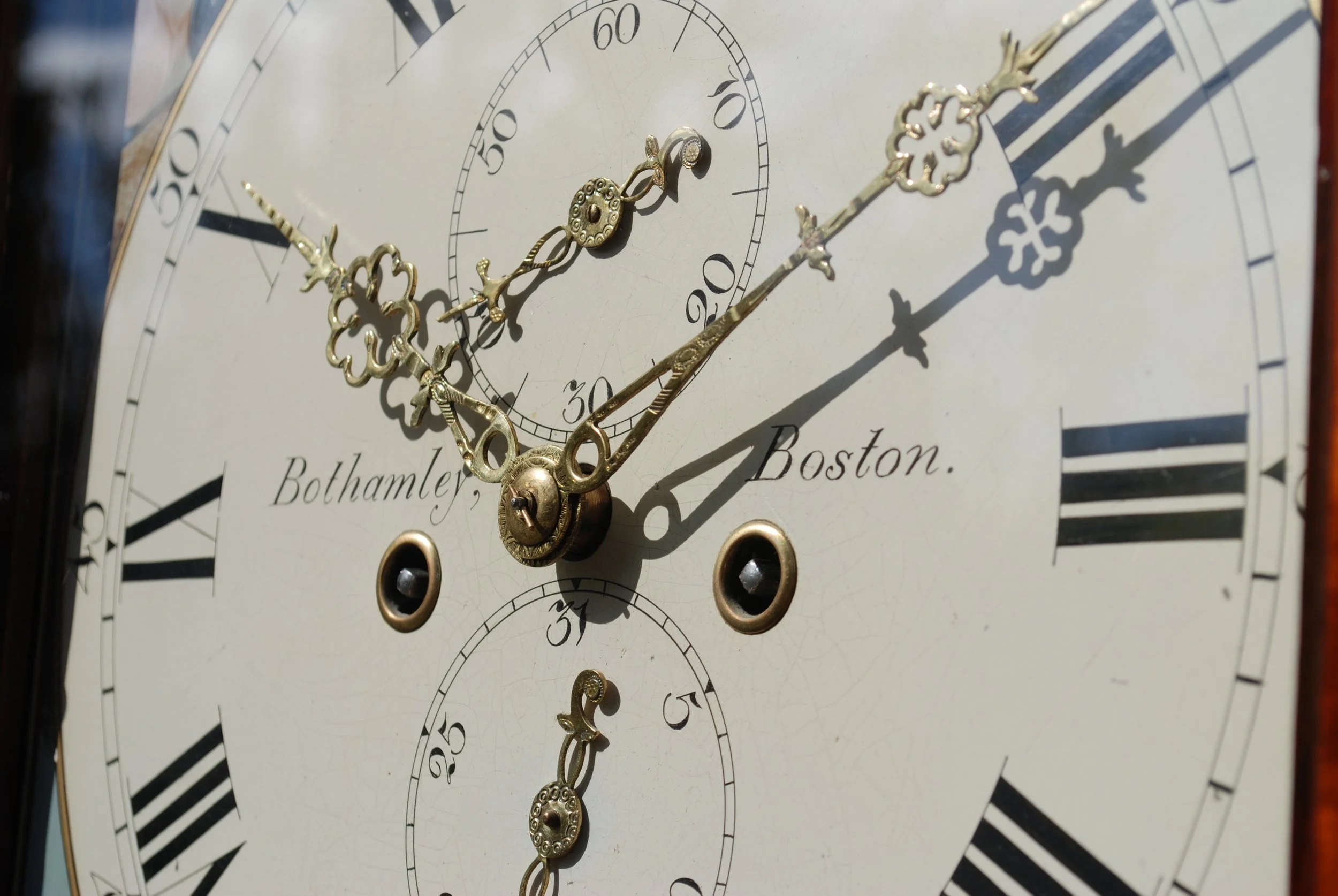
Ornate, pierced brass hands.
A subsidiary seconds dial below the centre.
A small calendar or date aperture (visible near the bottom of the main dial).
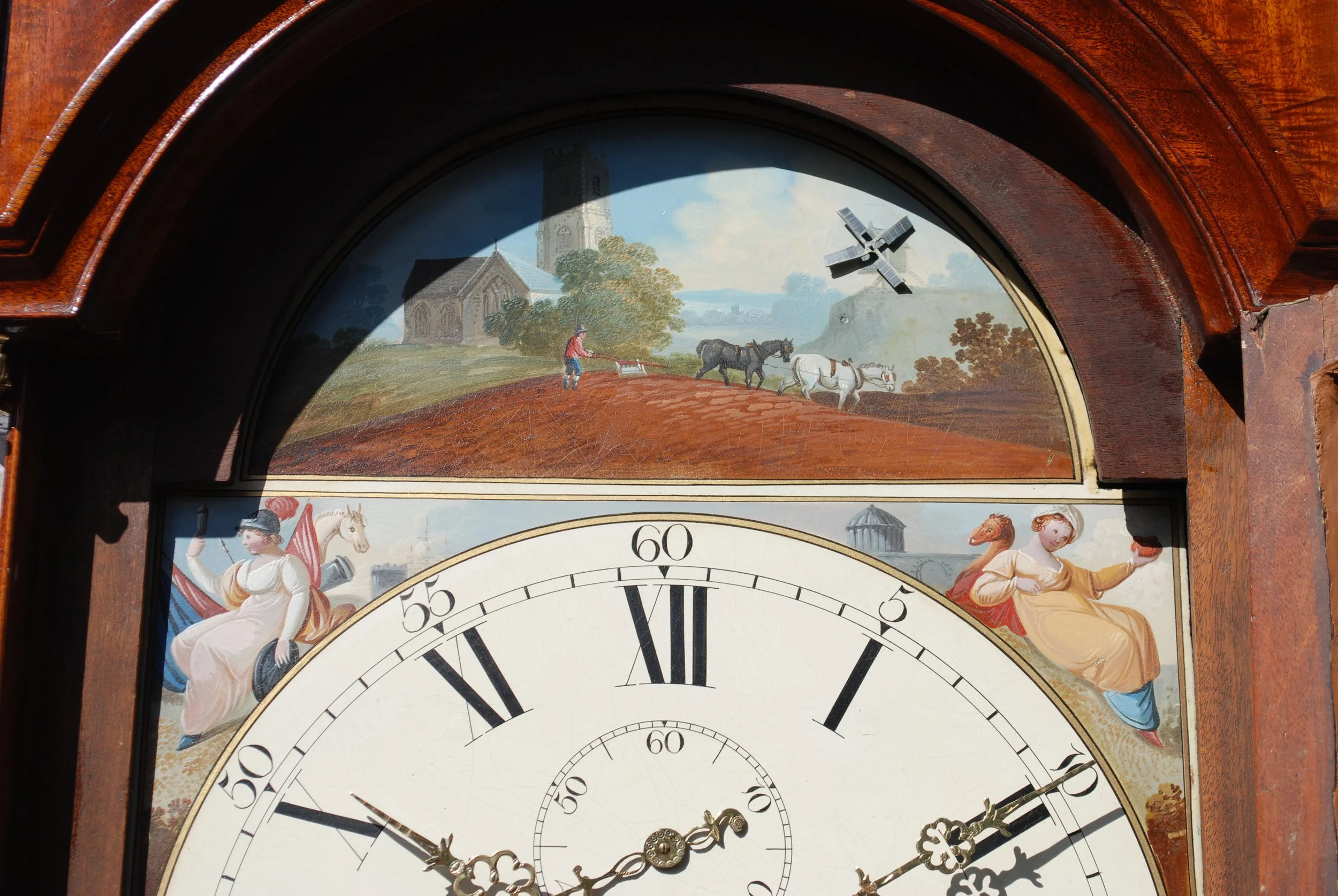
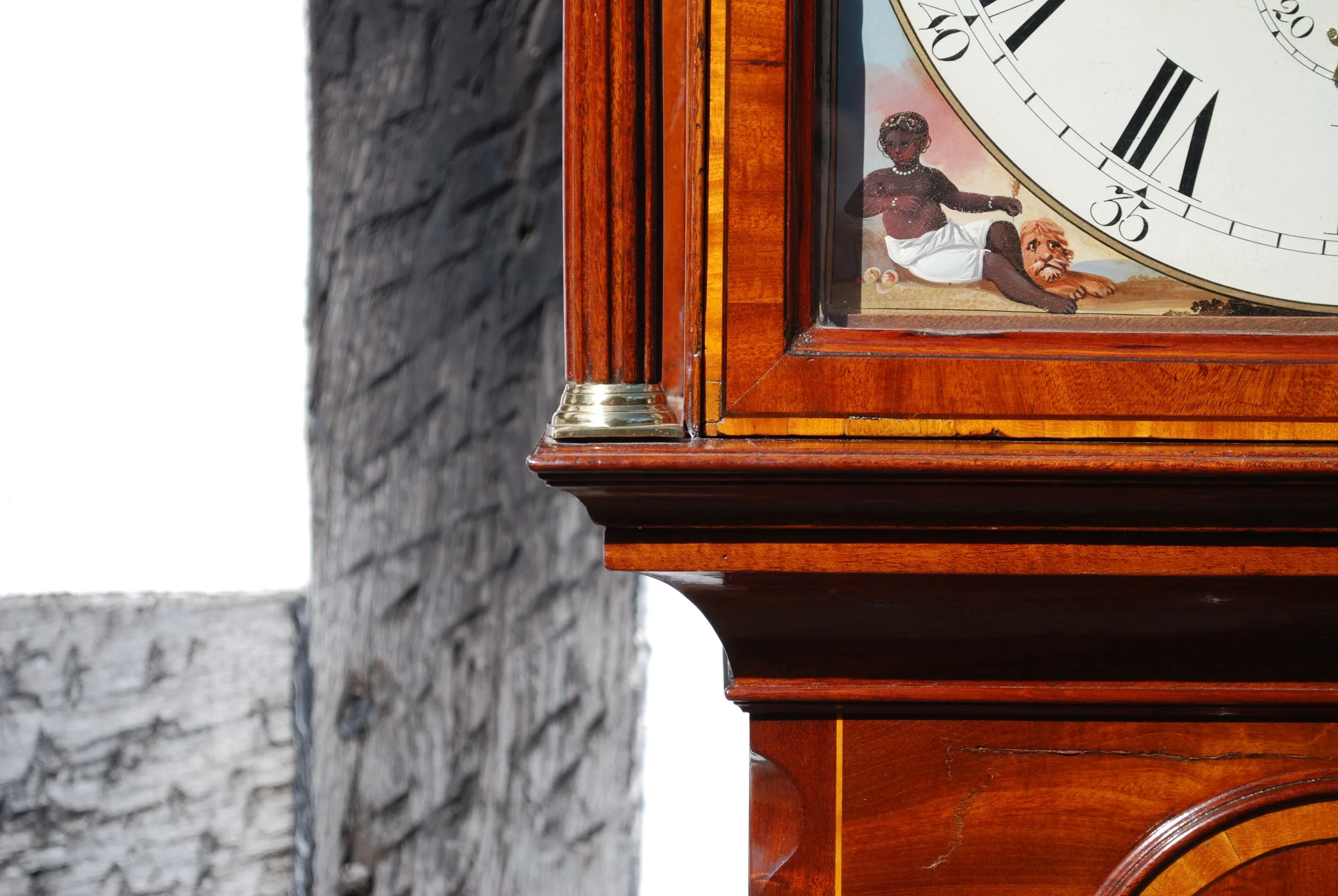
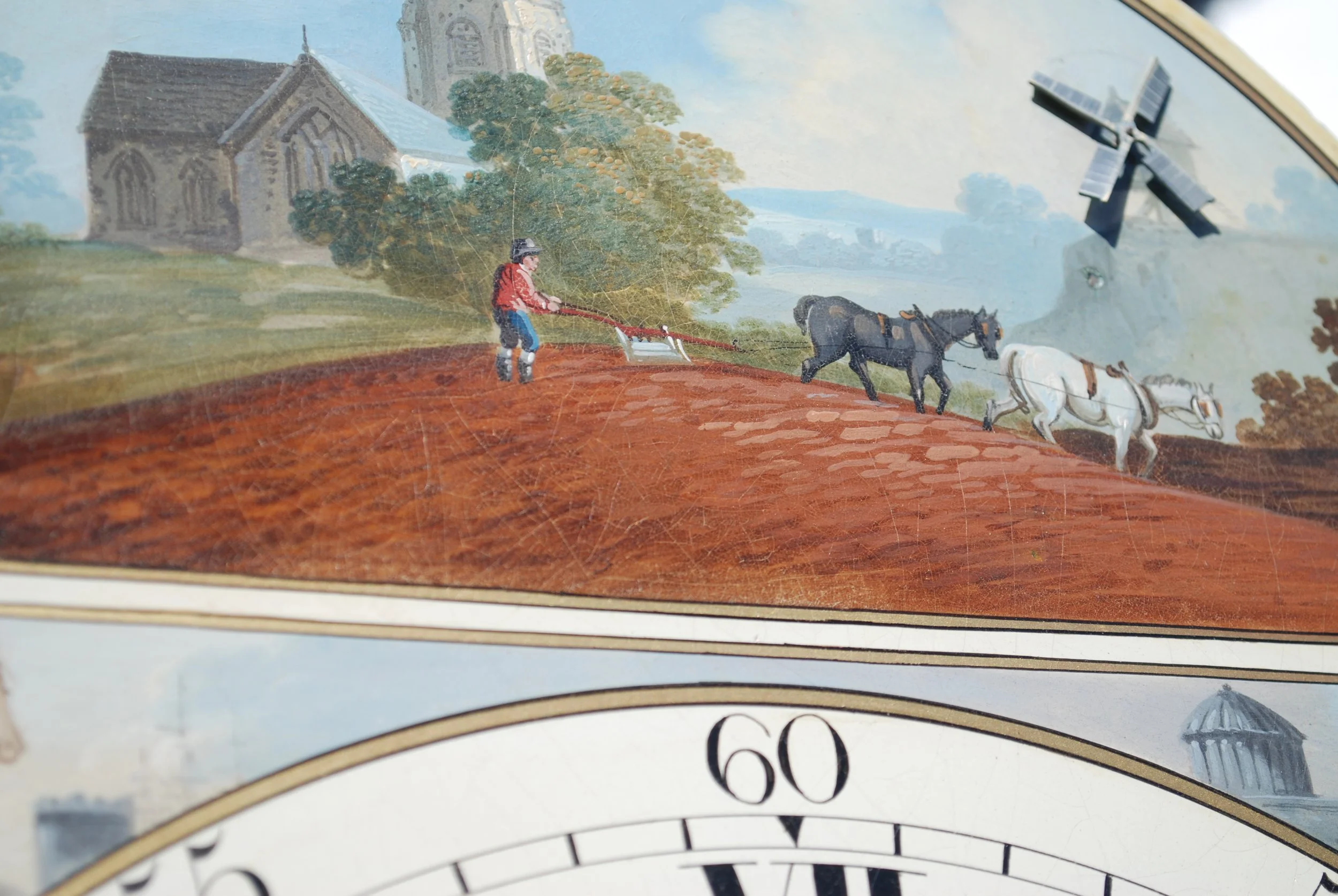
Decorative painted spandrels in the corners, featuring cherubic or allegorical figures with a pastoral or landscape scene in the arch above the dial.
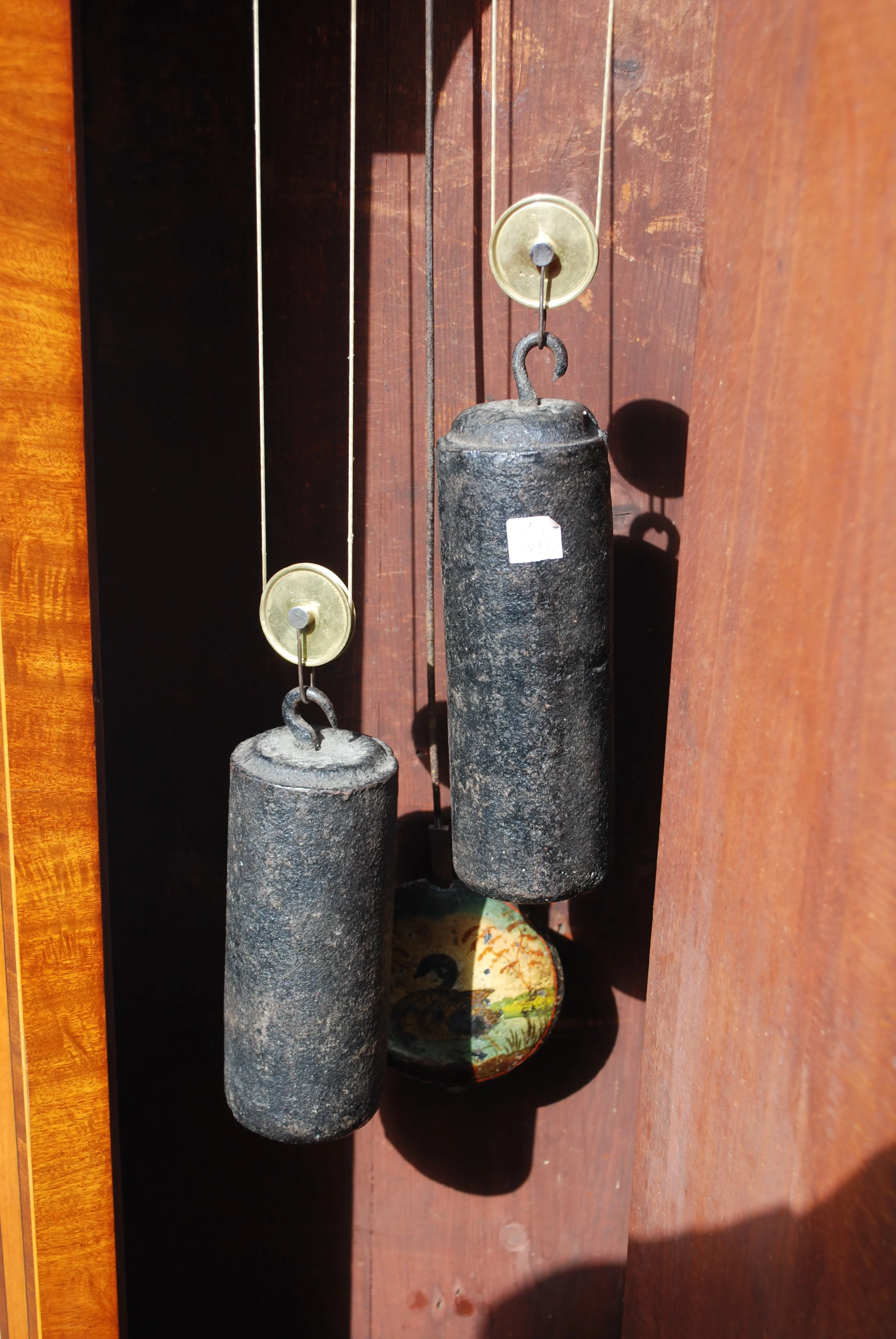
The dial is signed "Bothamley, Boston" (or similar variation), confirming the maker. As an eight-day movement, it runs for a full week on a single winding (using two weights for the time and strike trains) and would typically strike the hours on a bell.
The hood includes a glazed door or opening for access to the dial, and the overall proportions give it a graceful, well-balanced appearance.
Historical Context
The Bothamley family were prolific clockmakers in the Boston area of Lincolnshire for several generations (from at least the late 18th century into the Victorian period). They produced both longcase and other clocks, often in oak or mahogany, with painted dials that were popular in the 19th century. This example fits the mid-to-late Victorian era in style—refined yet substantial, with the rich mahogany and decorative inlays reflecting the period's taste for elegant domestic furniture.
Condition and Features:
The case appears in good order, with no obvious damage, and the movement is complete and original, having been professionally restored.
This would make a wonderful statement piece in a hallway, landing, or period interior, combining reliable timekeeping with fine craftsmanship from a well-regarded regional maker.
This is a handsome Victorian eight day clock made by the respected Lincolnshire clockmaking family Bothamley of Boston.
Case and Overall Design
The clock features a classic tall, elegant form with a rich, warm mahogany case that displays beautiful figured grain, particularly in the central door panel with its striking flame or feather-pattern veneer in a large, pointed oval (leaf-shaped) inlay.
The case is divided into three main sections:
A substantial plinth base with simple panelled detailing.
A long trunk with a shaped, arched door.
An ornate hood topped by a broken-arch pediment with a central decorative finial or carved motif (possibly a fleur-de-lis or similar) and small side finials.
The mahogany has a deep, polished reddish-brown tone that catches the light beautifully, highlighting the skilled cabinetry and inlay work typical of quality 19th-century provincial English clock cases.
Dial and Movement
The white painted dial is framed within the hood and includes:
Roman numerals for the hours.
Ornate, pierced brass hands.
A subsidiary seconds dial below the centre.
A small calendar or date aperture (visible near the bottom of the main dial).
Decorative painted spandrels in the corners, featuring cherubic or allegorical figures with a pastoral or landscape scene in the arch above the dial.
The dial is signed "Bothamley, Boston" (or similar variation), confirming the maker. As an eight-day movement, it runs for a full week on a single winding (using two weights for the time and strike trains) and would typically strike the hours on a bell.
The hood includes a glazed door or opening for access to the dial, and the overall proportions give it a graceful, well-balanced appearance.
Historical Context
The Bothamley family were prolific clockmakers in the Boston area of Lincolnshire for several generations (from at least the late 18th century into the Victorian period). They produced both longcase and other clocks, often in oak or mahogany, with painted dials that were popular in the 19th century. This example fits the mid-to-late Victorian era in style—refined yet substantial, with the rich mahogany and decorative inlays reflecting the period's taste for elegant domestic furniture.
Condition and Features:
The case appears in good order, with no obvious damage, and the movement is complete and original, having been professionally restored.
This would make a wonderful statement piece in a hallway, landing, or period interior, combining reliable timekeeping with fine craftsmanship from a well-regarded regional maker.