JOHN EWER of LONDON c.1700
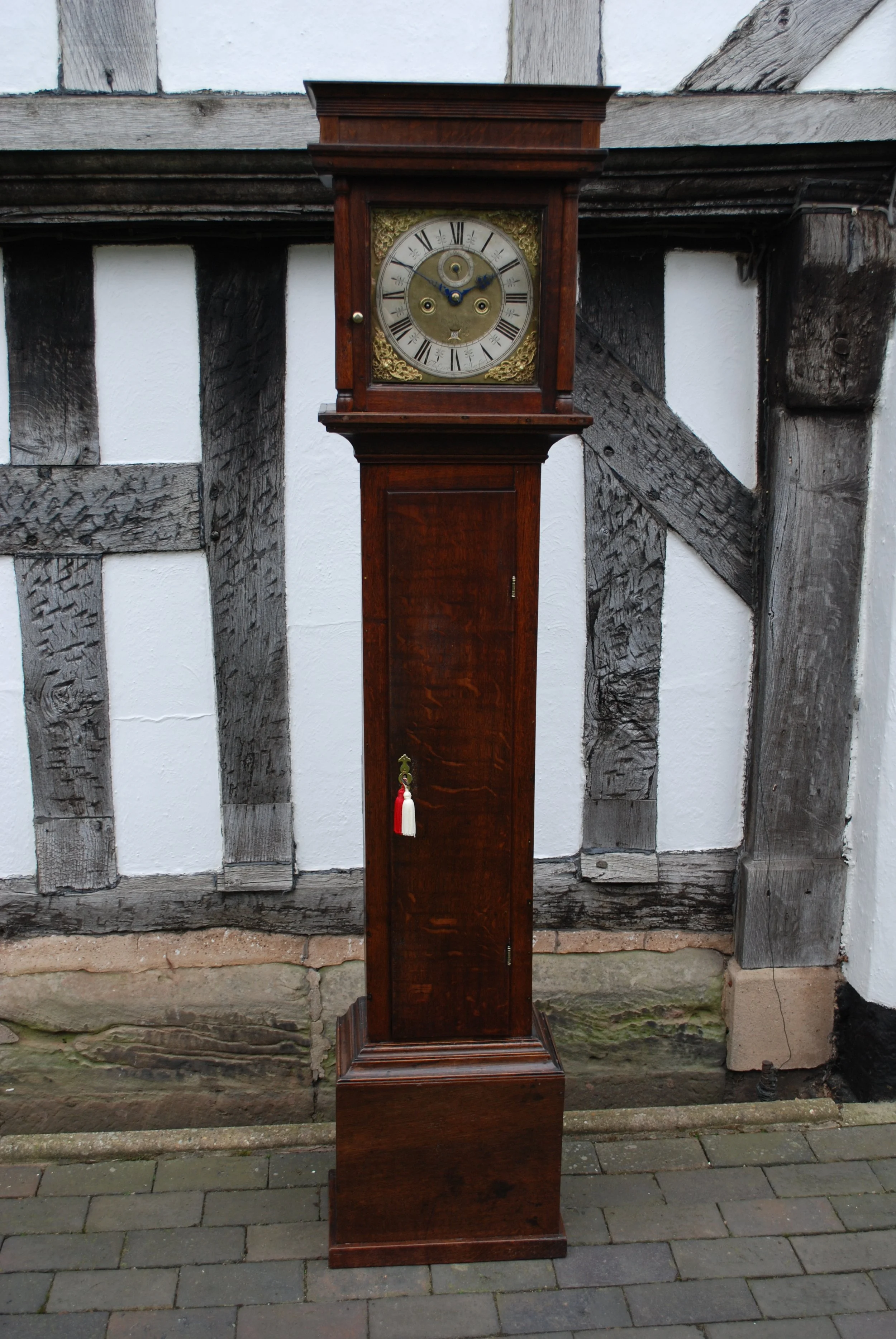
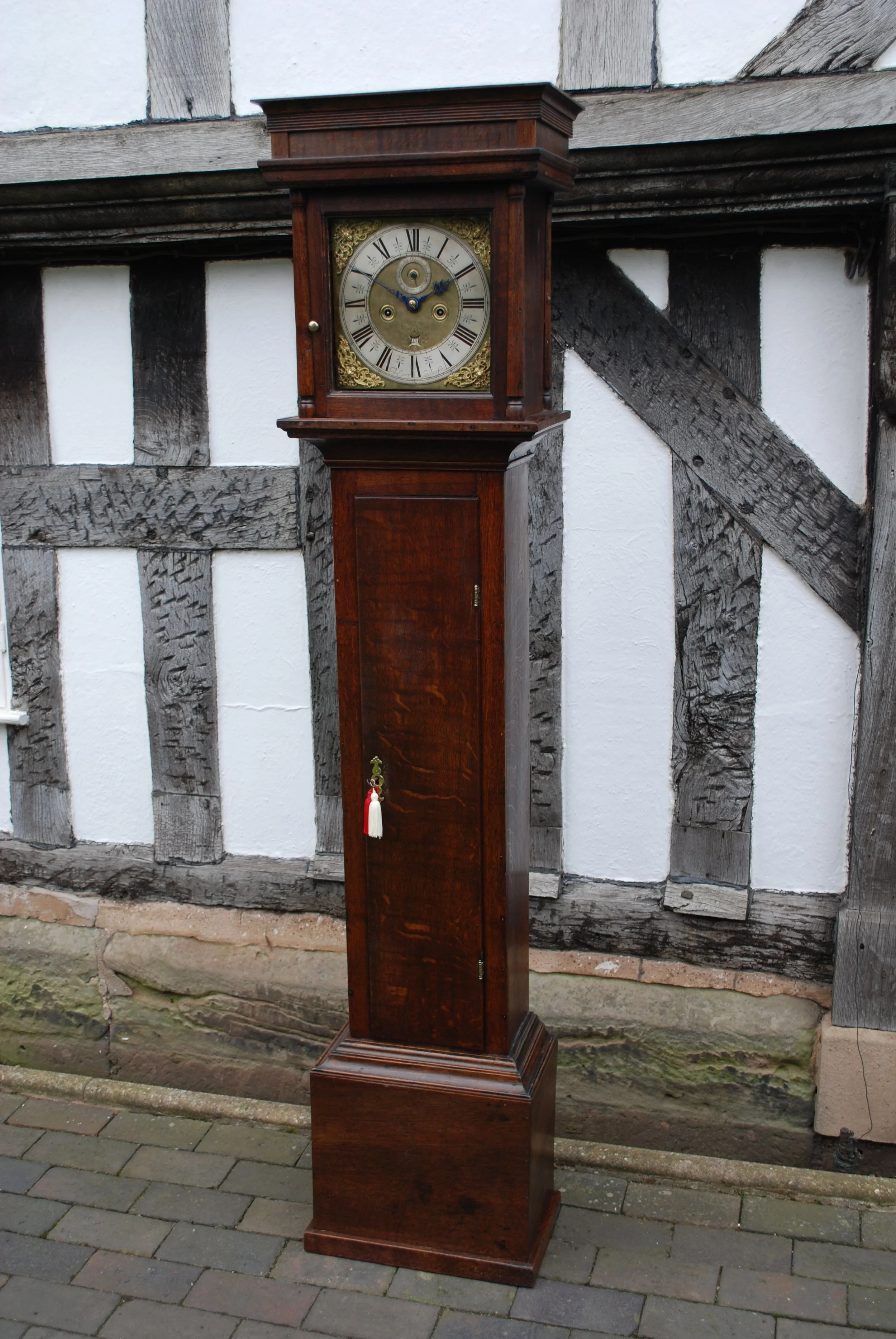
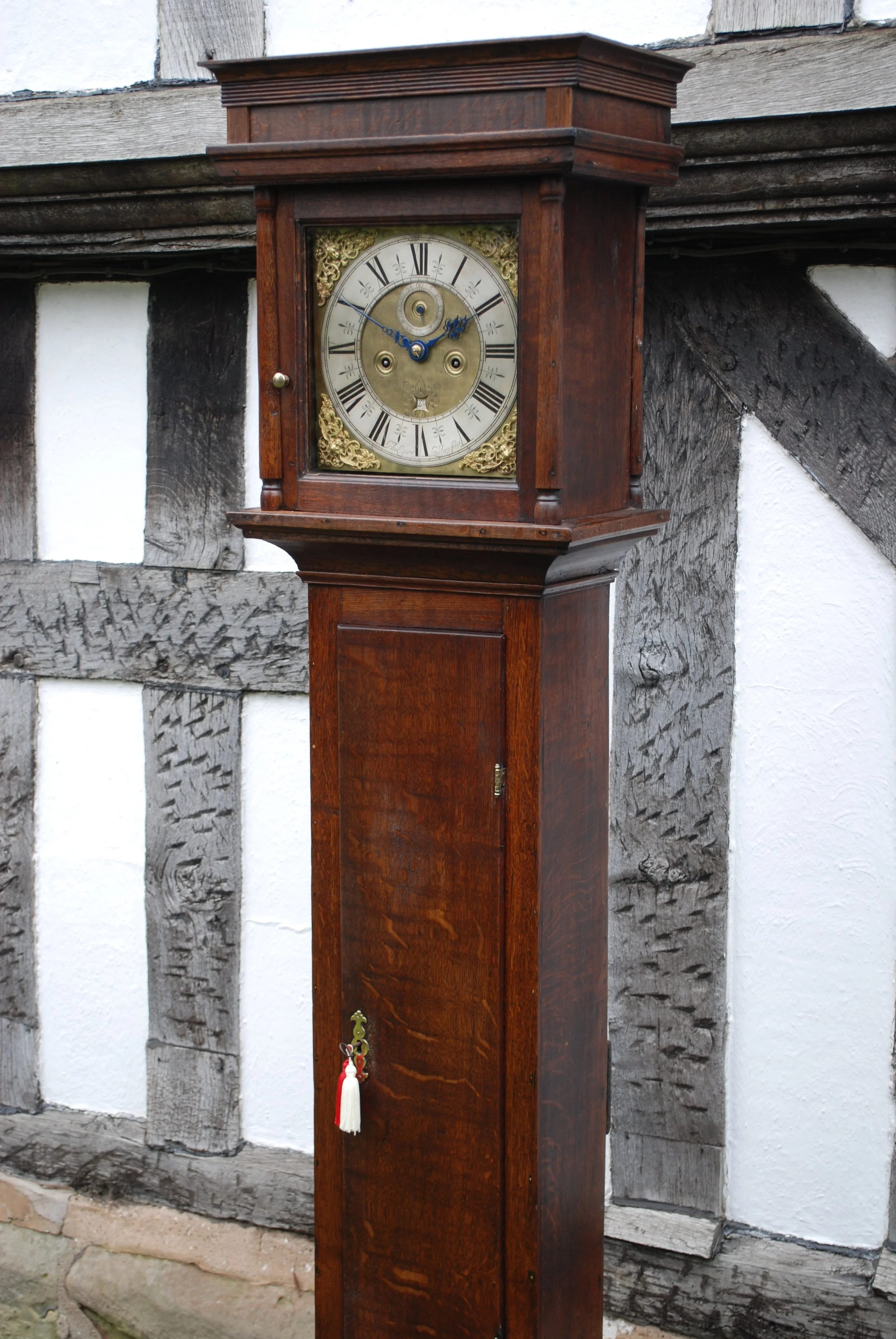
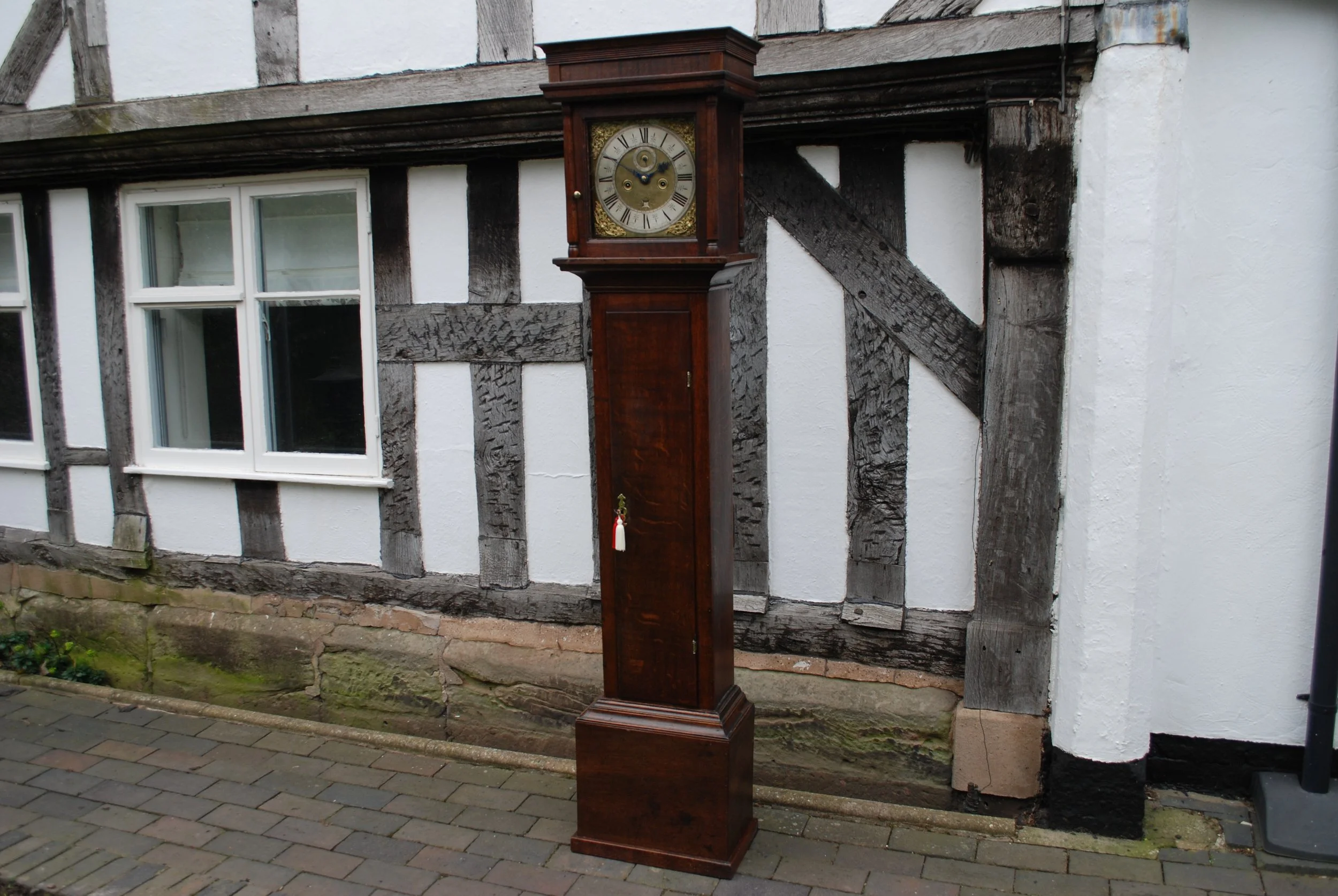
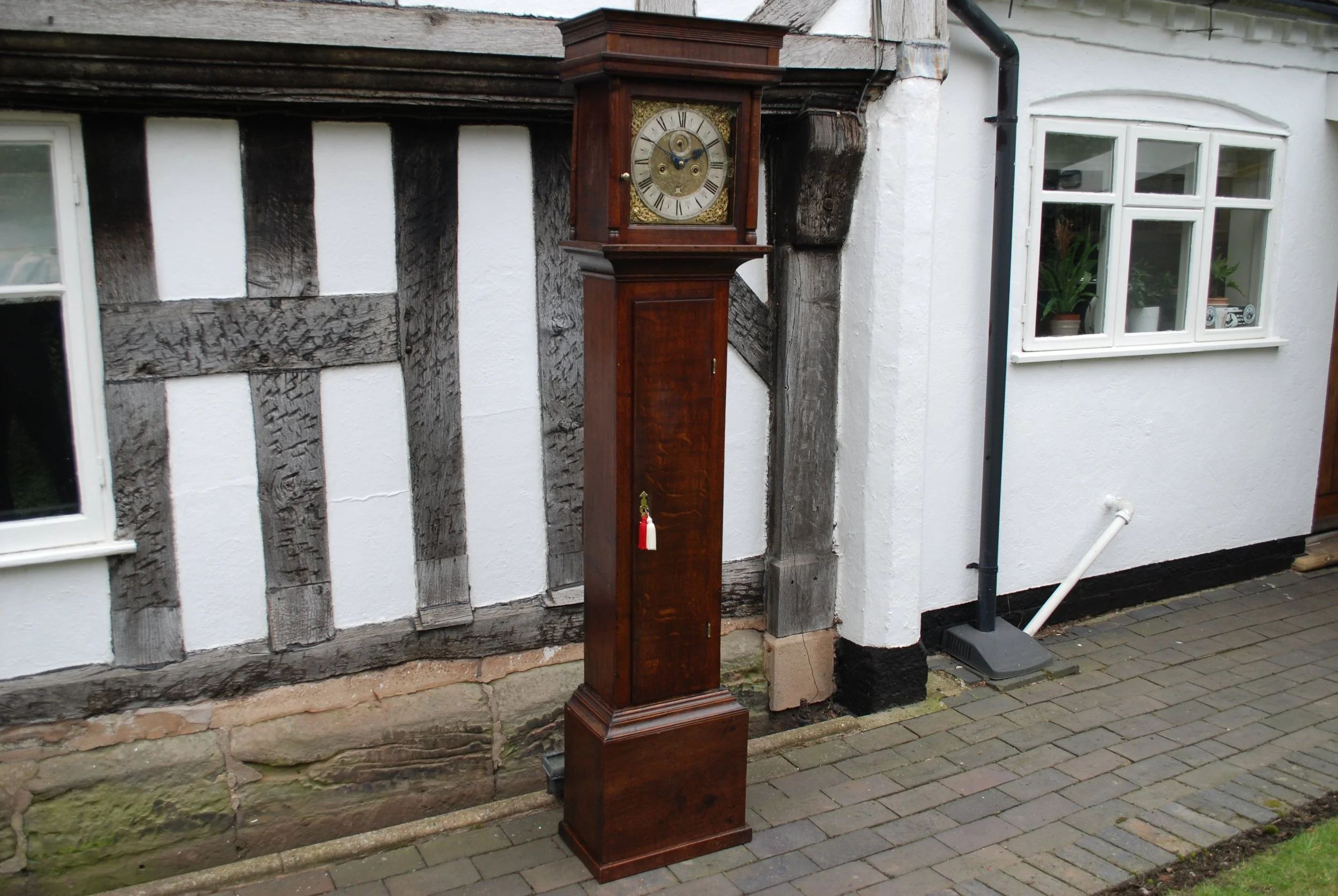
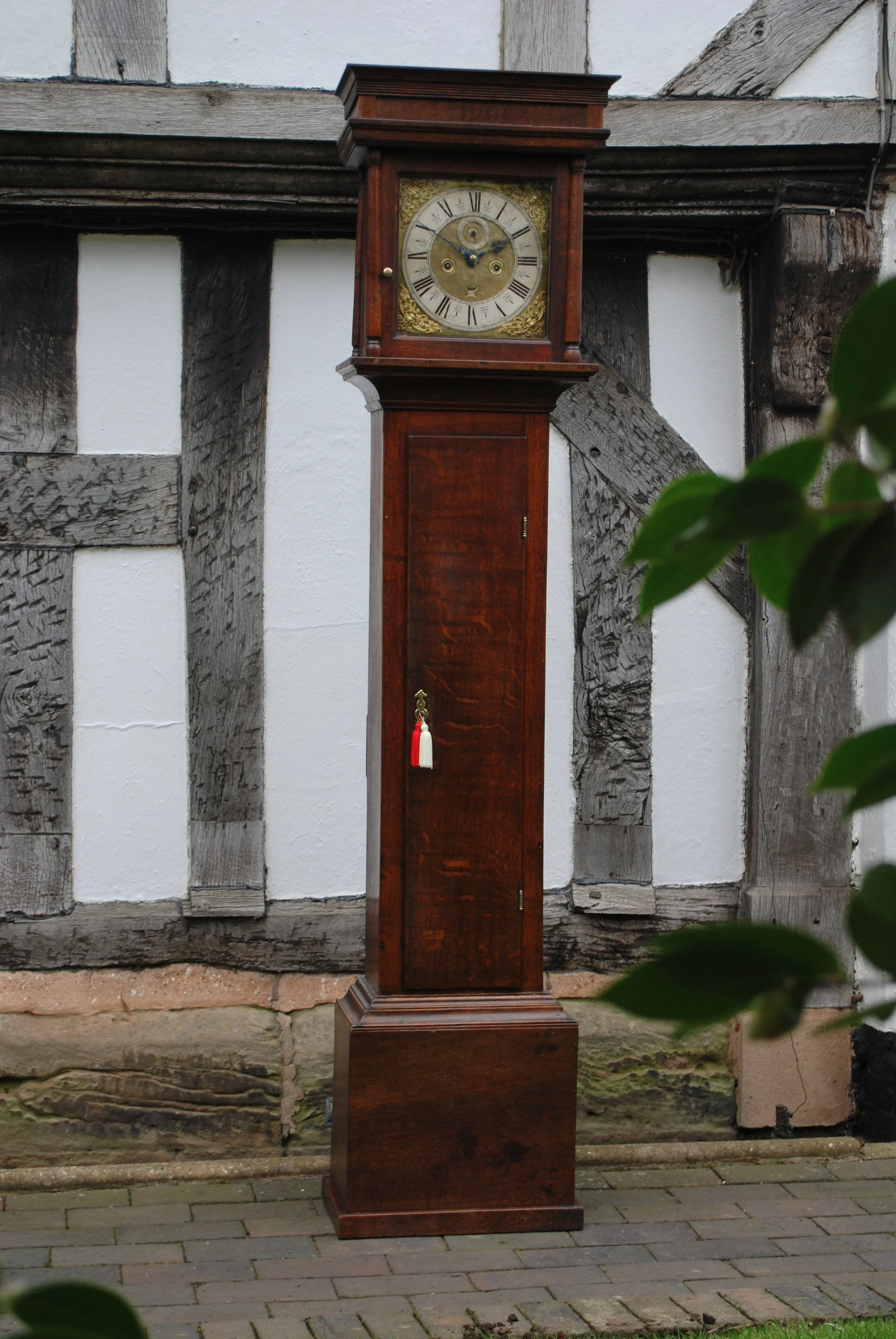
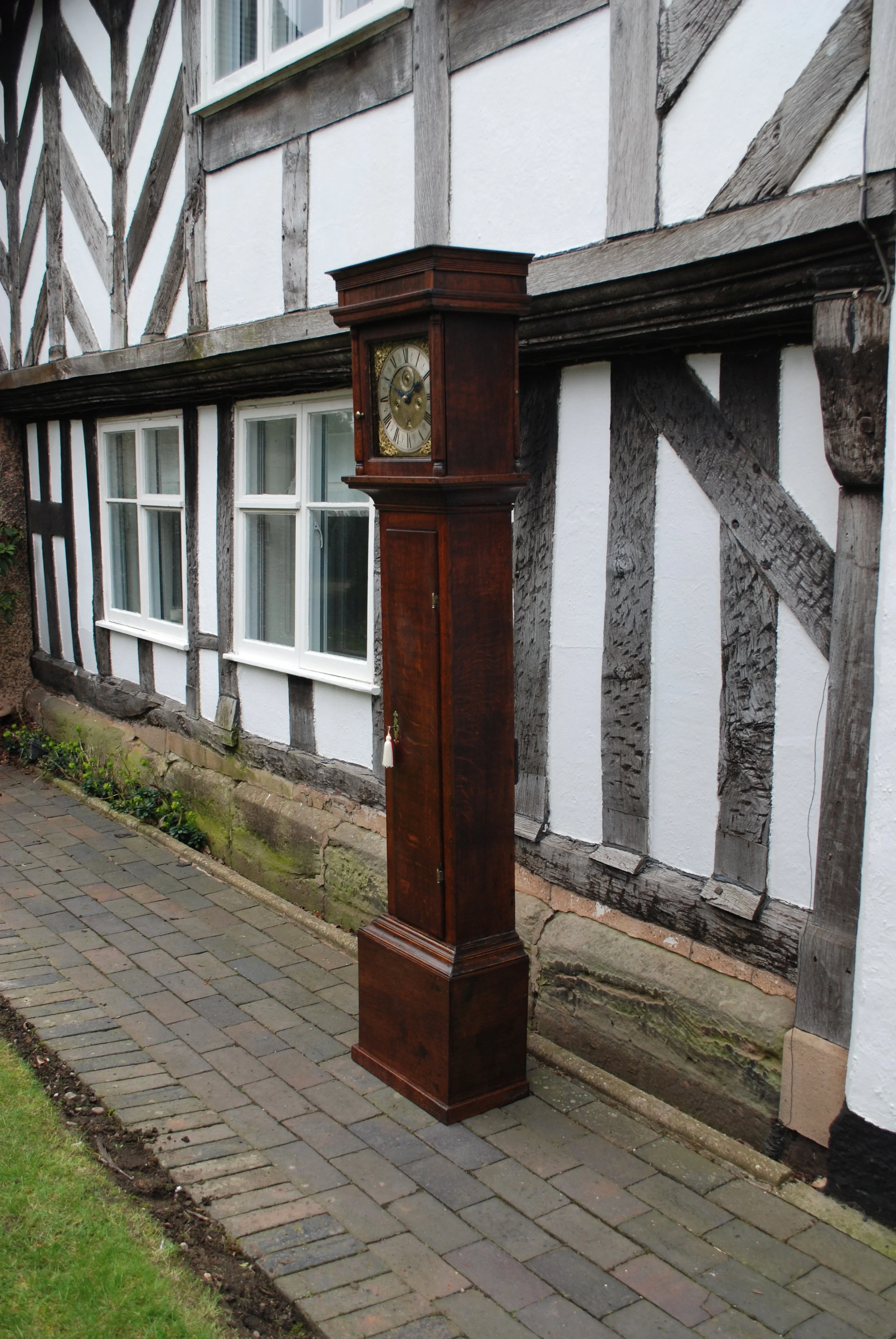
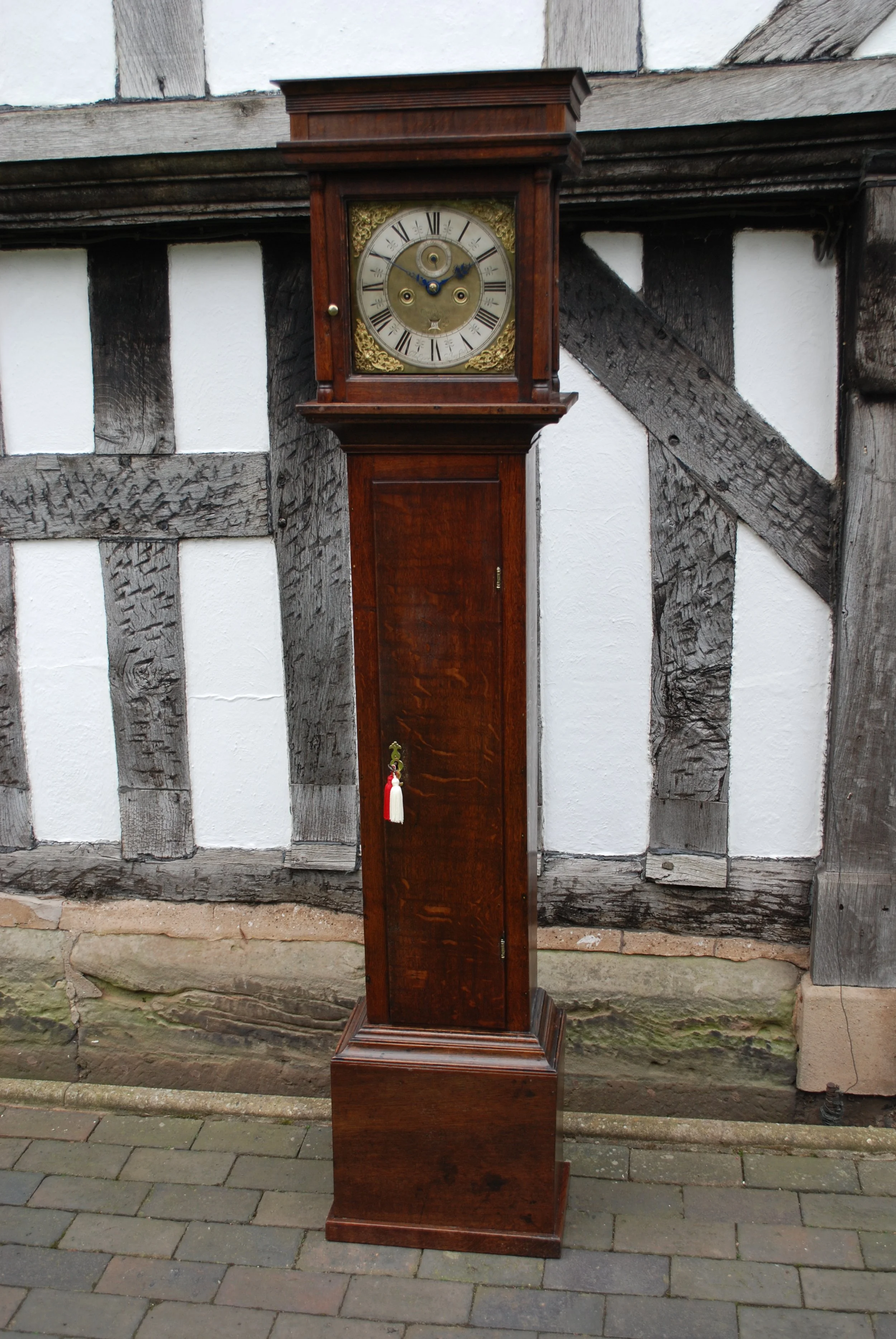
This is a fine fully restored example of a late 17th century oak clock by John Ewer who worked with Sir Oswald Temple. Ewer completed his apprenticeship in 1687, the “golden age” of English horology. His clocks have sold for several thousand pounds at major auction houses because his pieces are considered important examples of that era’s craftsmanship.
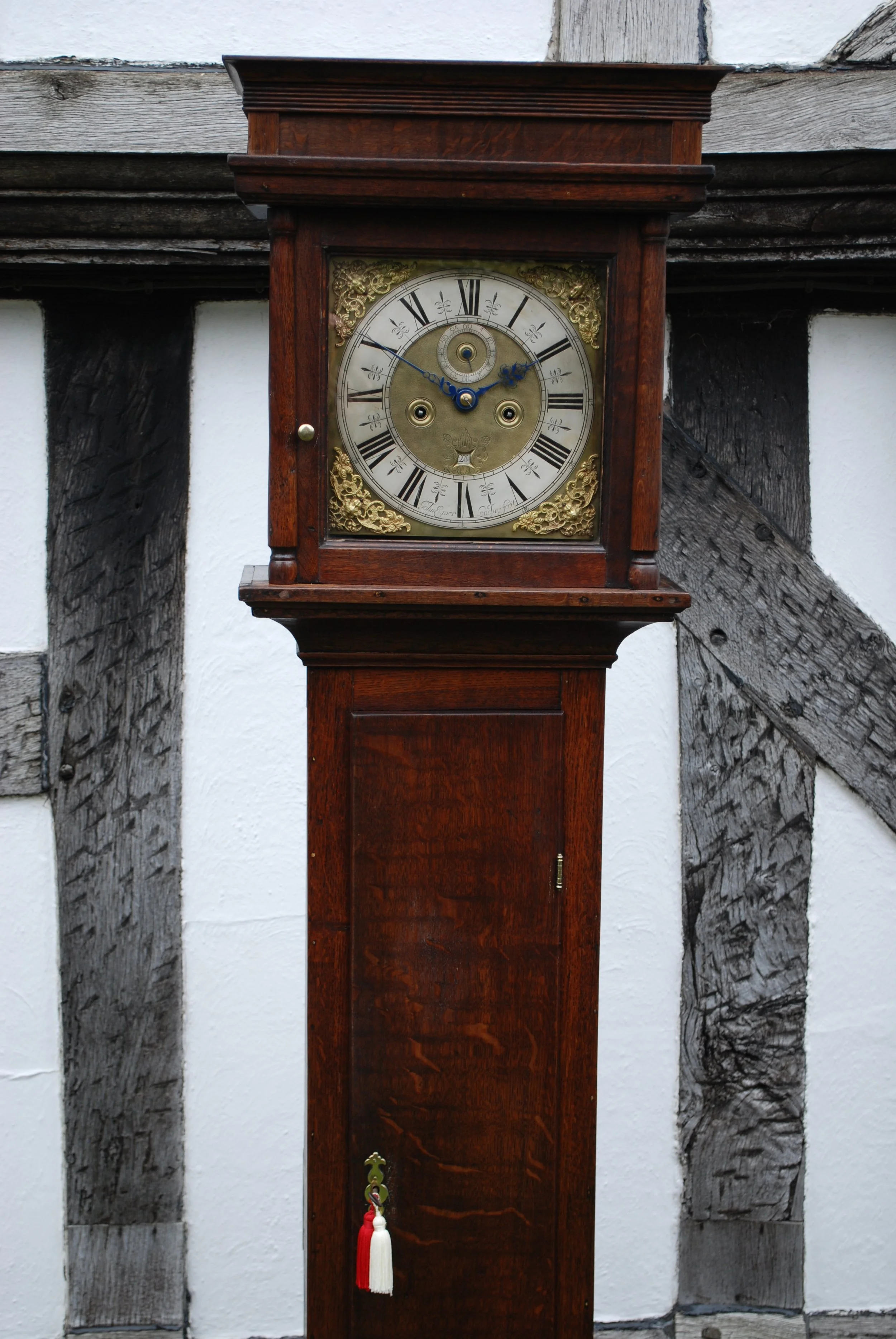
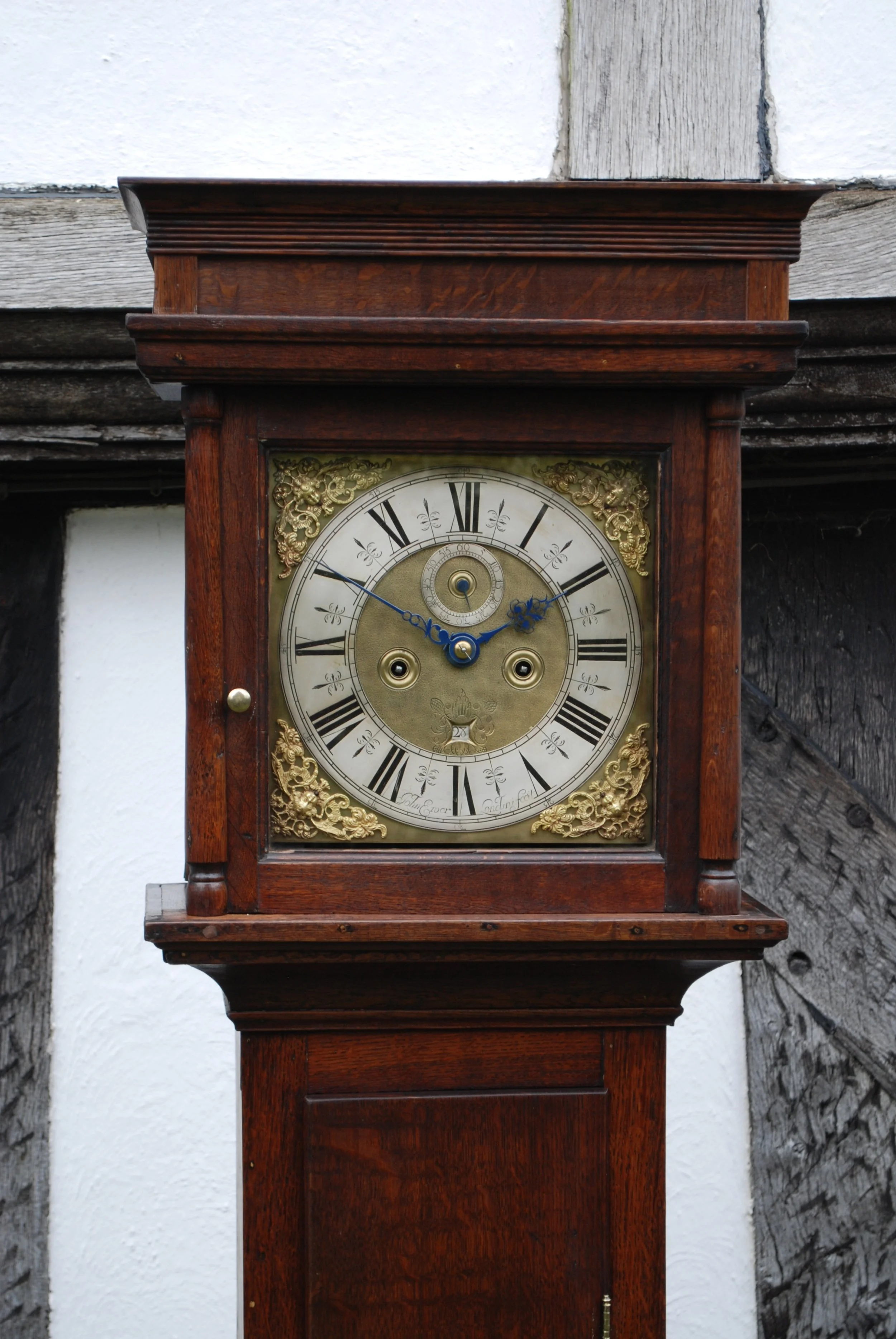
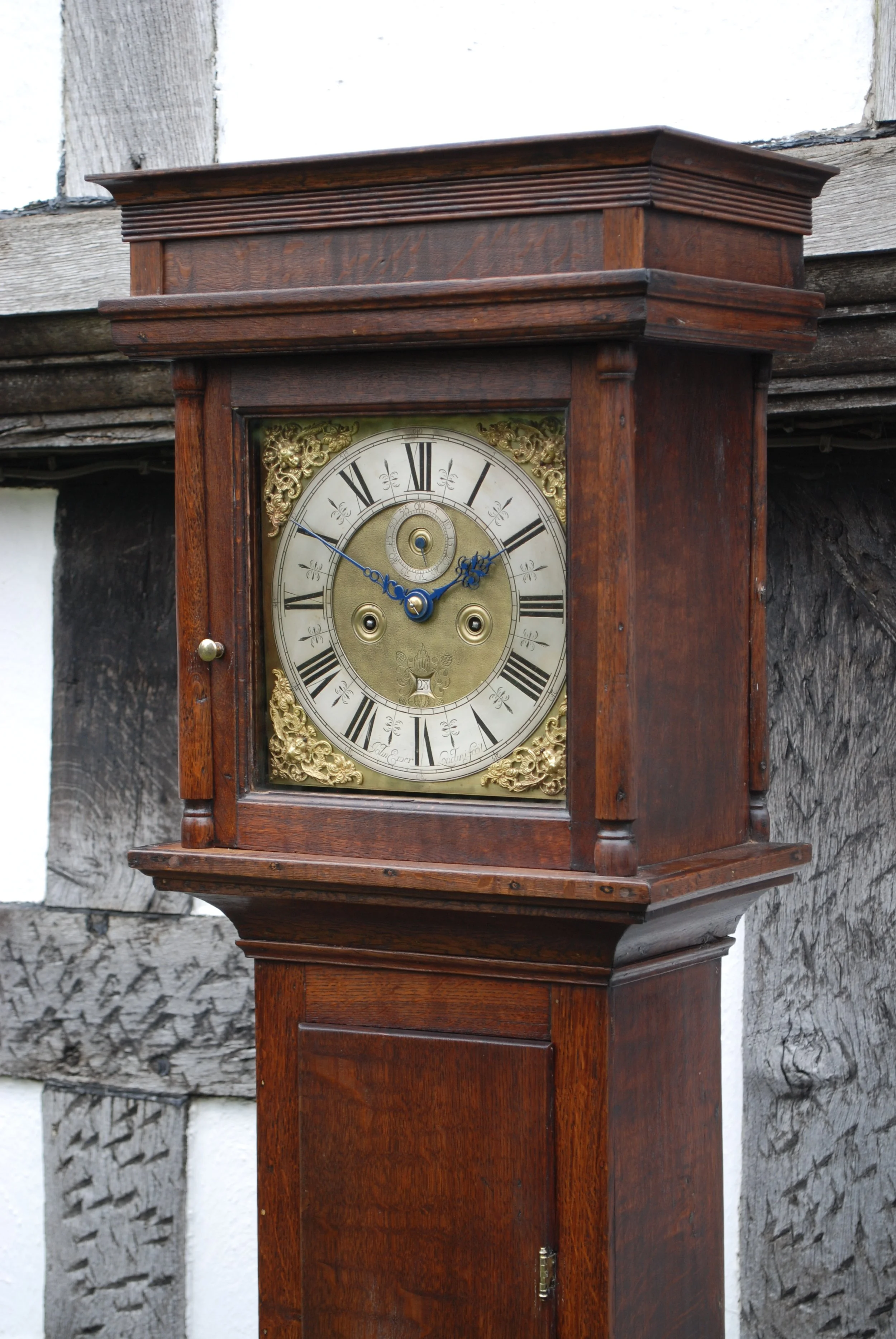
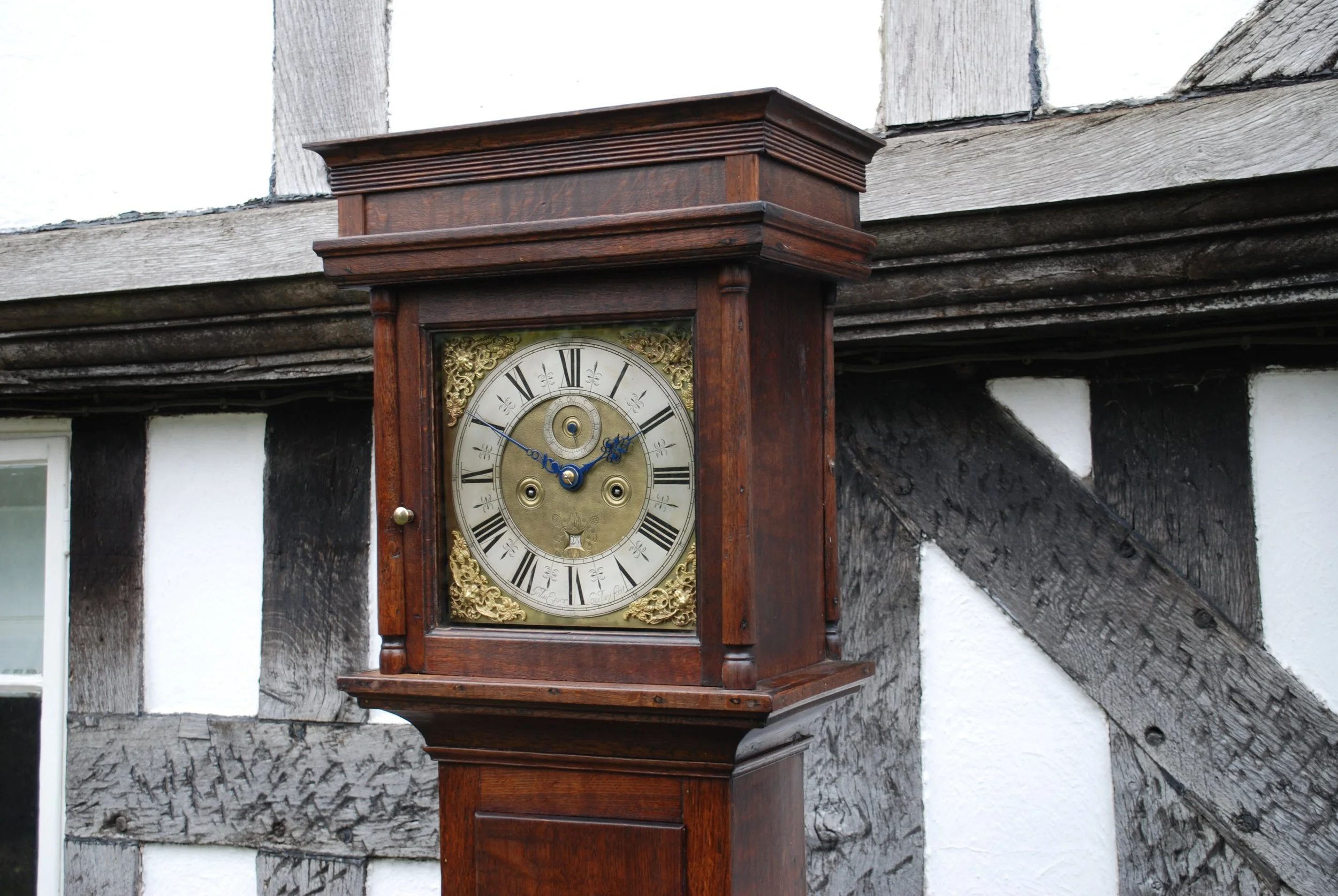
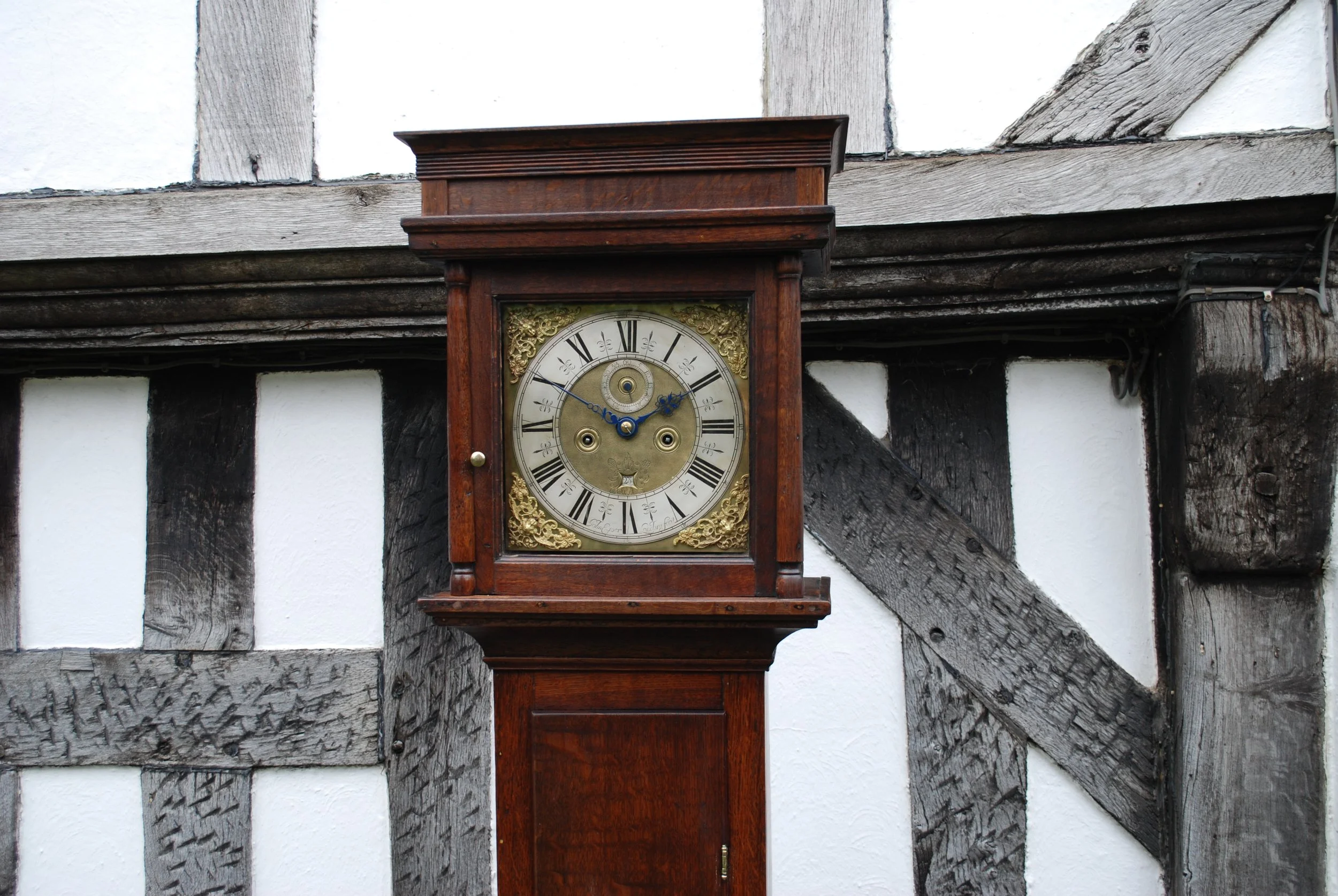
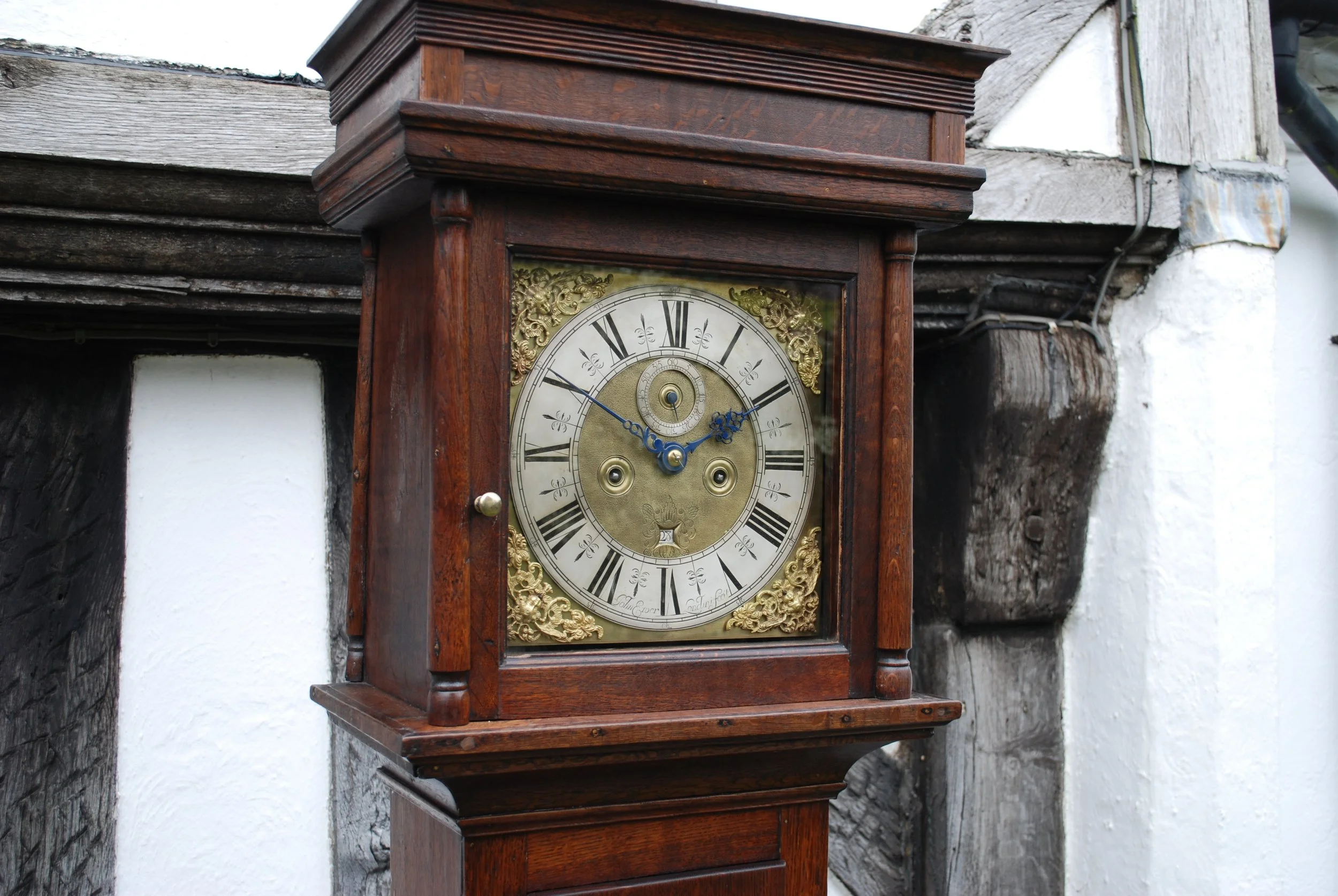
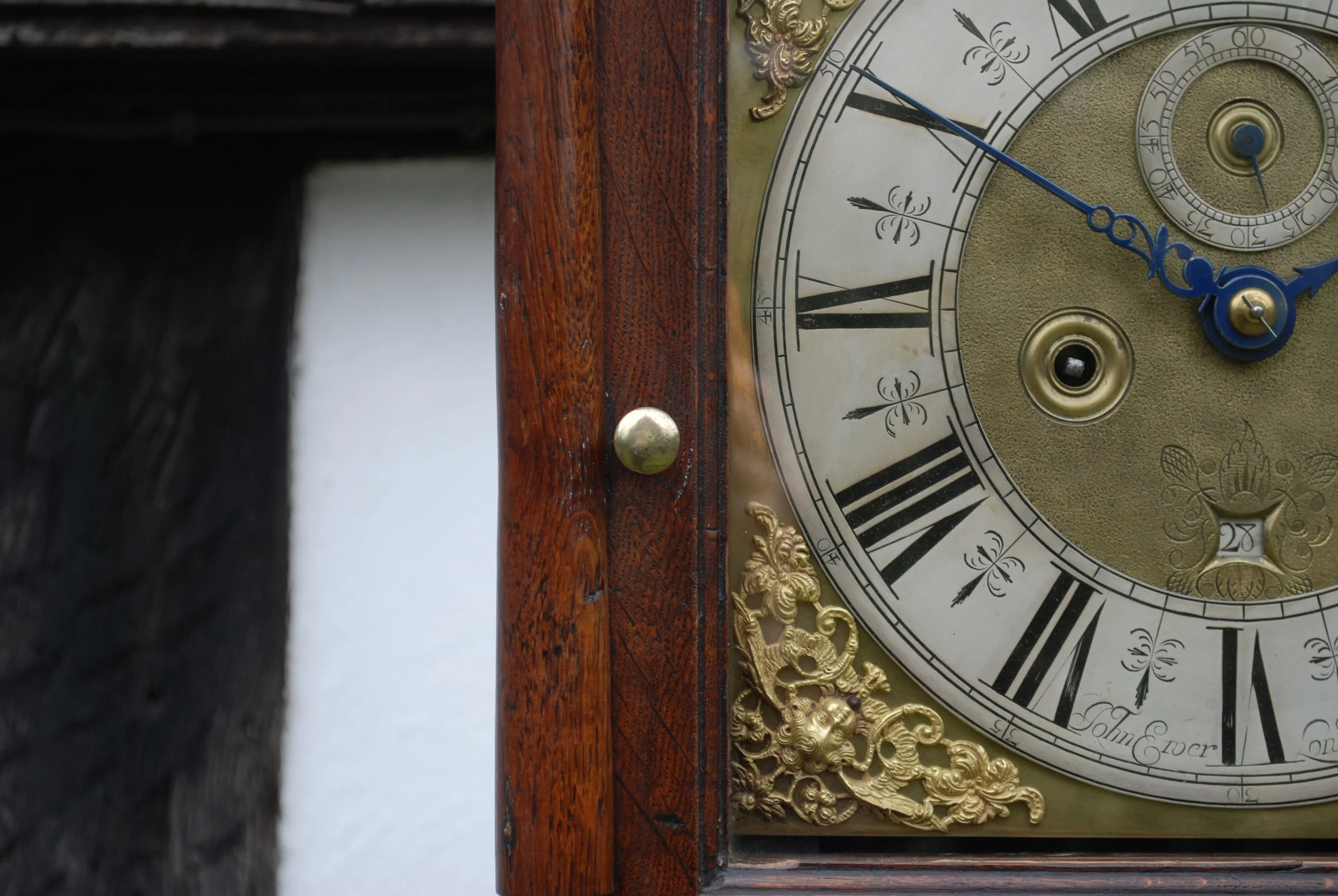
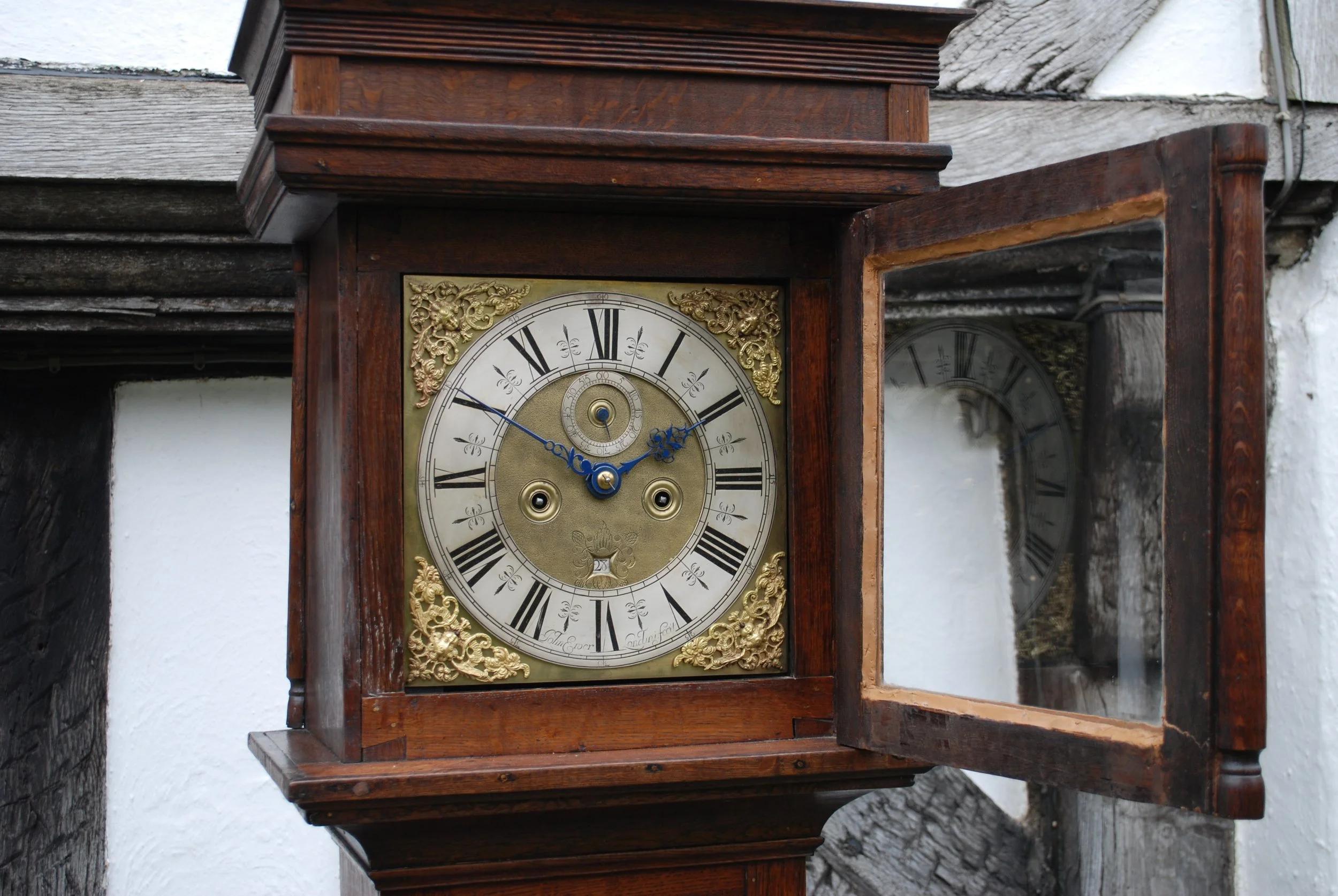
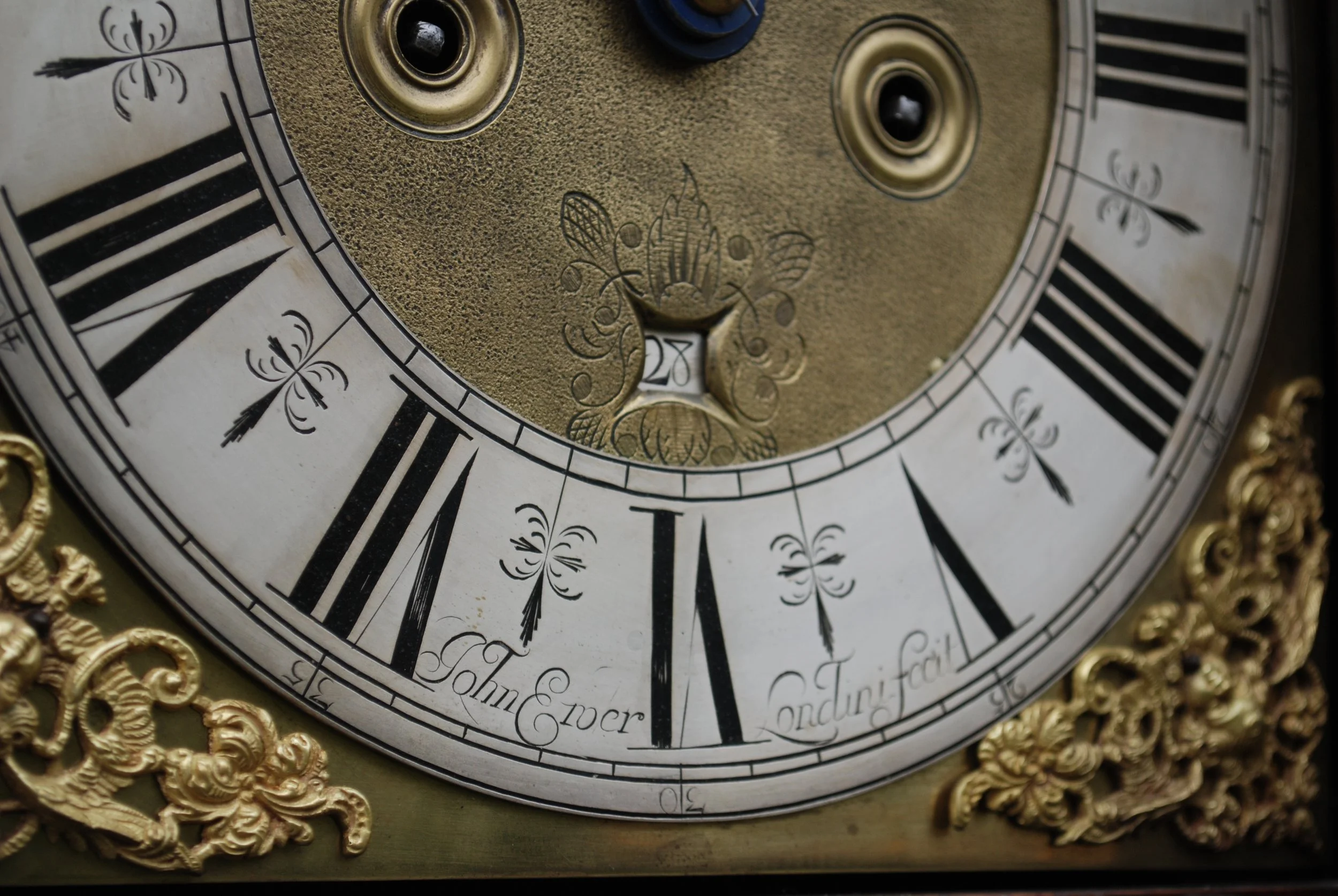
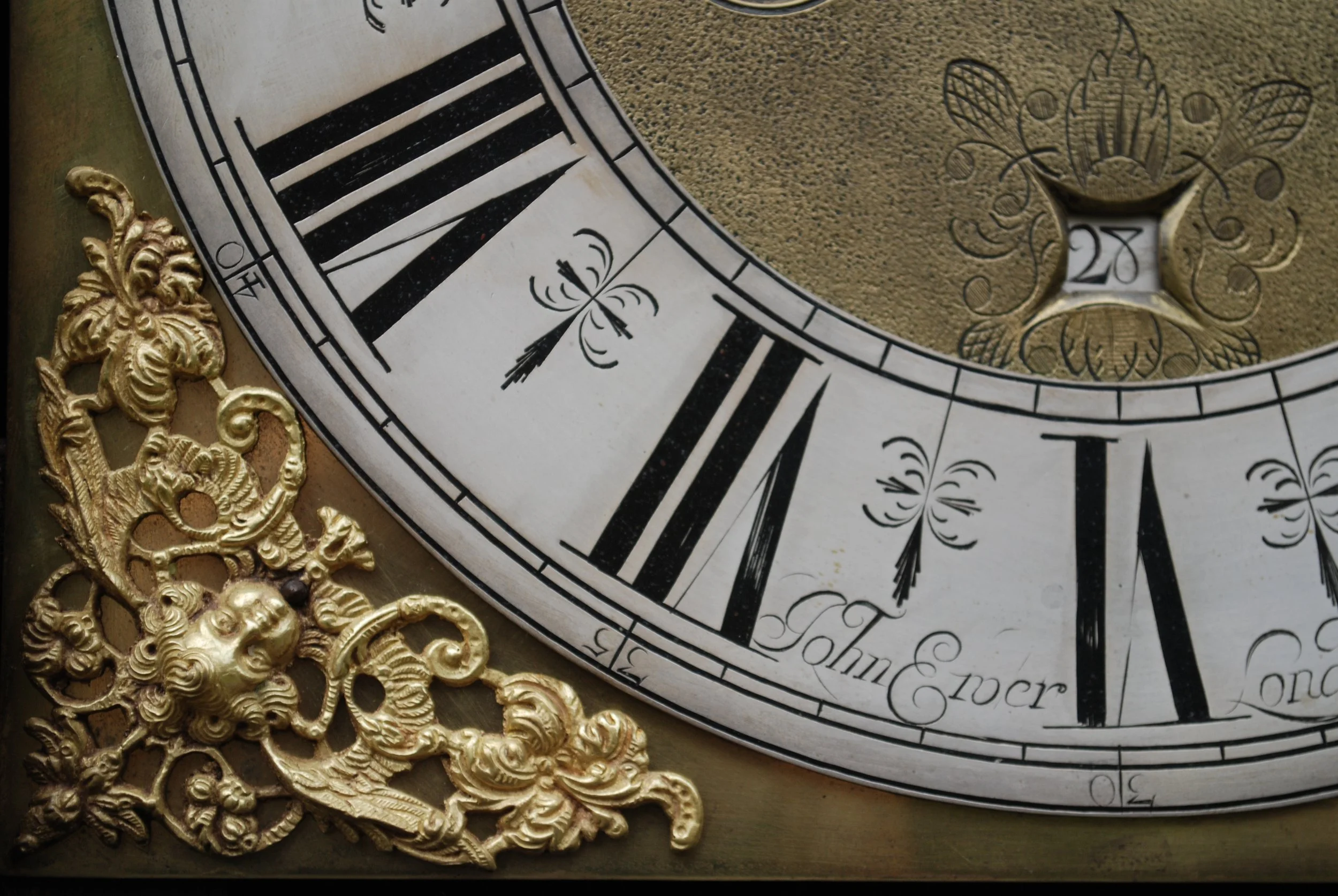
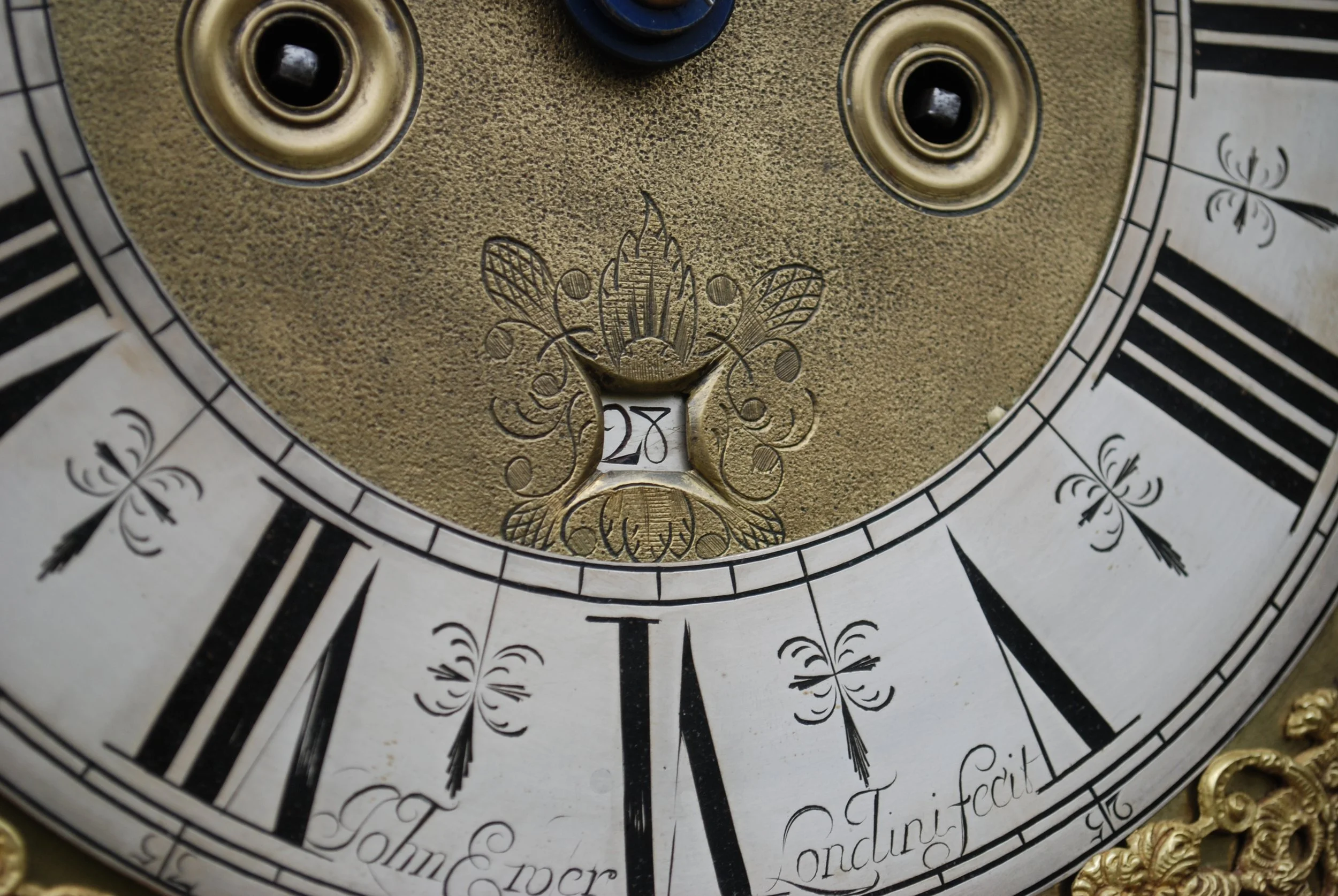
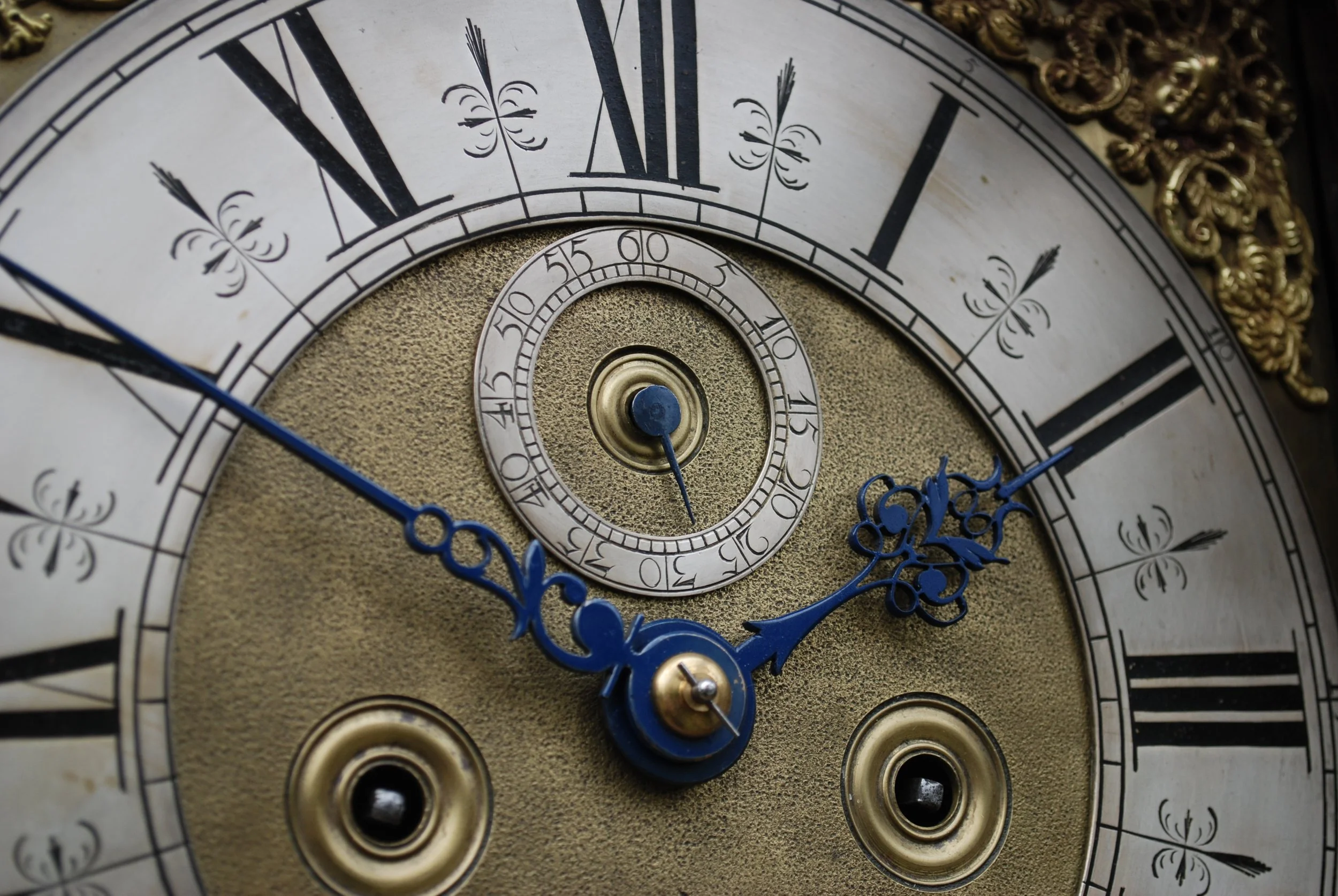
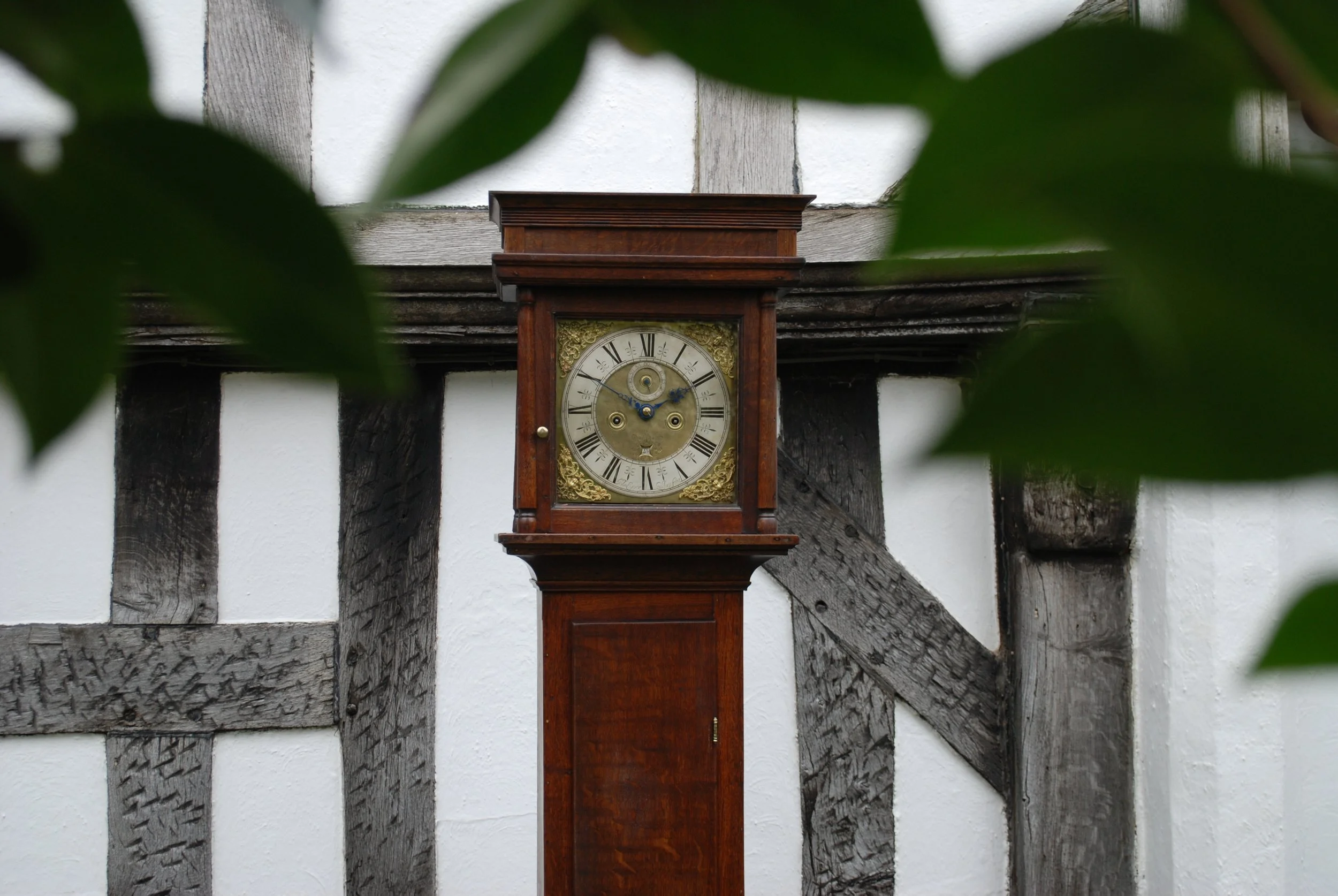
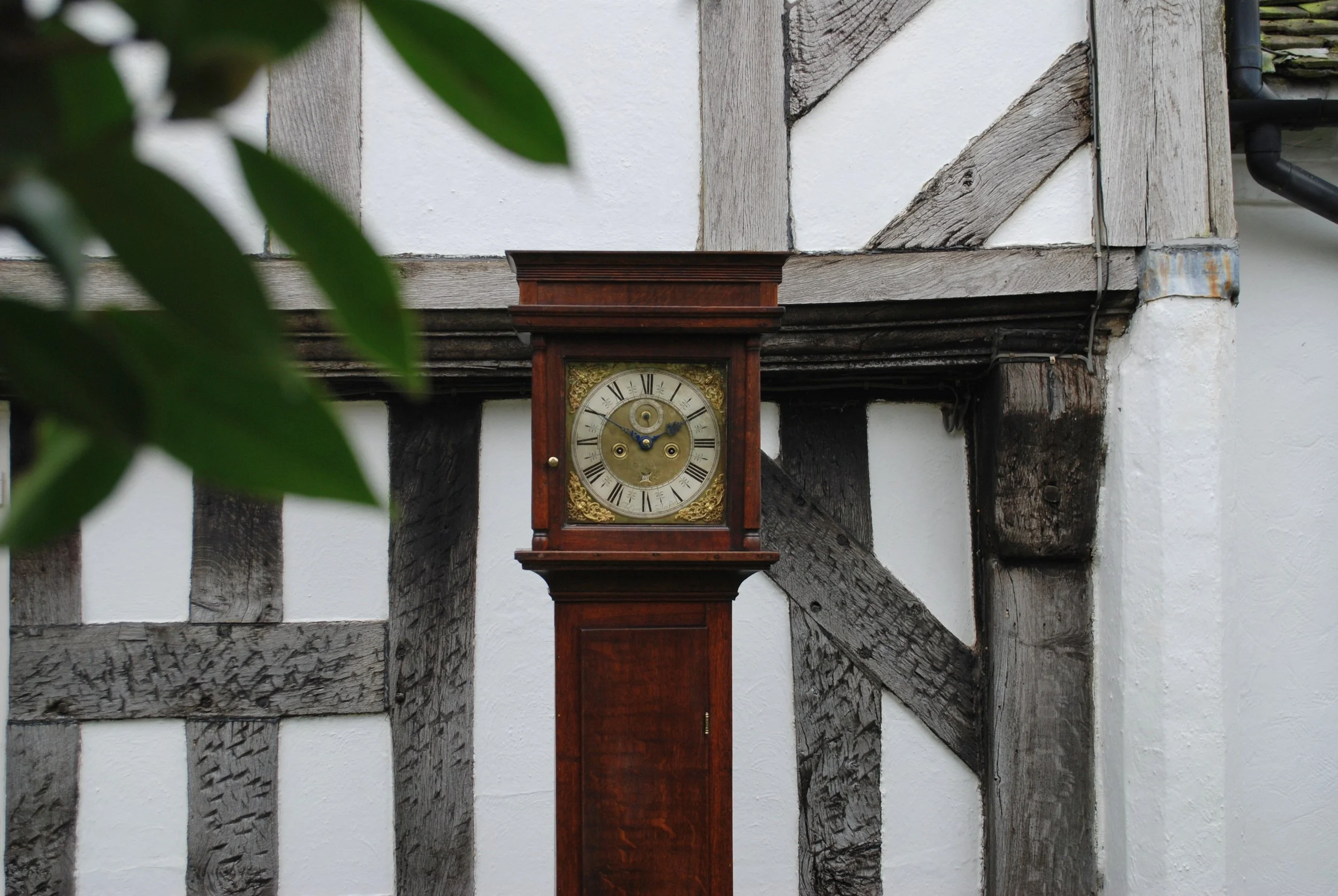
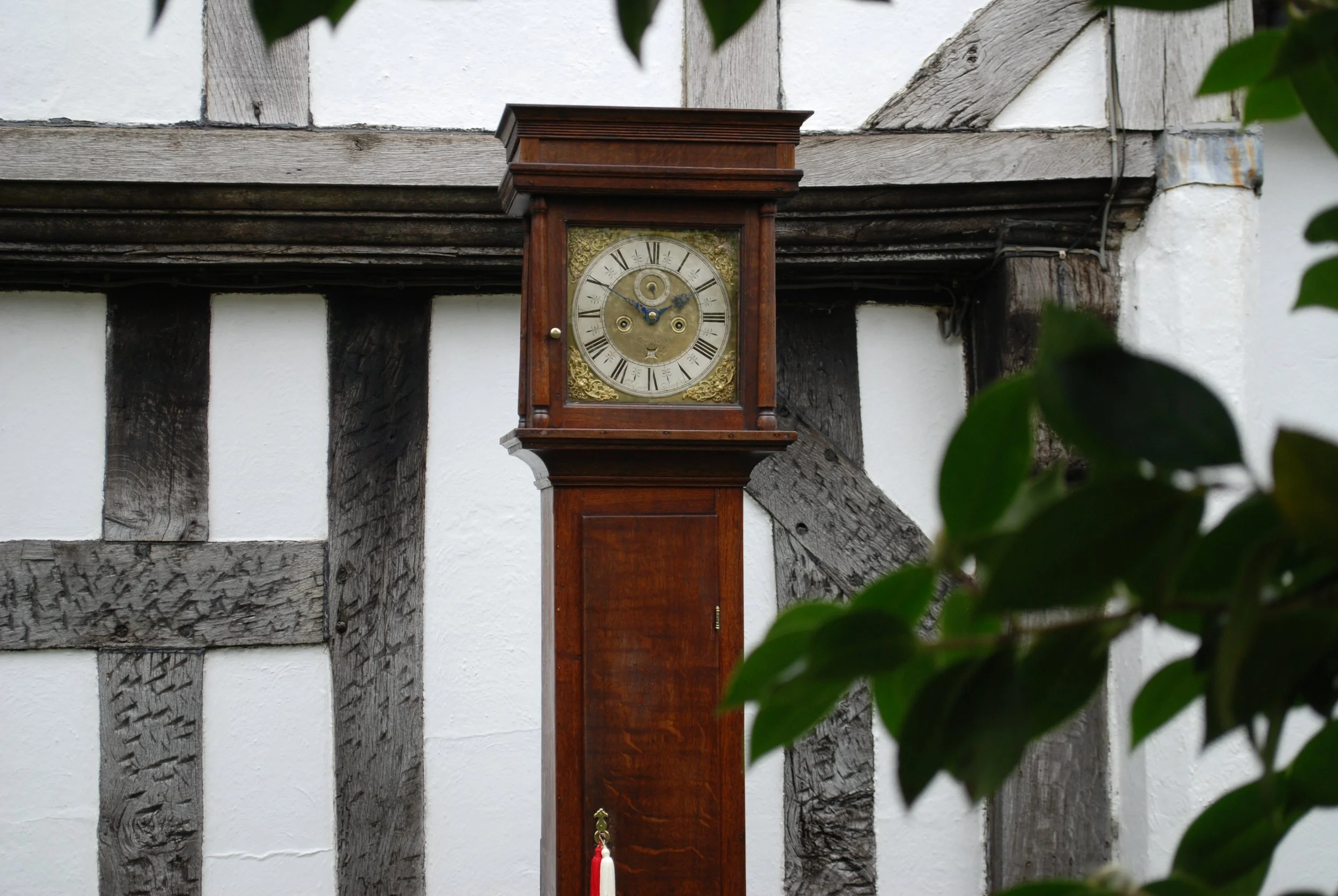
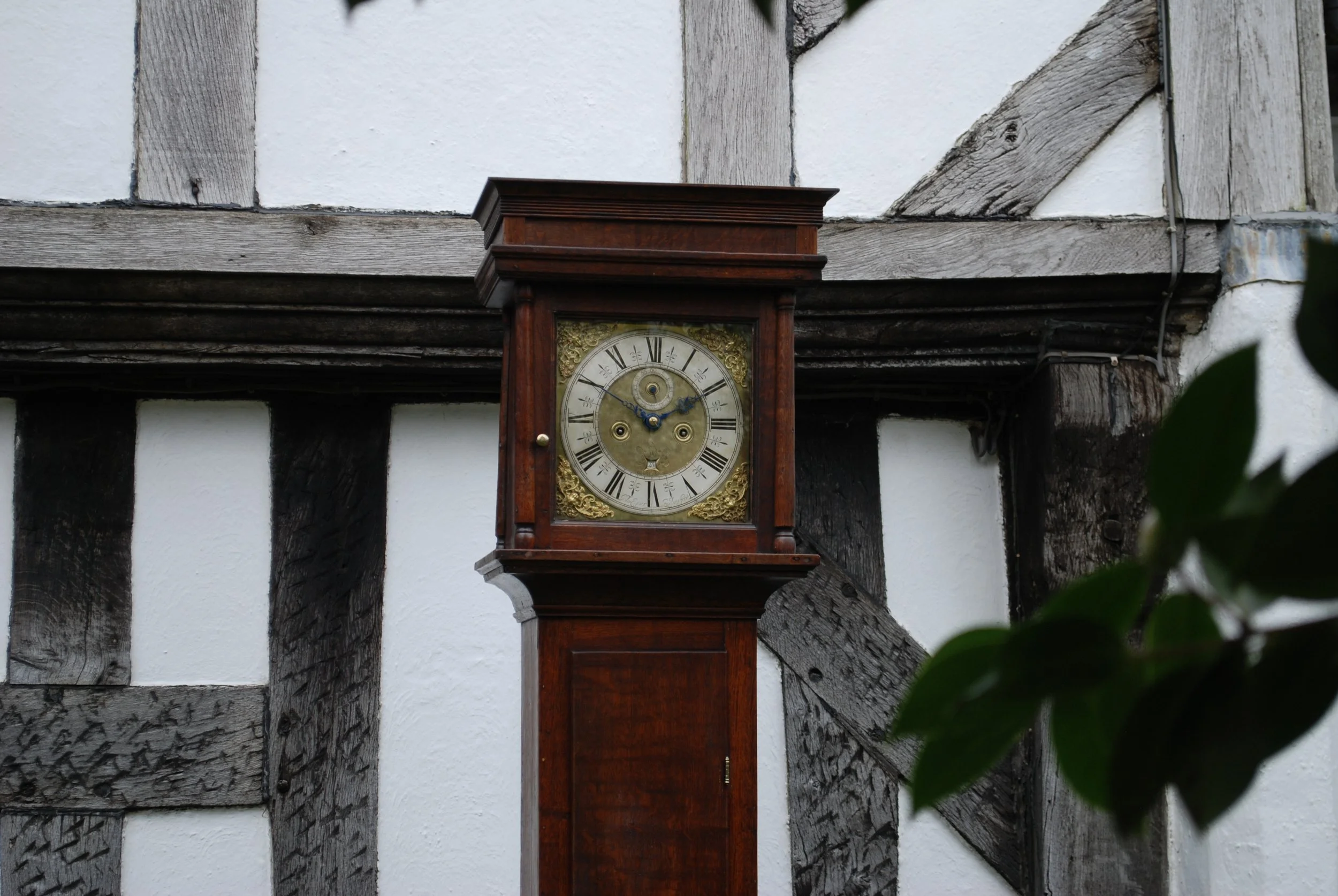
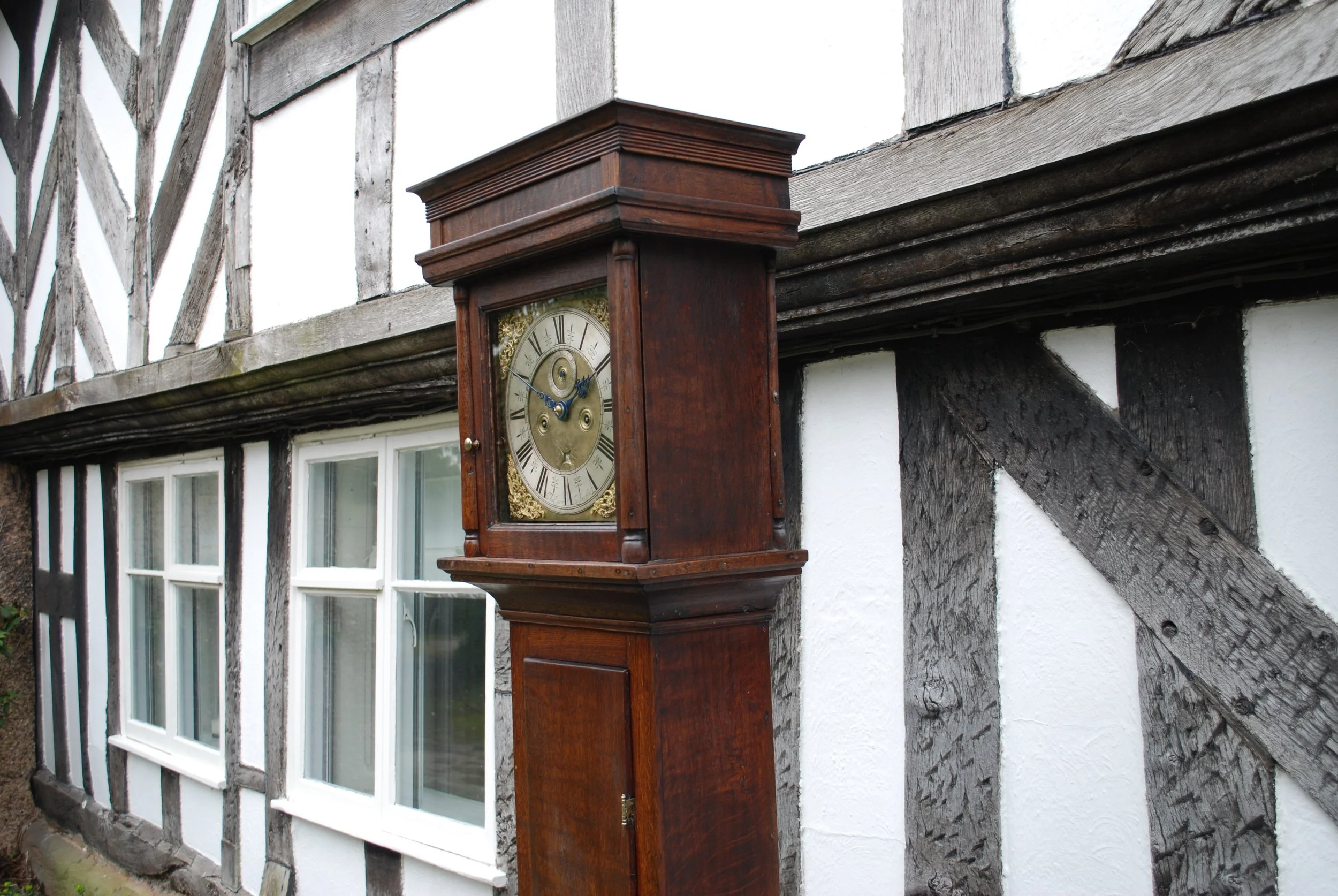
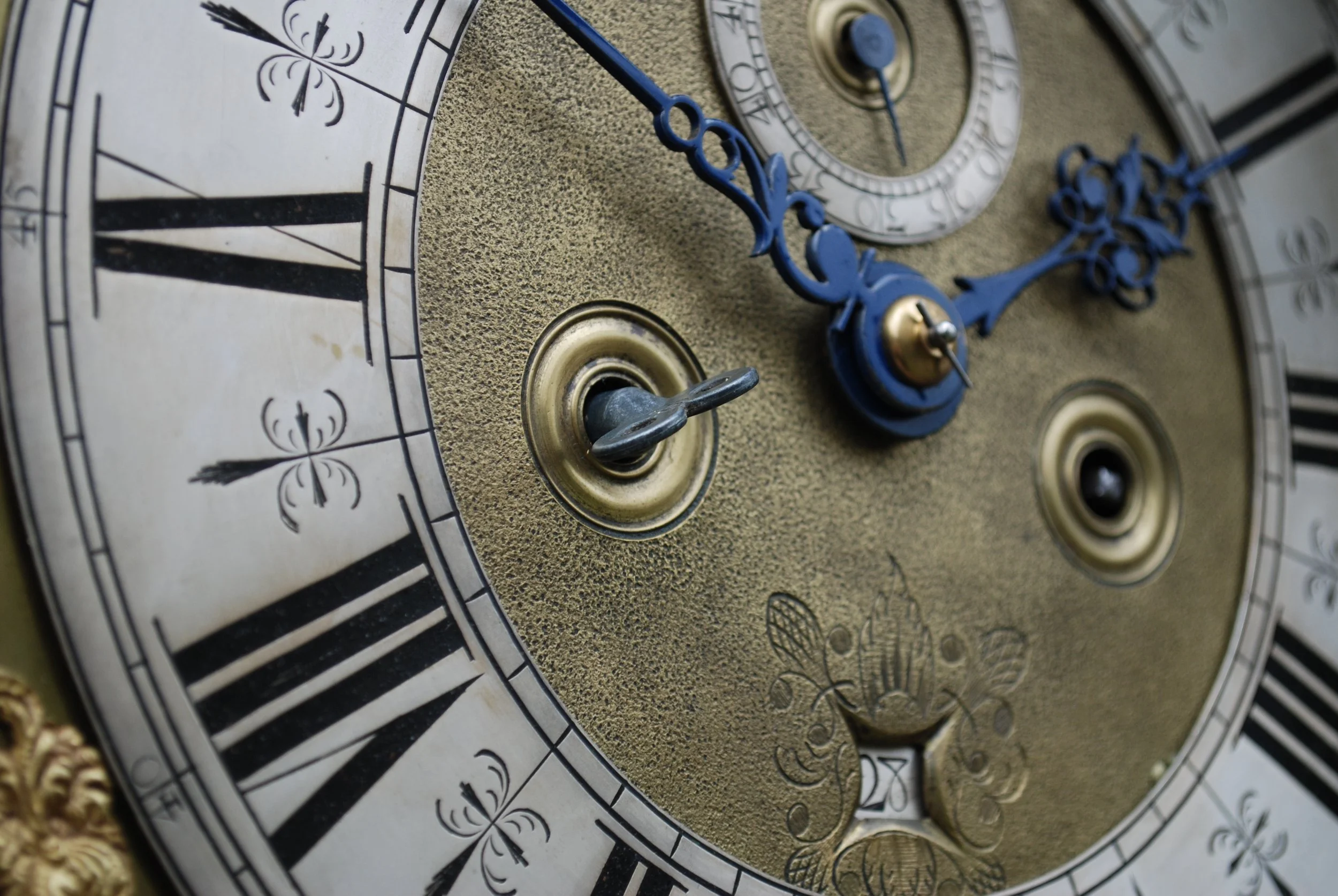
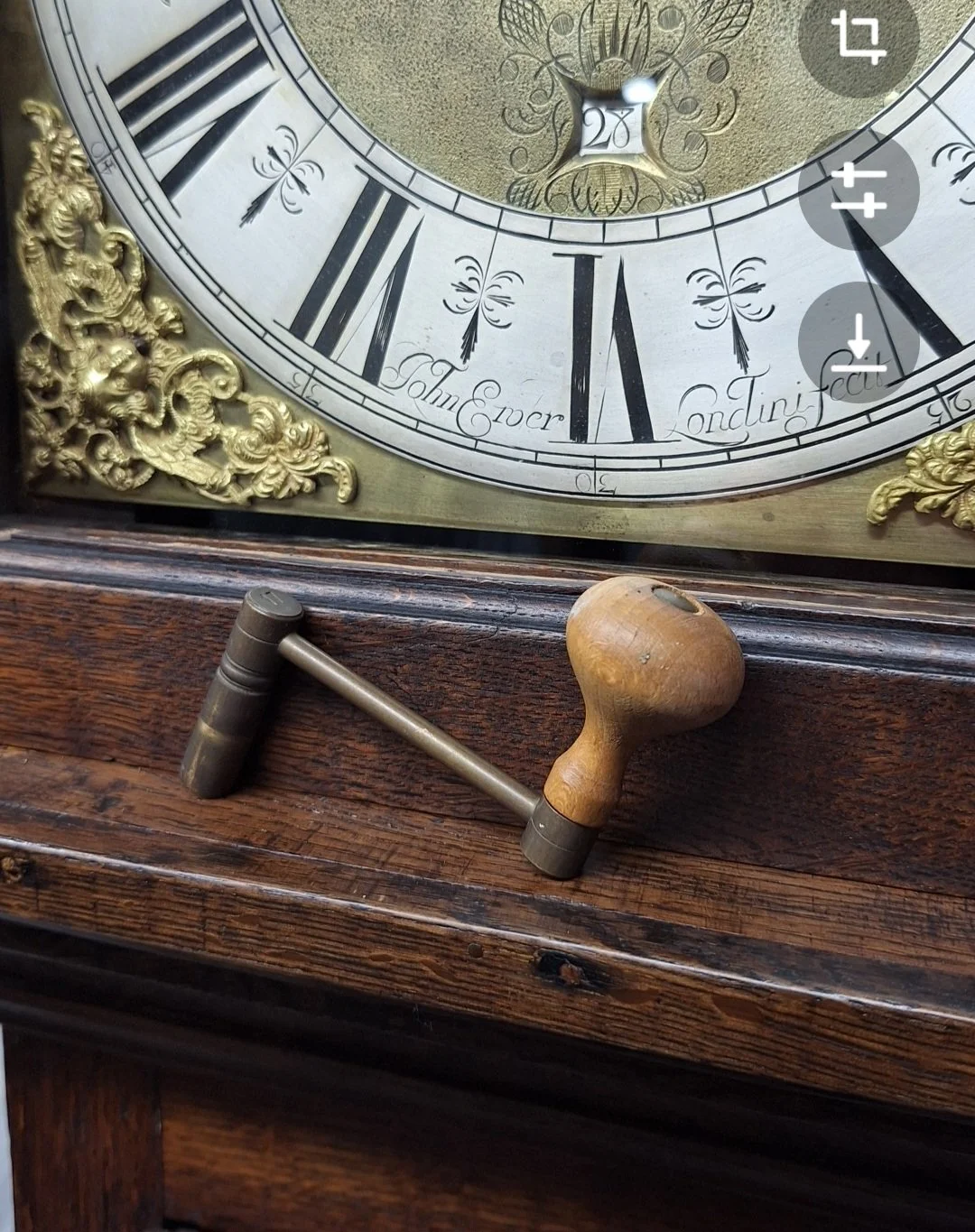
This clock has a brass face with matted centre and silvered chapter and seconds rings. It has Roman and Arabic numerals.
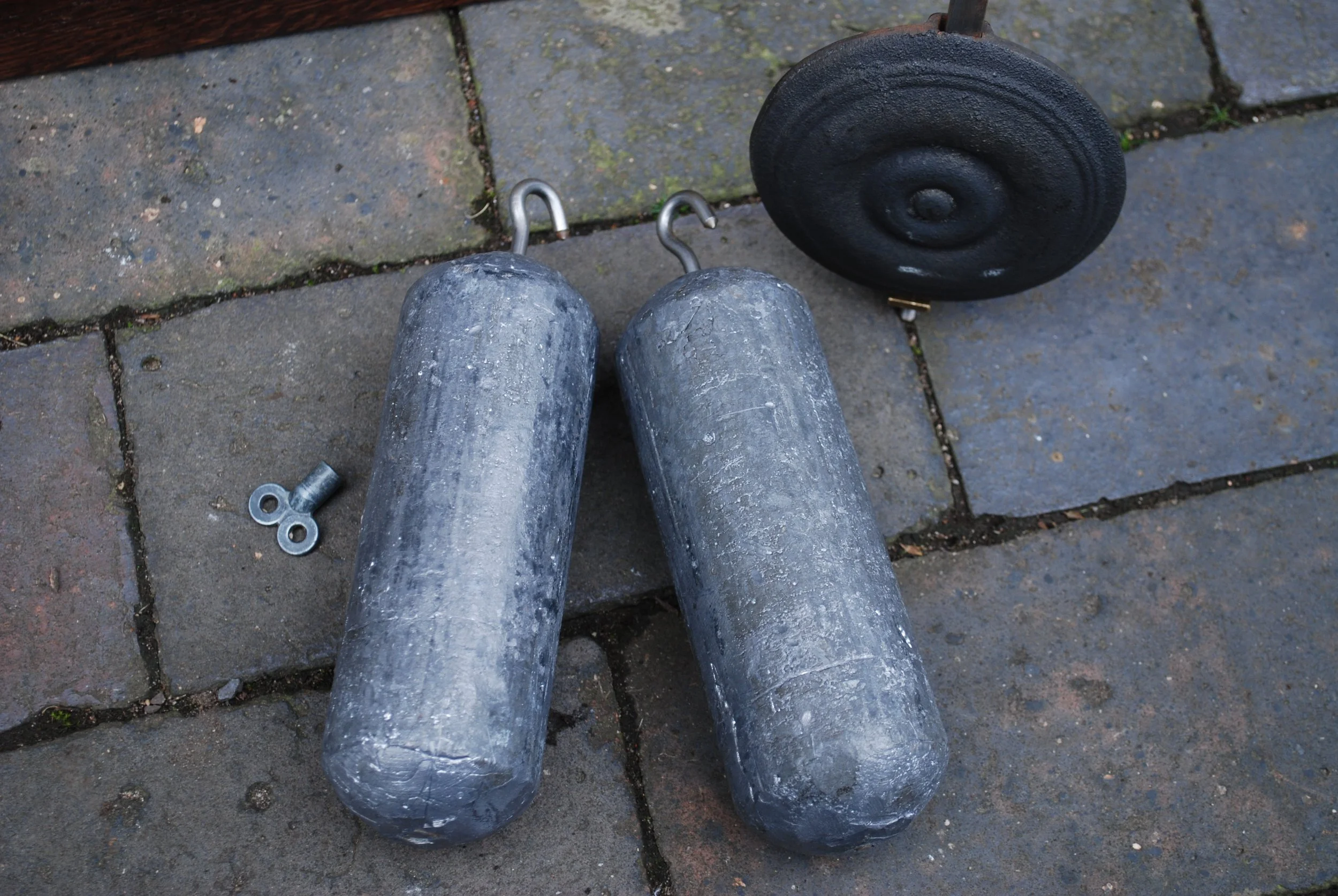
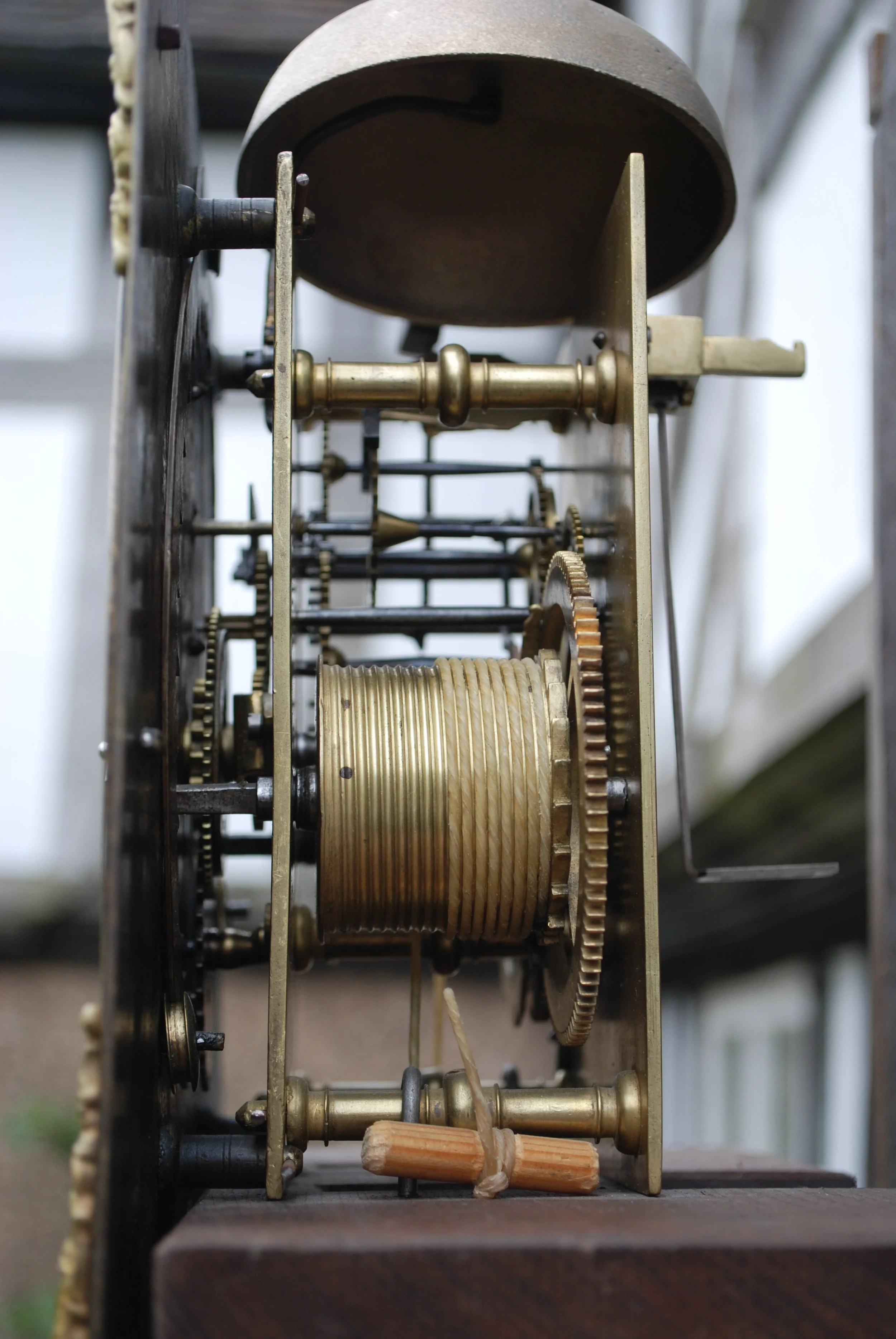
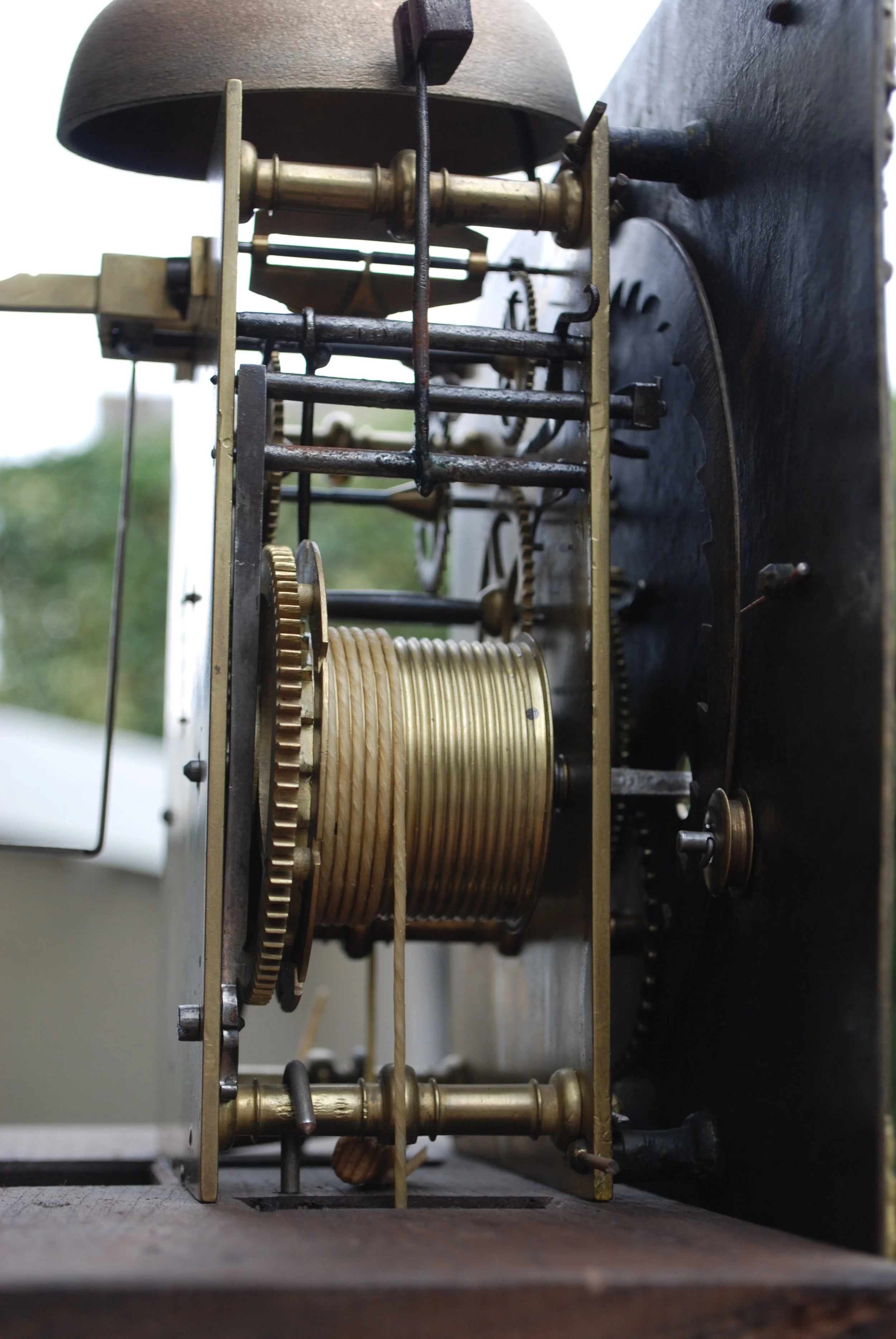
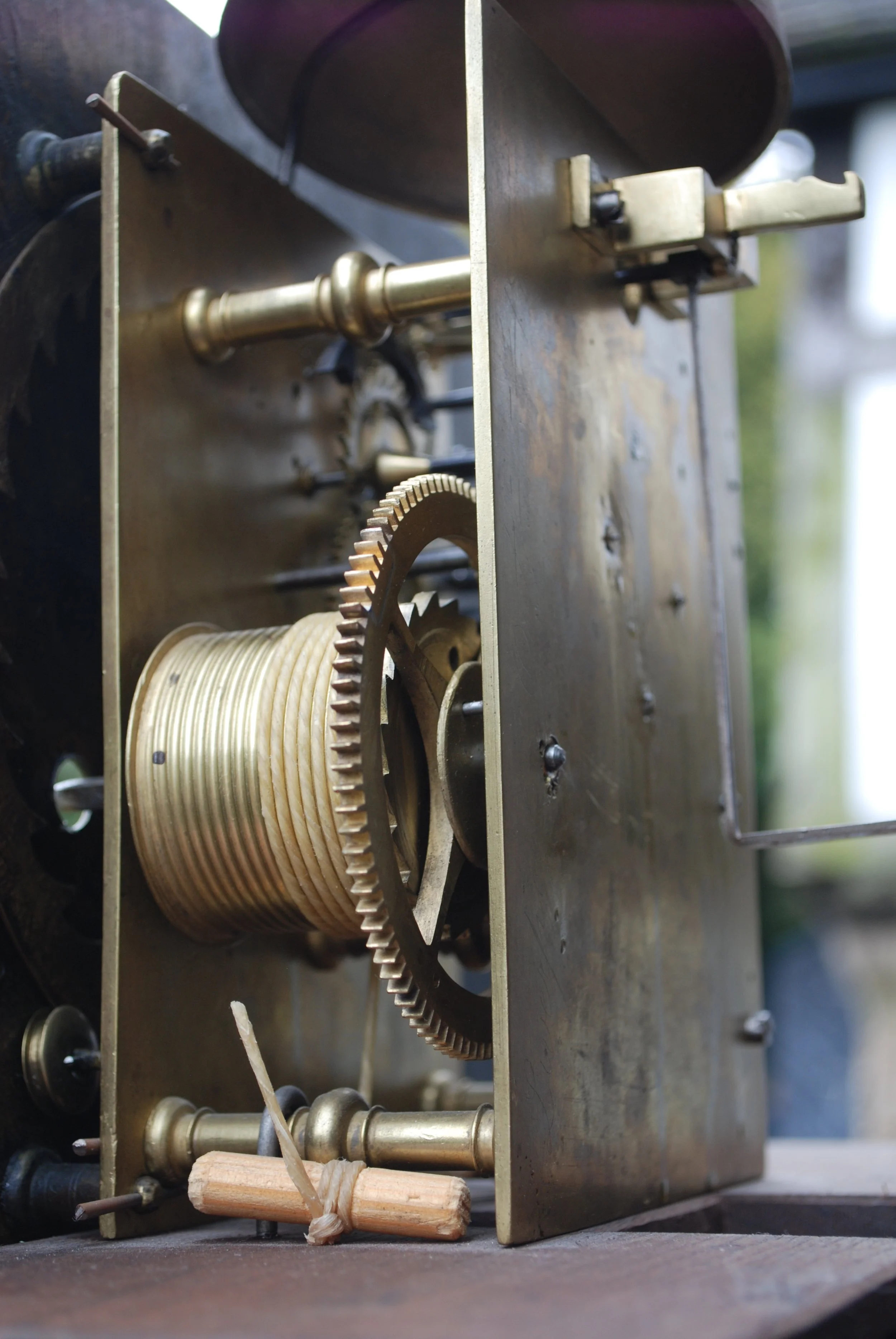
The movement has been fully restored, is clean and keeps good time. It rings to the hour on a bell.
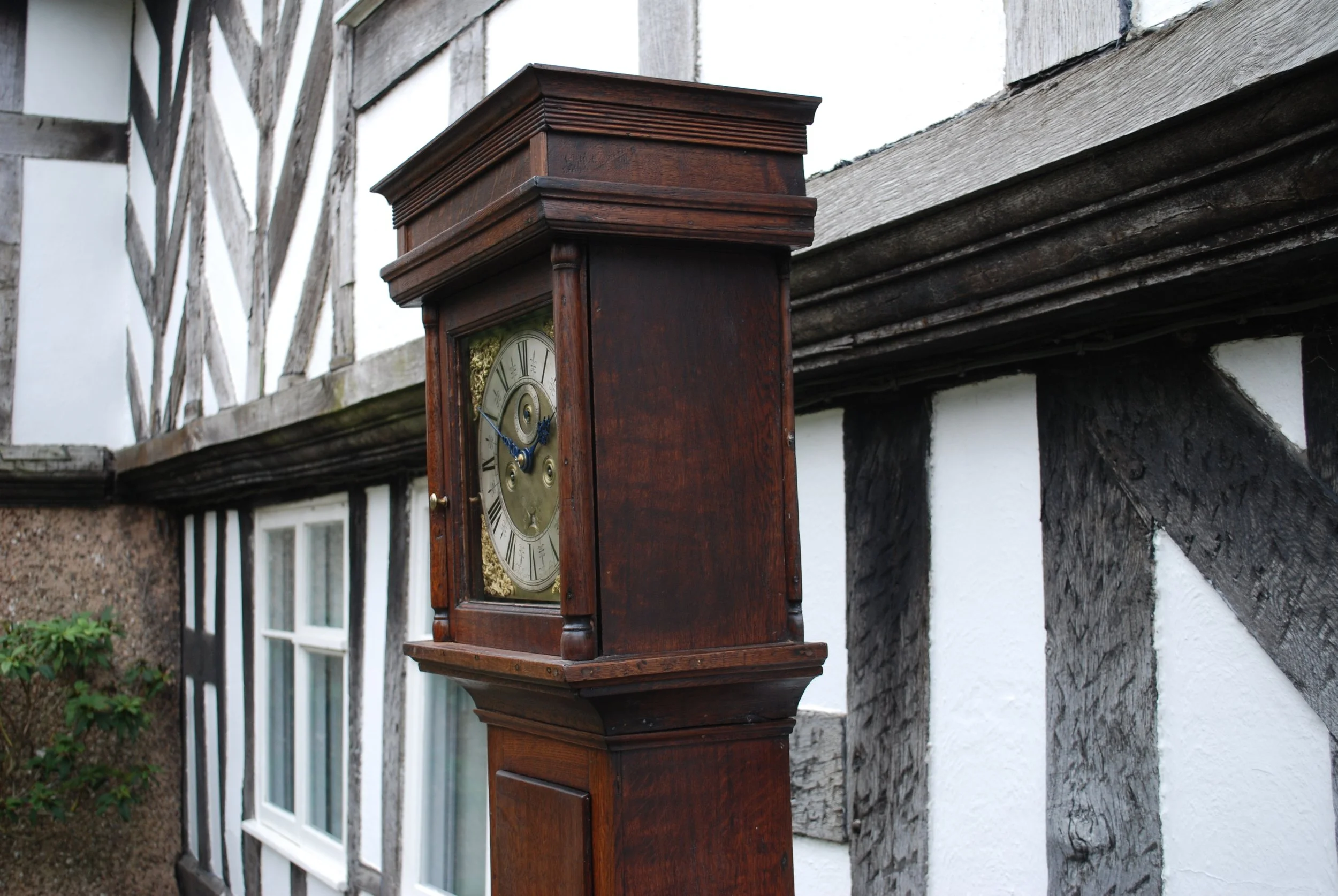
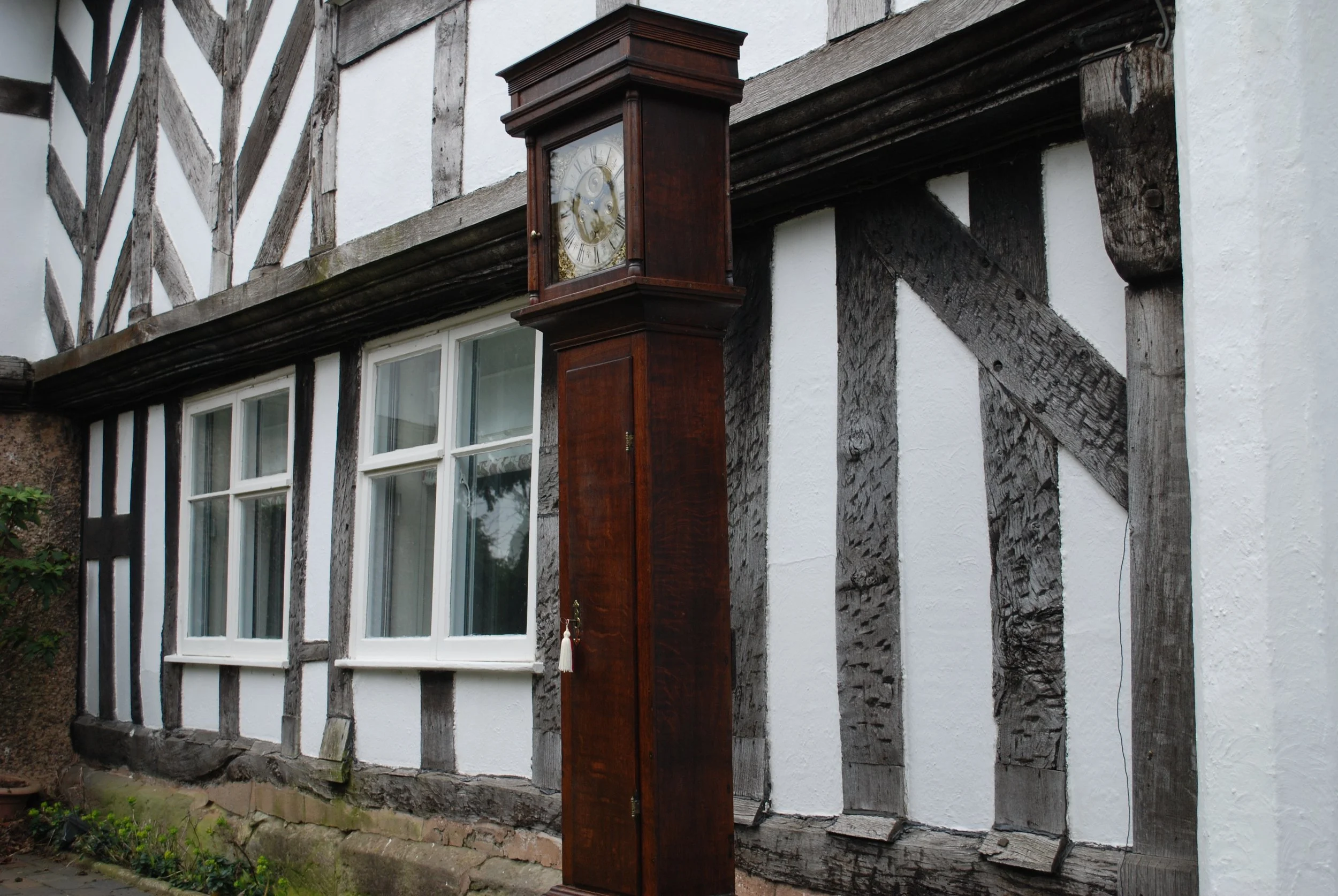
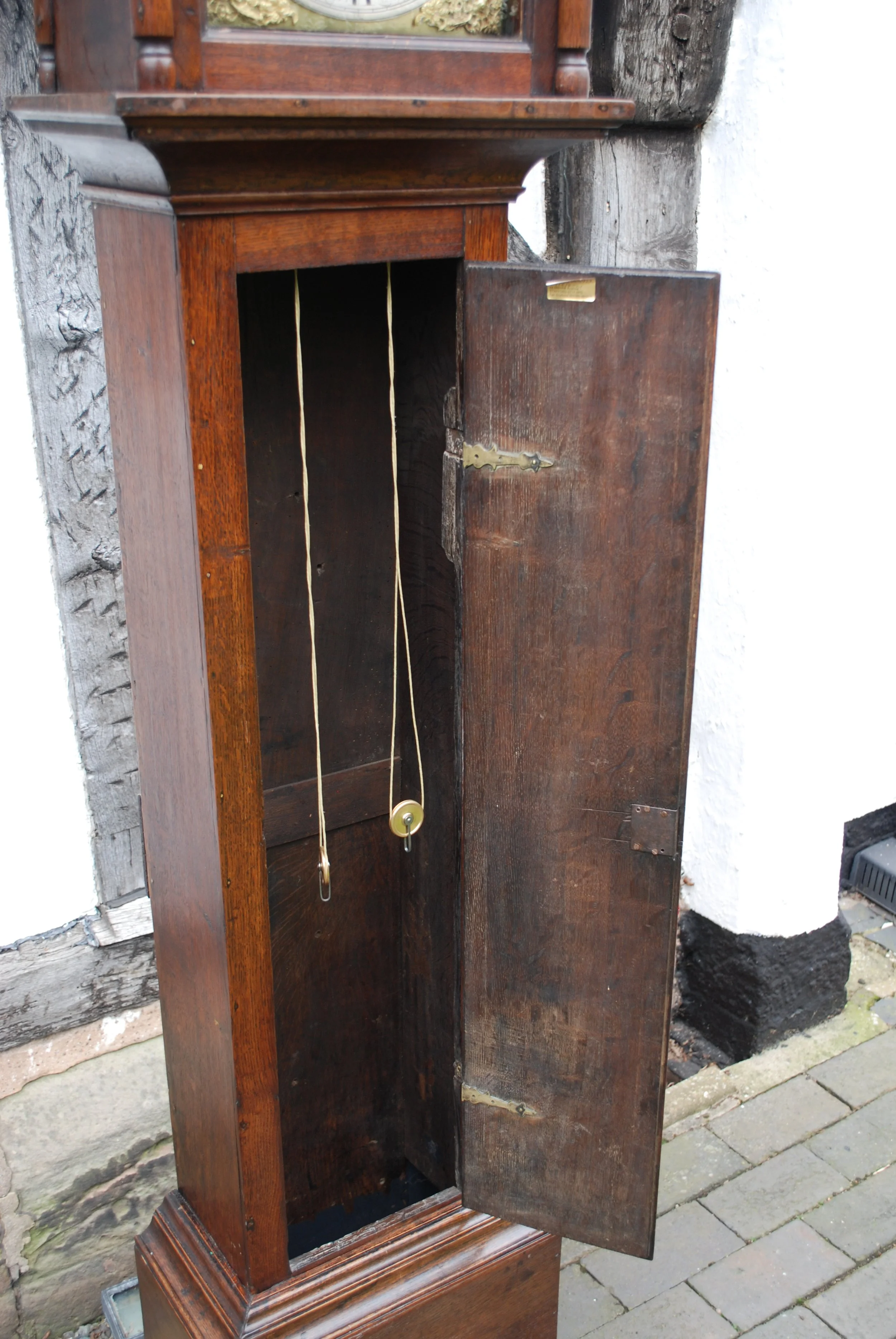
The hood has a caddy top which is supported on tapered wooden columns.
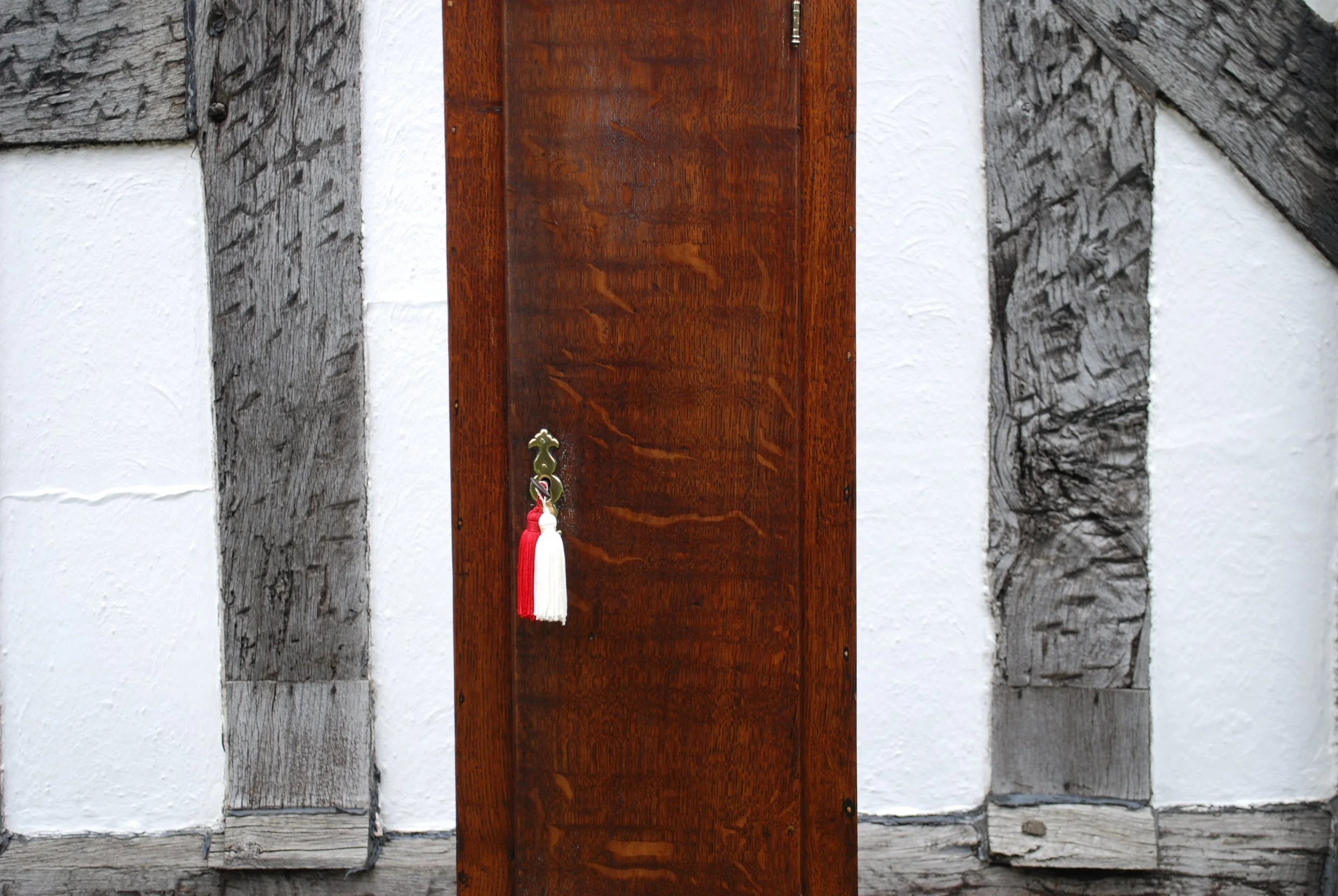
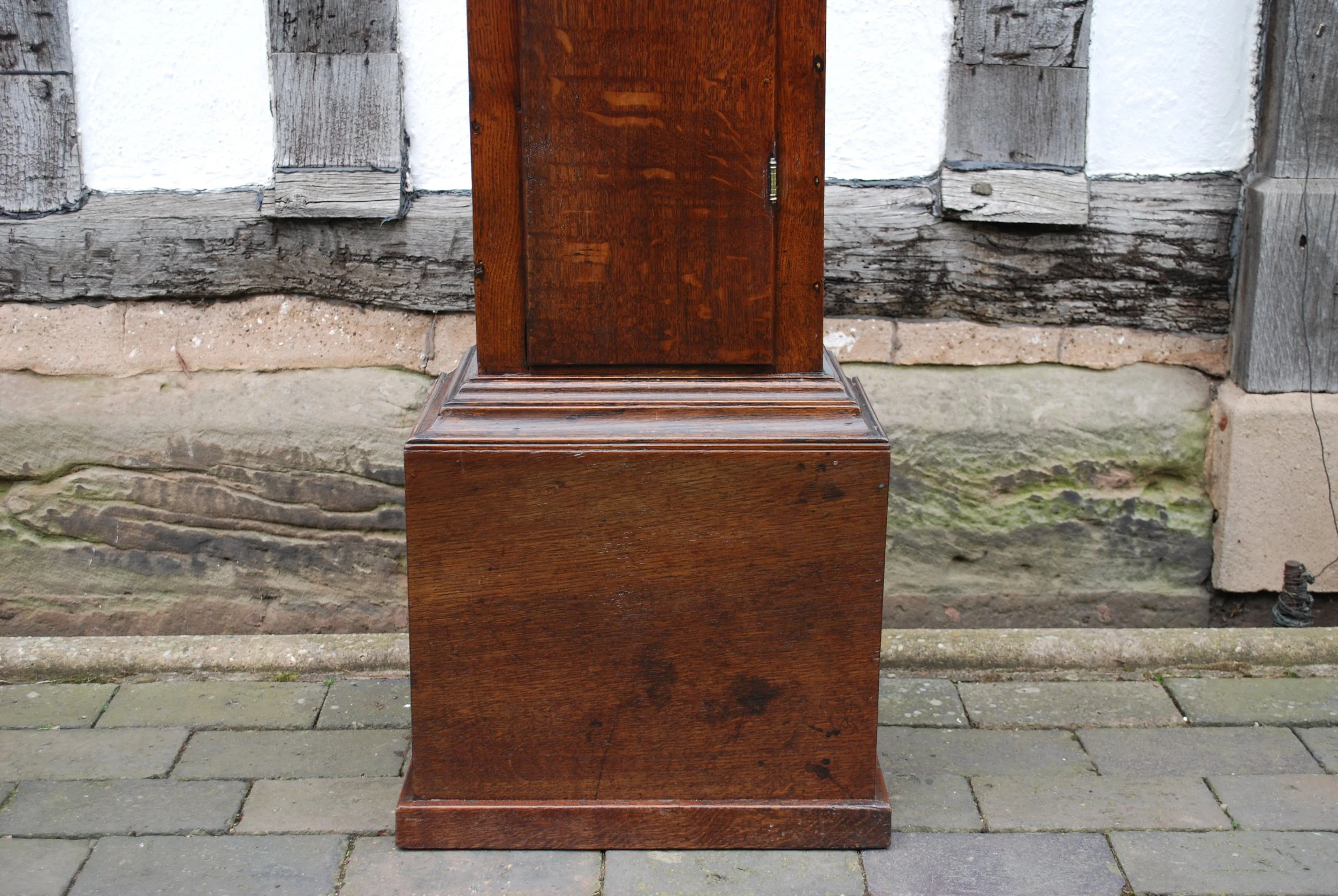
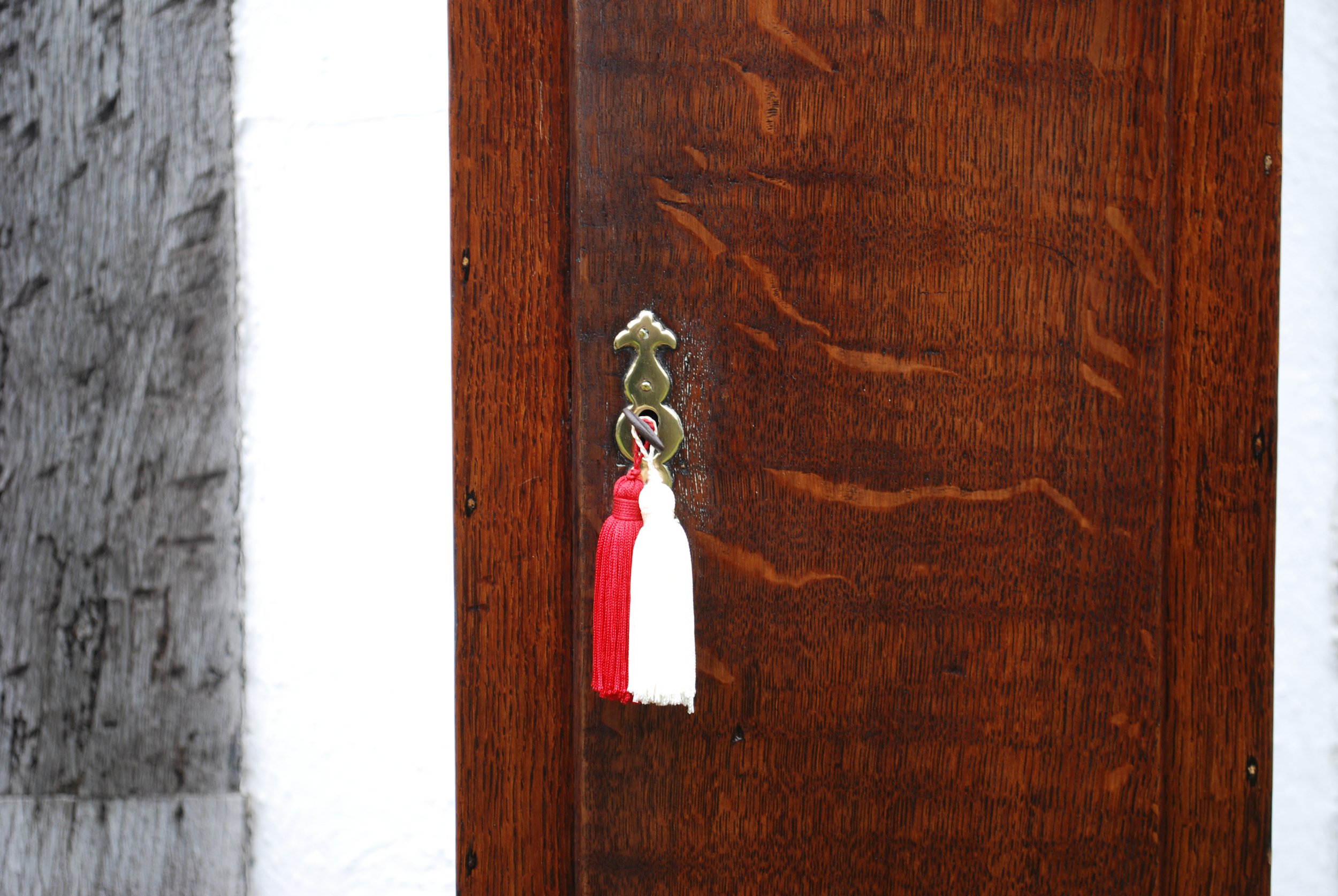
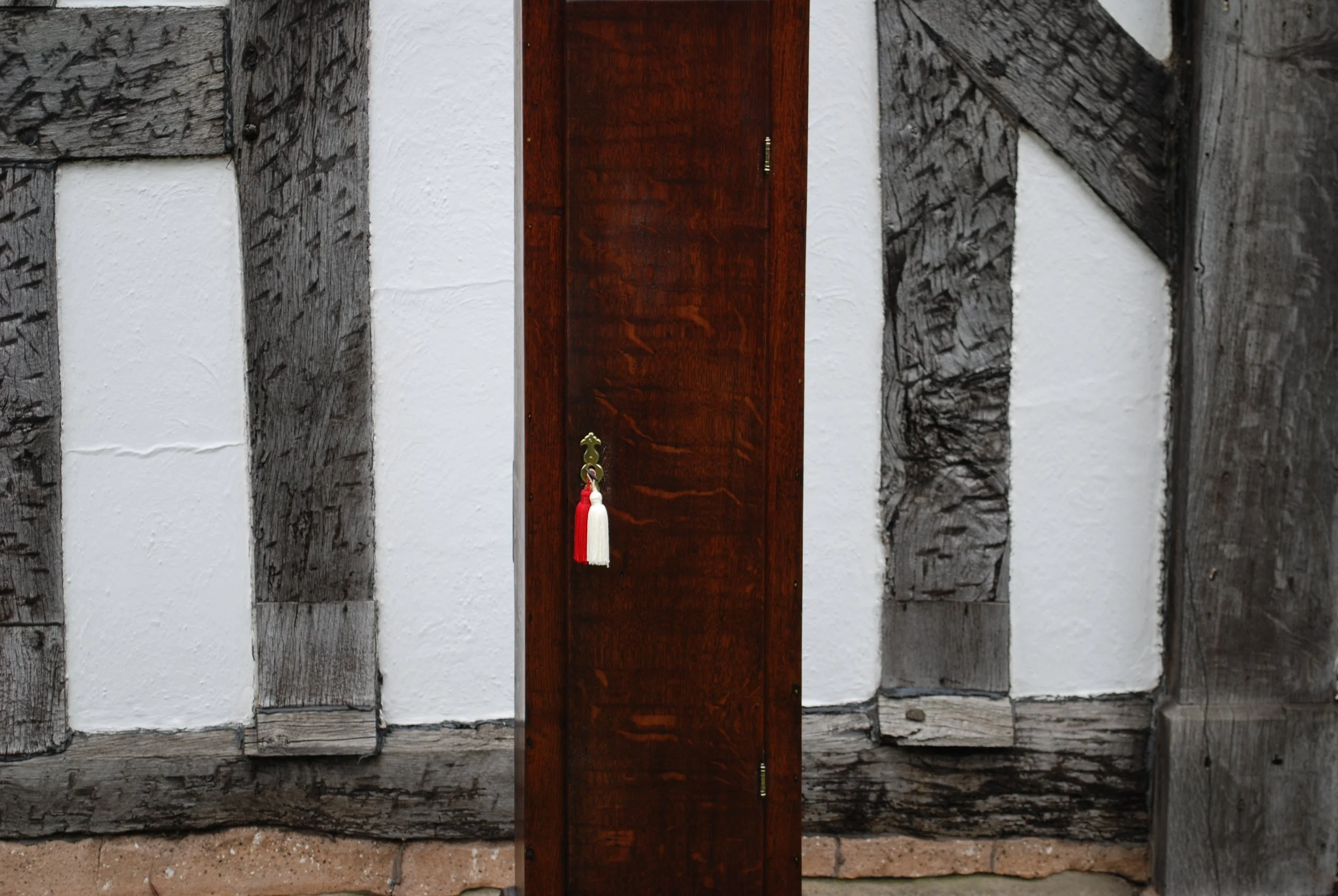
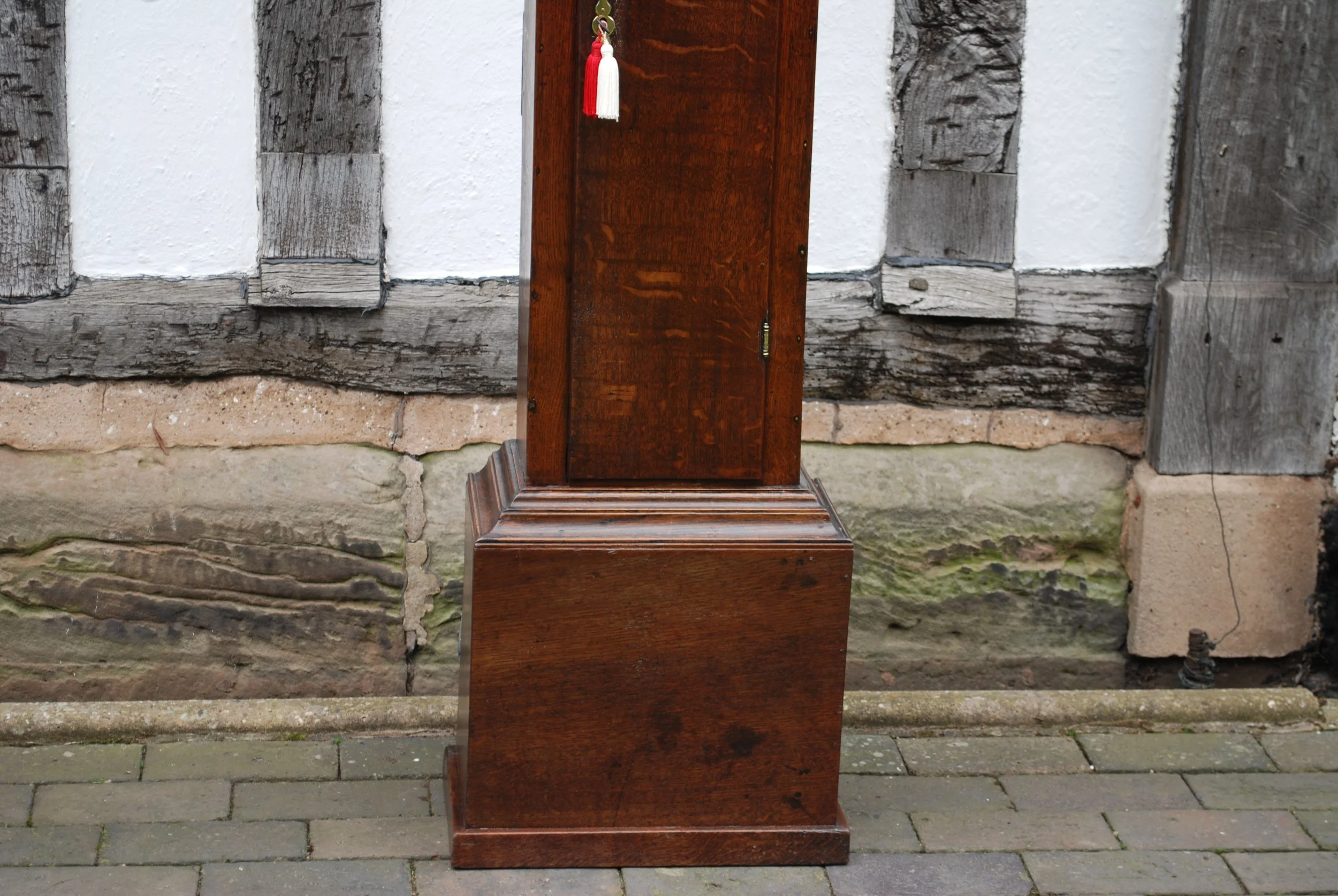
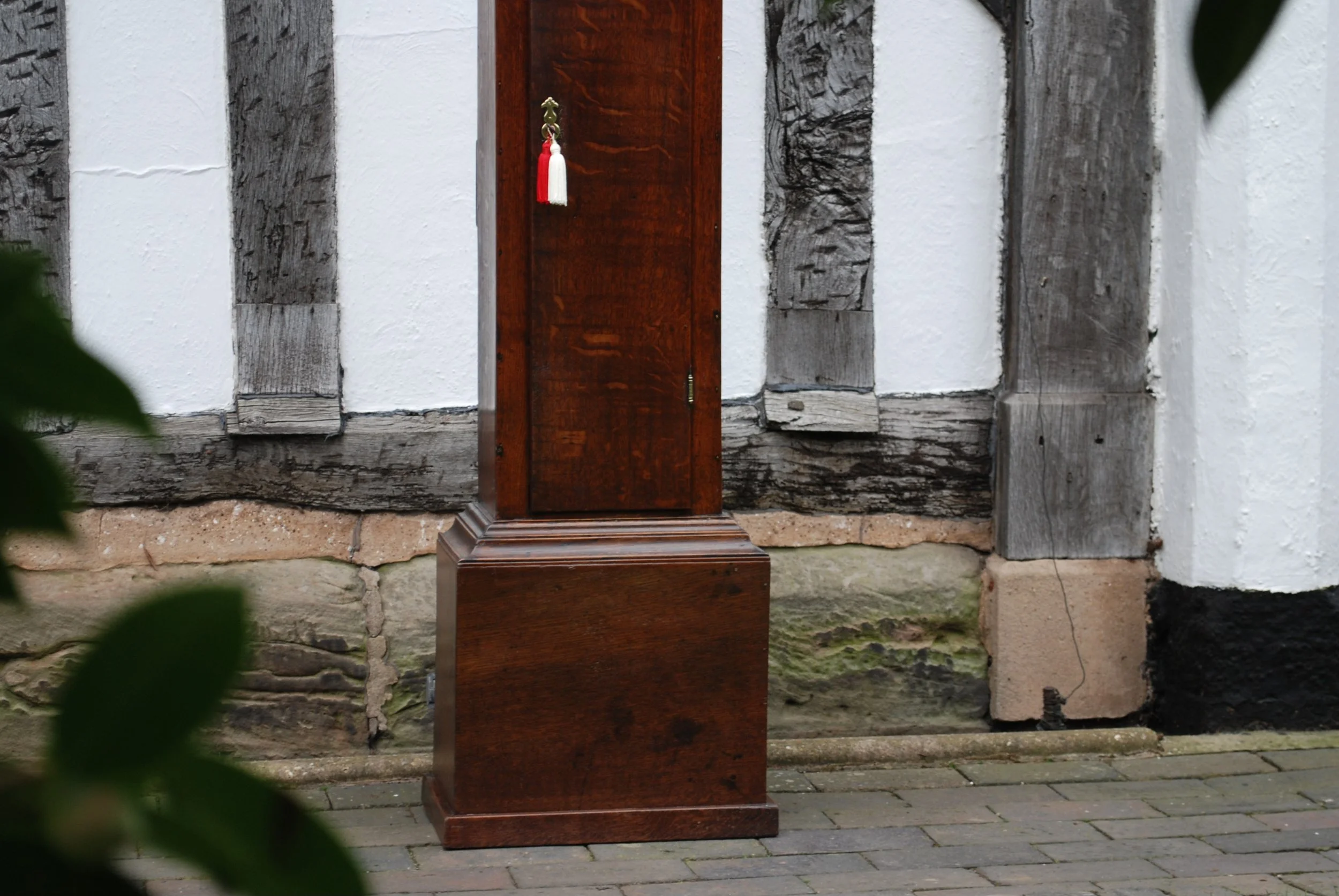
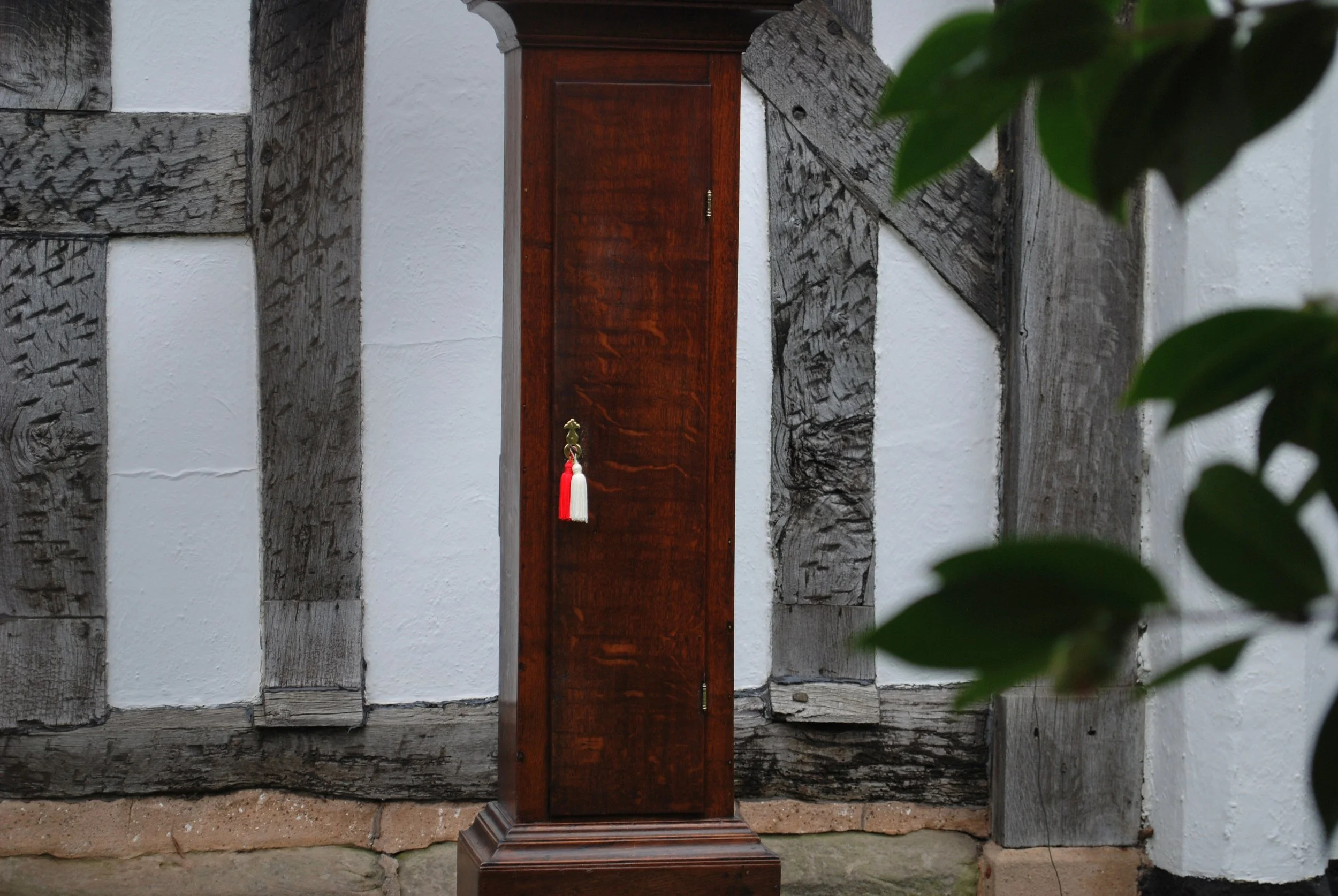
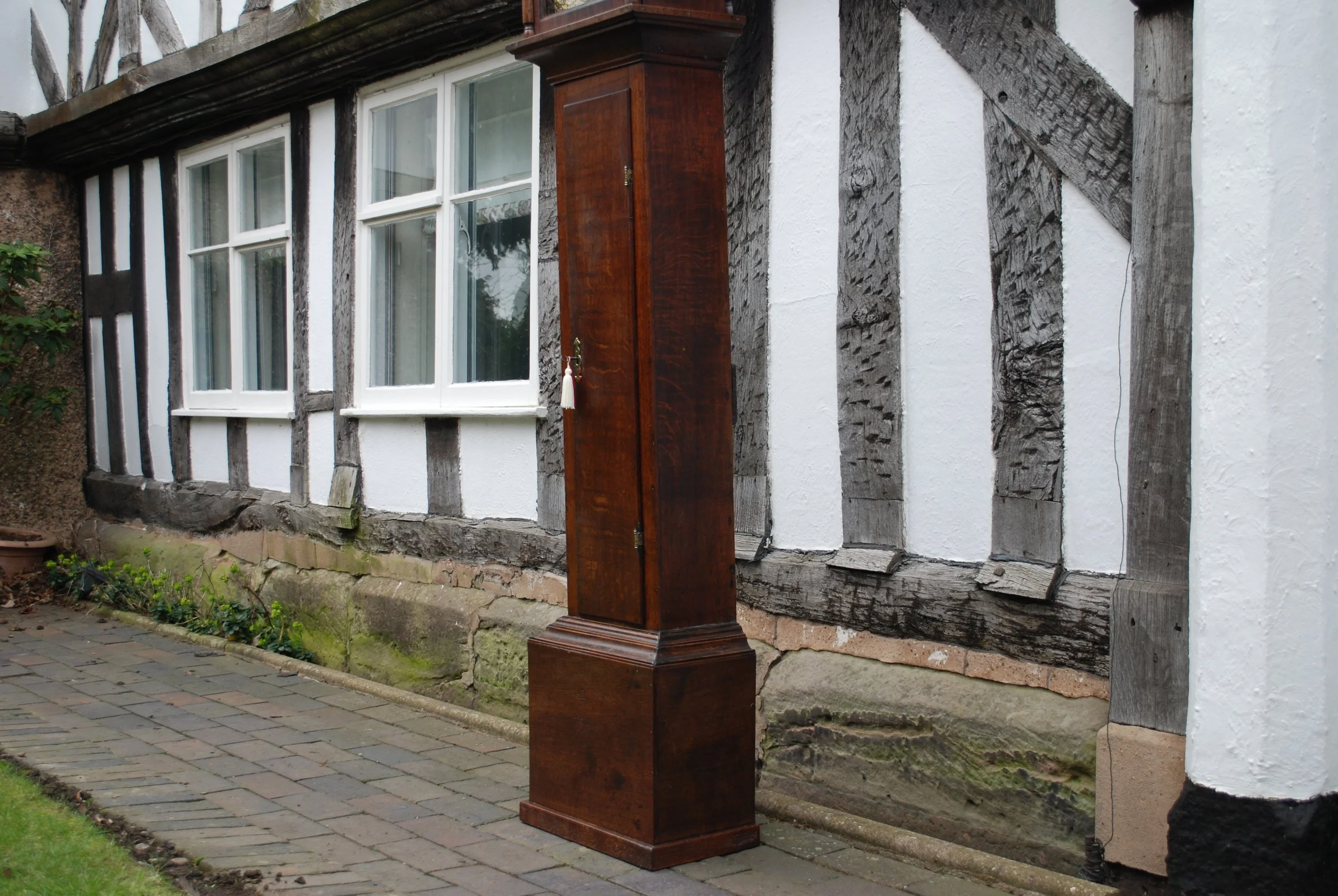
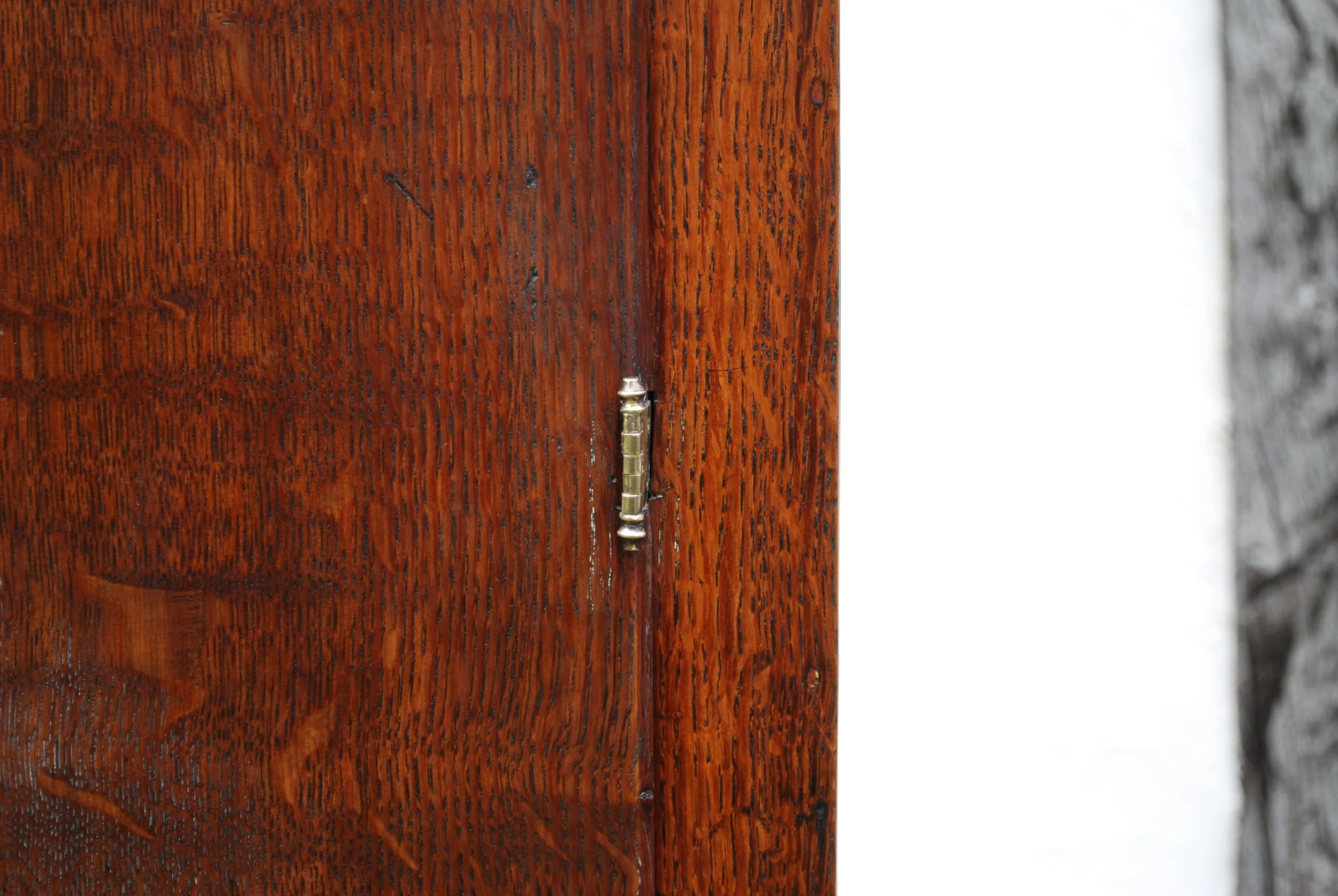
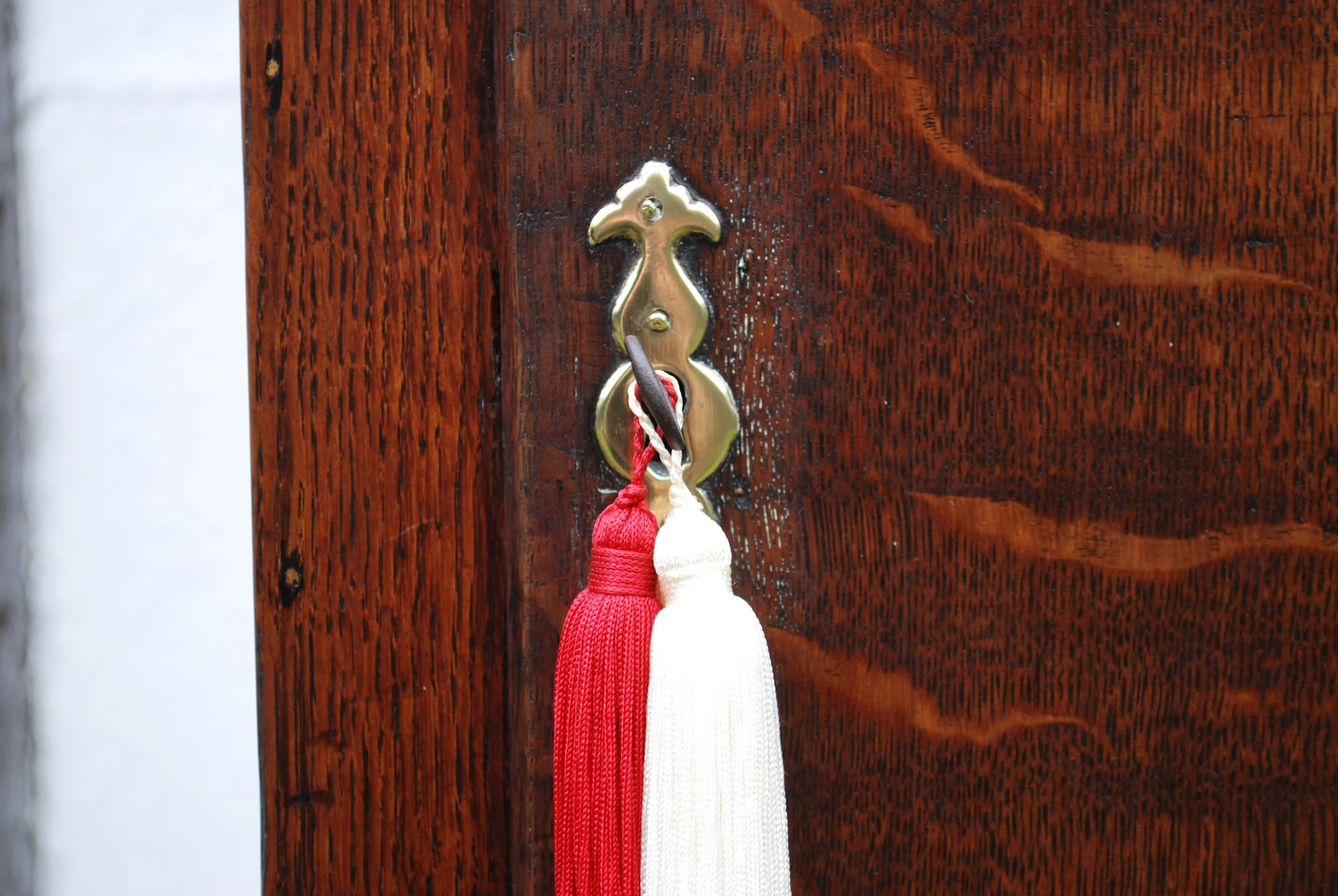
The rich oak case has a full-length door with a brass escutcheon and working lock and key.
A photograph of the receipt for the restoration dates the clock at 1720. However, features of the clock such as the matted centre, the ringed winding holes, the seconds hand without a tail, the design of the spandrels, the short tail on the number “5”, the design of the hands and the pillars being attached to the hood door all suggest this clock was made no later than 1700.
H = 81.5” W = 17.75” D = 10.25”
JOHN EWER of LONDON c.1700
This is a fine fully restored example of a late 17th century oak clock by John Ewer who worked with Sir Oswald Temple. Ewer completed his apprenticeship in 1687, the “golden age” of English horology. His clocks have sold for several thousand pounds at major auction houses because his pieces are considered important examples of that era’s craftsmanship.
This clock has a brass face with matted centre and silvered chapter and seconds rings. It has Roman and Arabic numerals.
The movement has been fully restored, is clean and keeps good time. It rings to the hour on a bell.
The hood has a caddy top which is supported on tapered wooden columns.
The rich oak case has a full-length door with a brass escutcheon and working lock and key.
A photograph of the receipt for the restoration dates the clock at 1720. However, features of the clock such as the matted centre, the ringed winding holes, the seconds hand without a tail, the design of the spandrels, the short tail on the number “5”, the design of the hands and the pillars being attached to the hood door all suggest this clock was made no later than 1700.
H = 81.5” W = 17.75” D = 10.25”