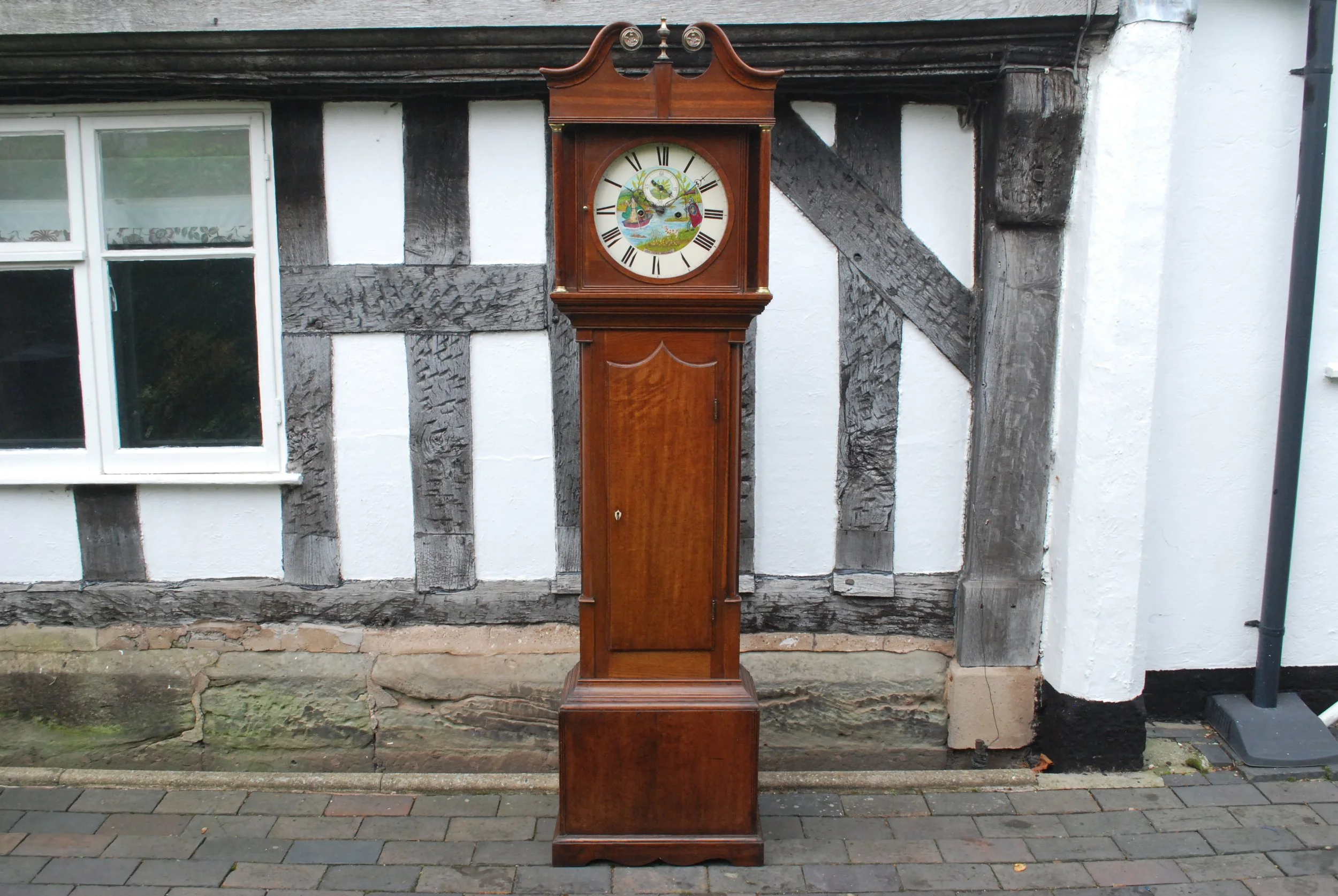
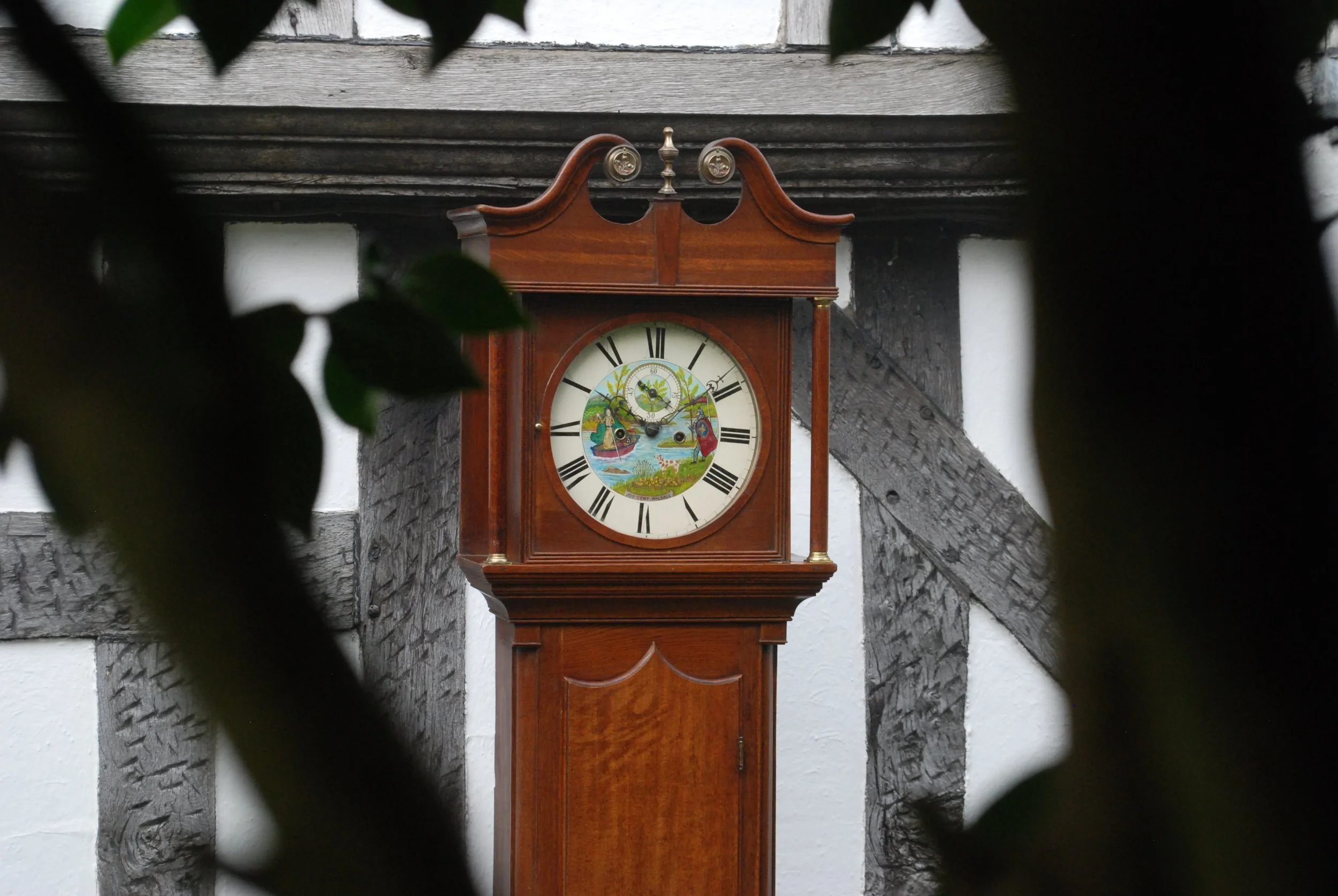
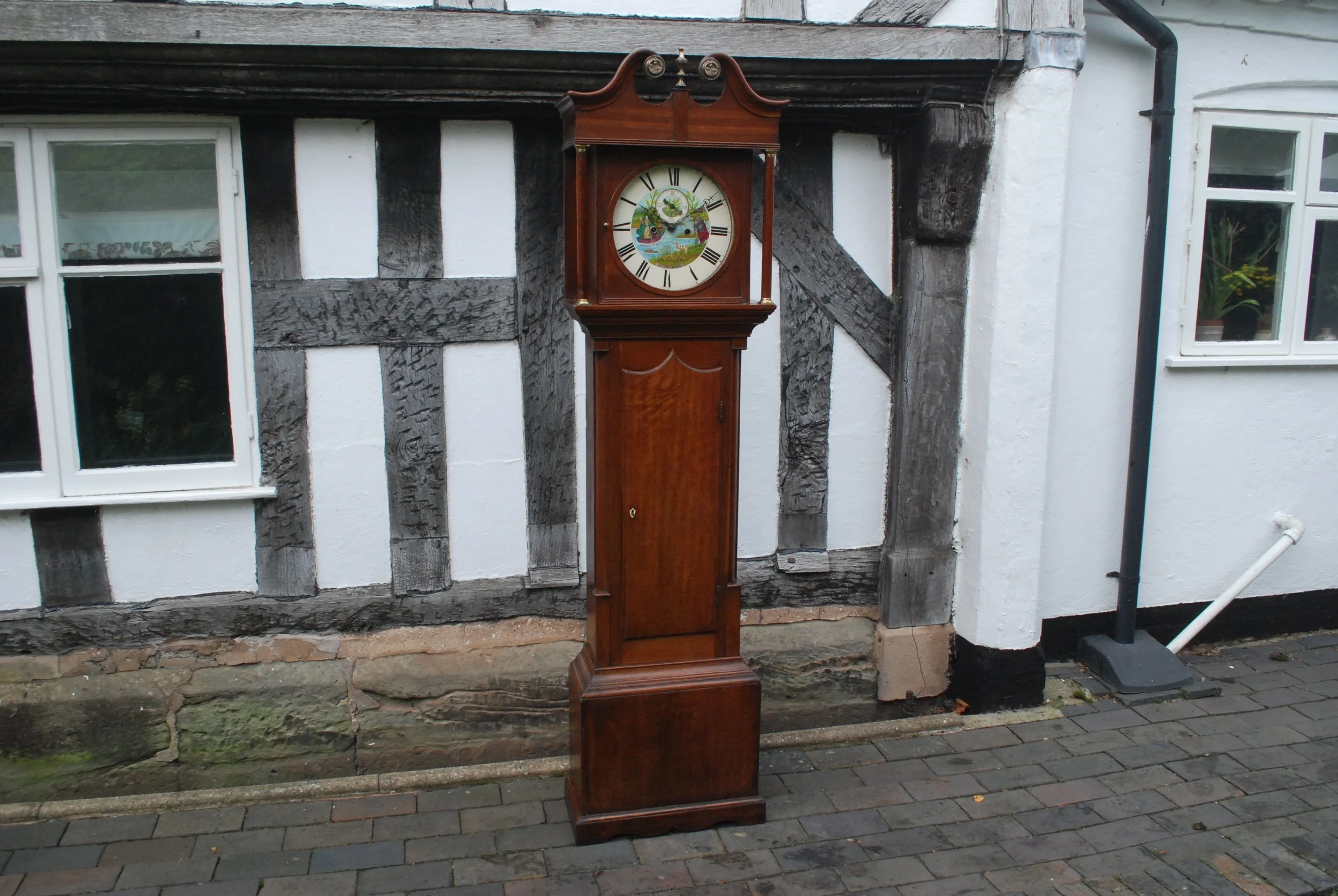
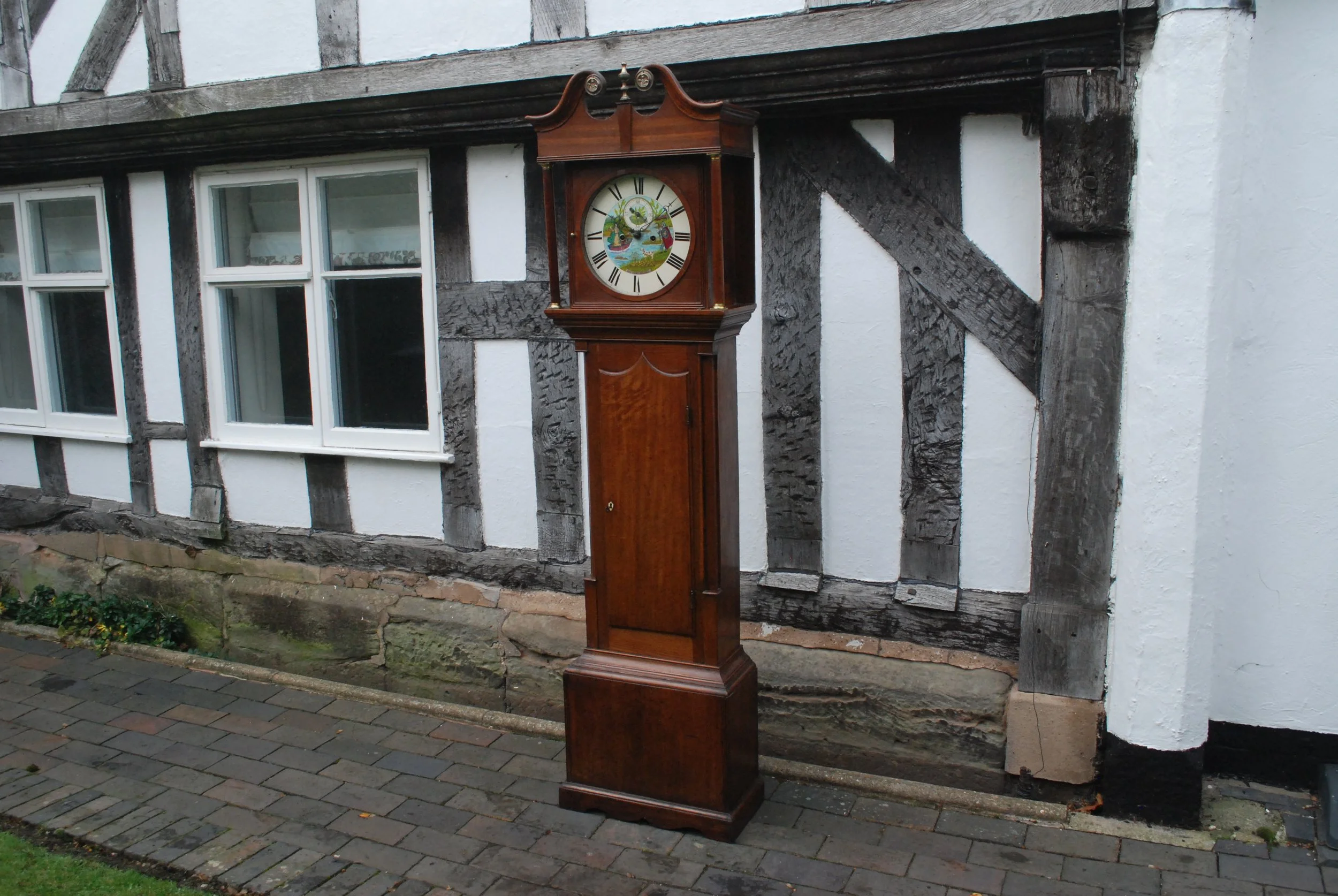
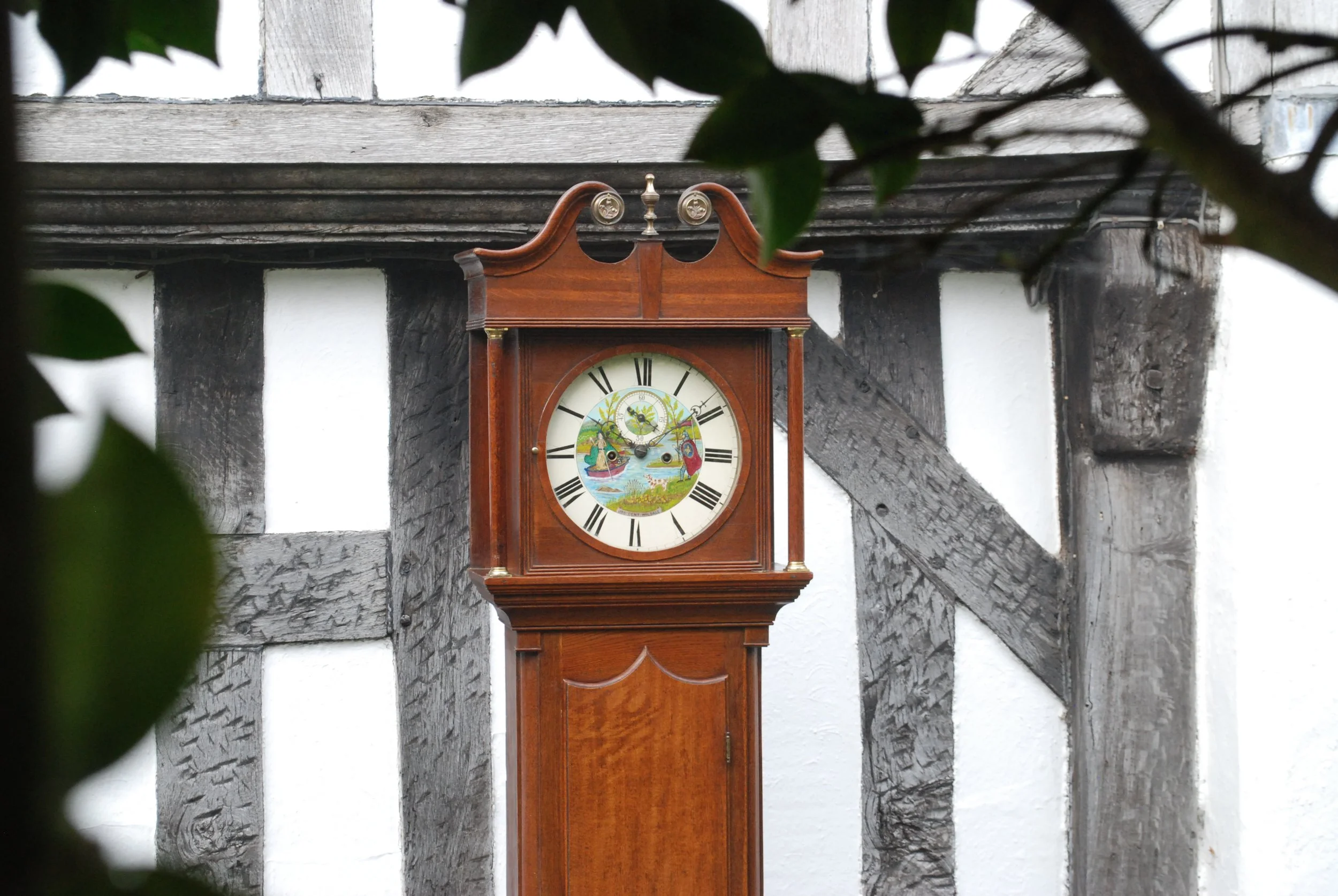
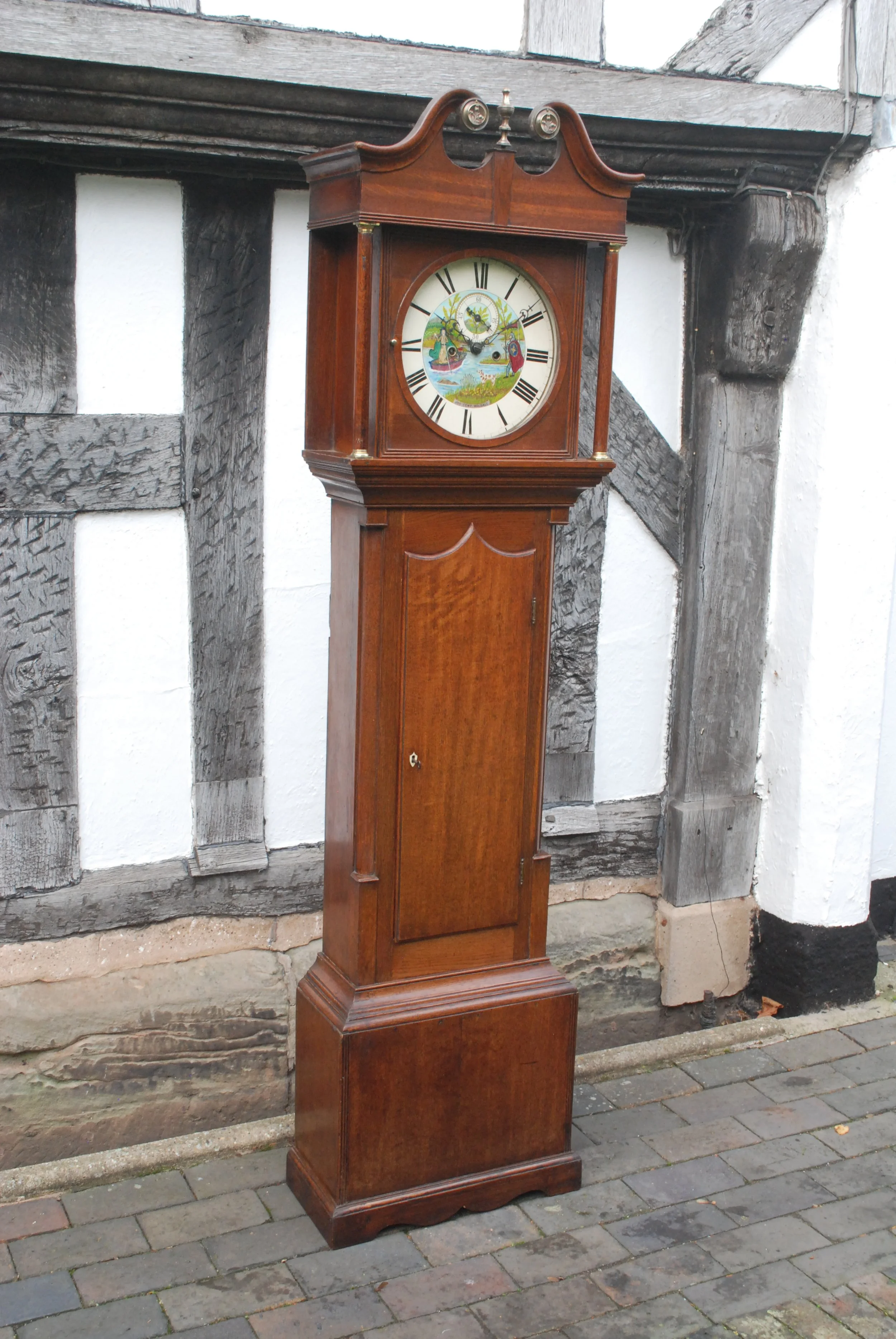
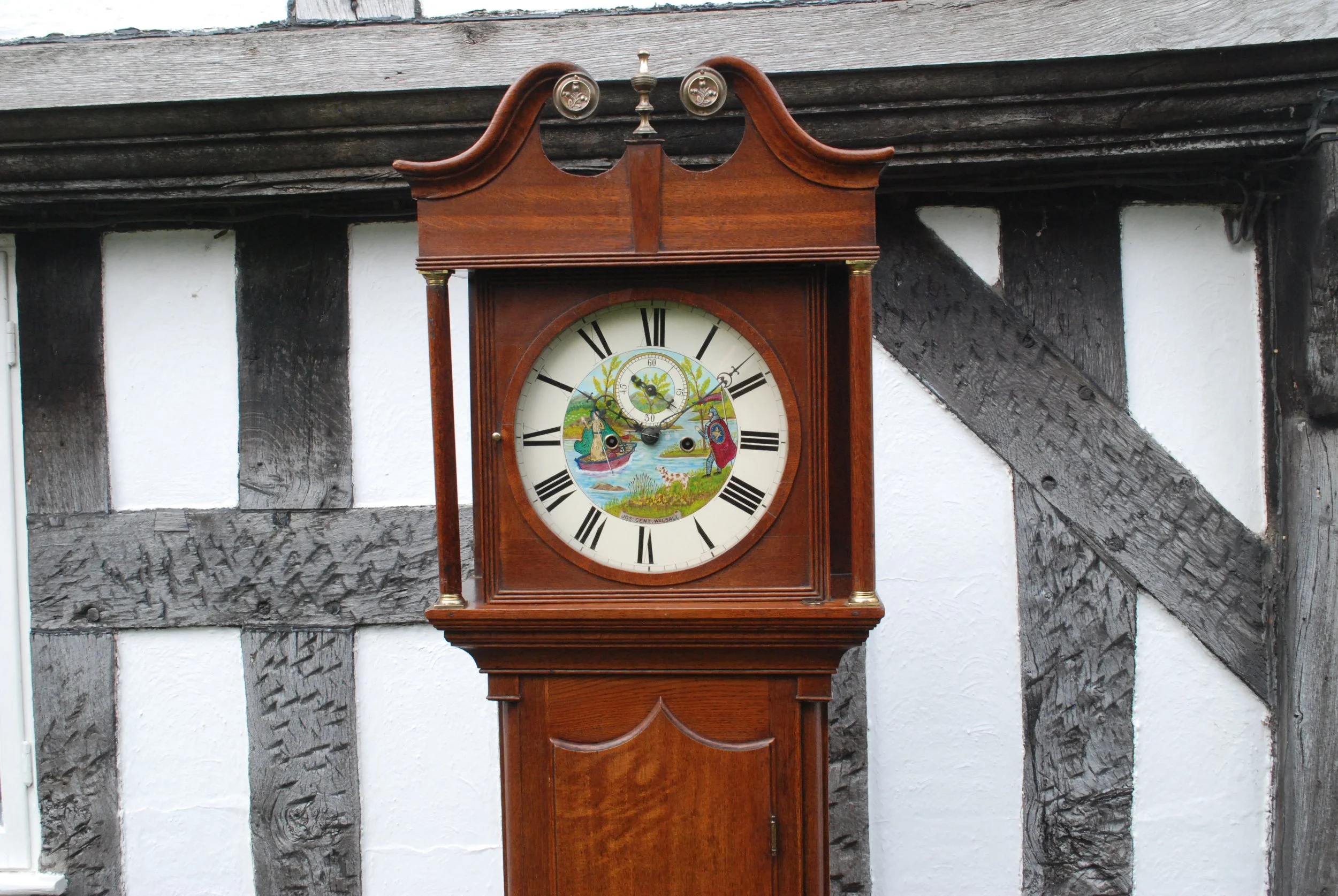
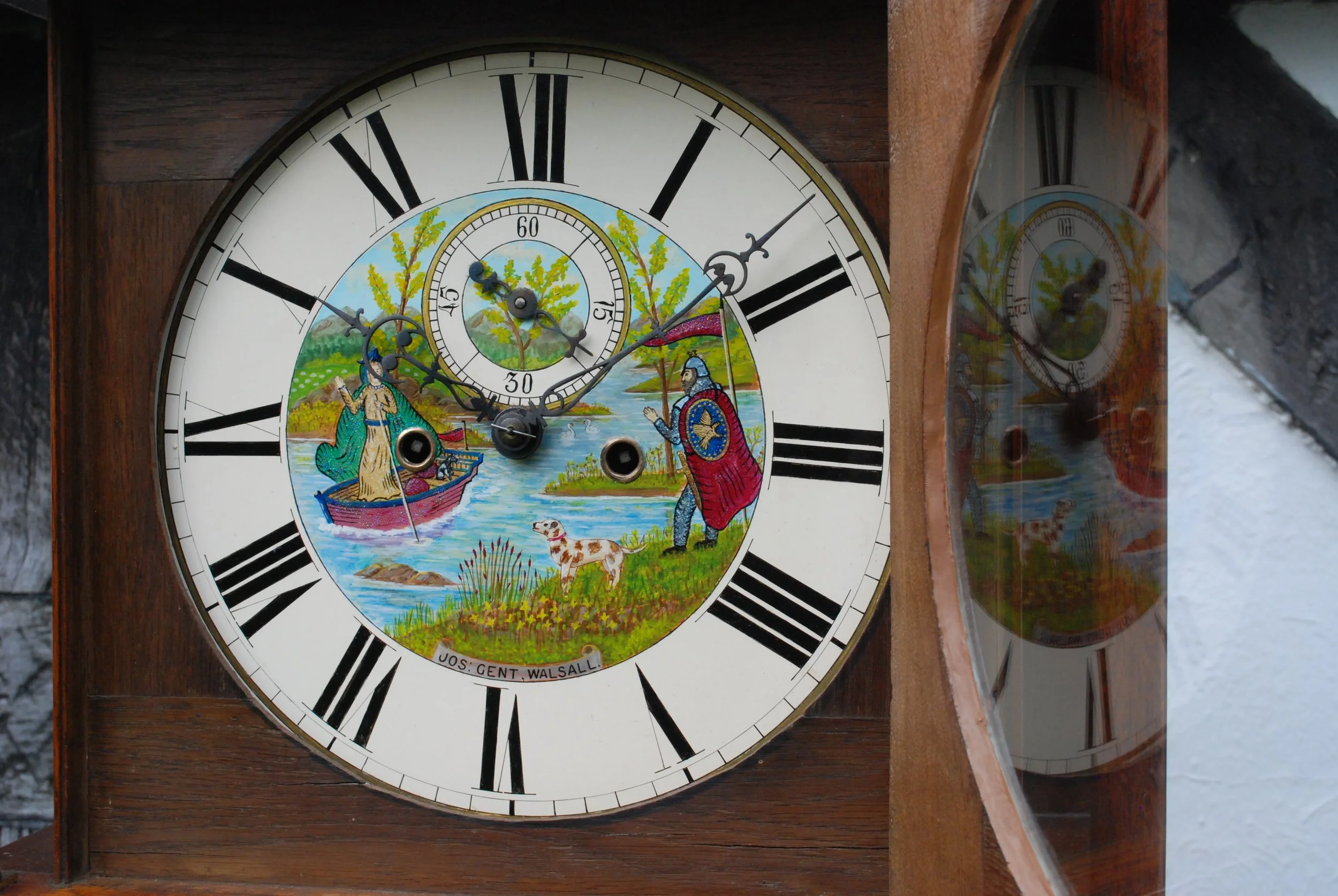
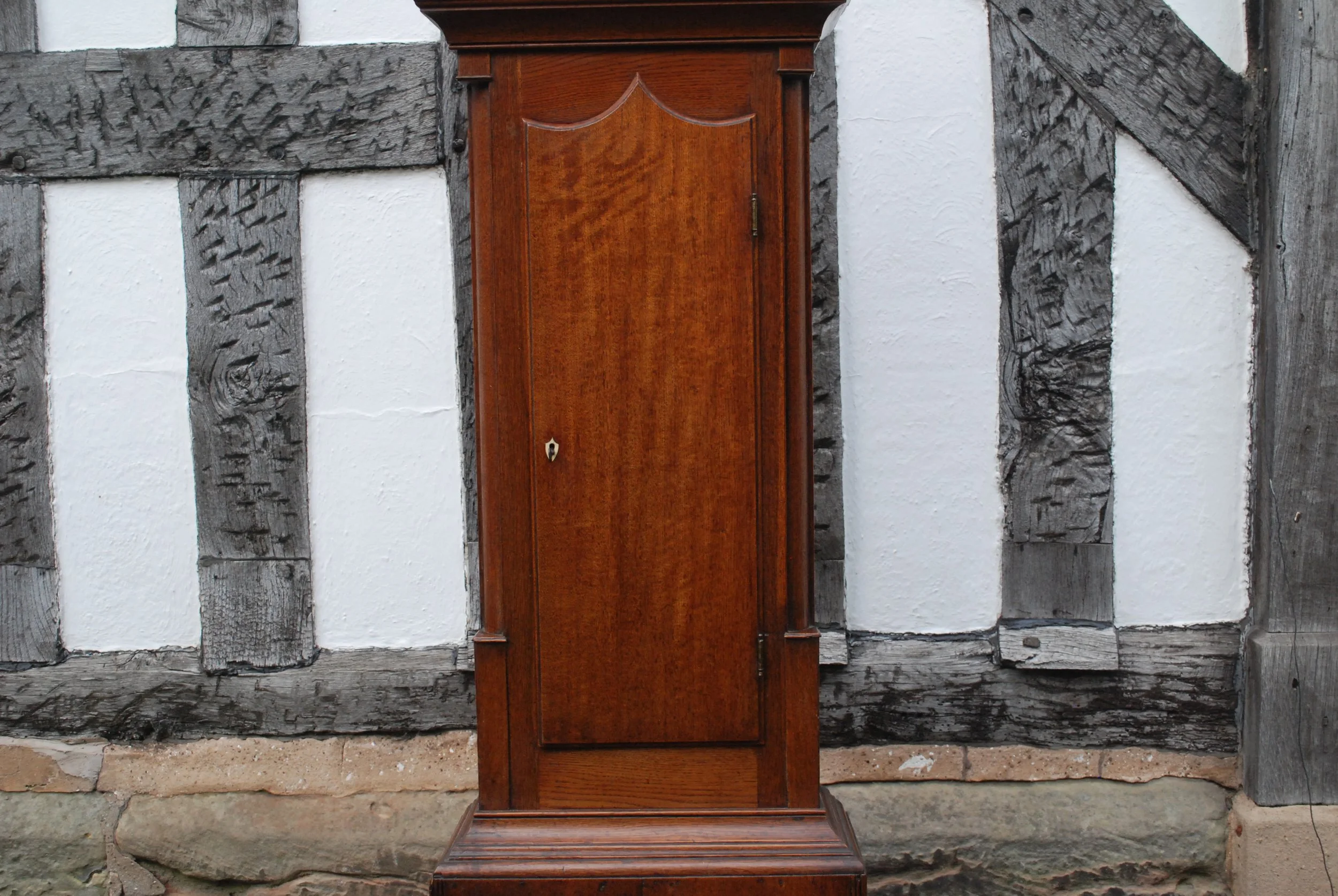
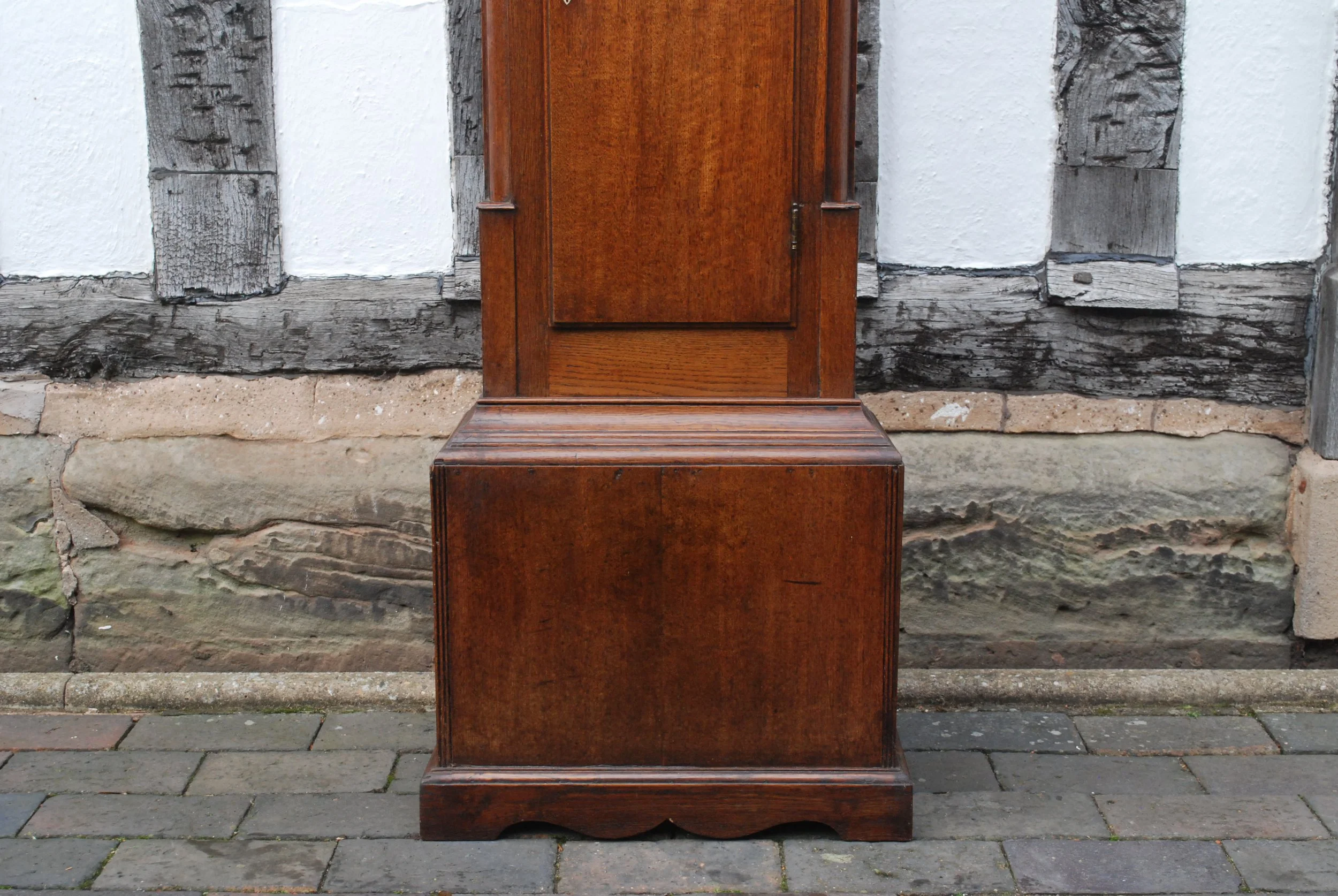
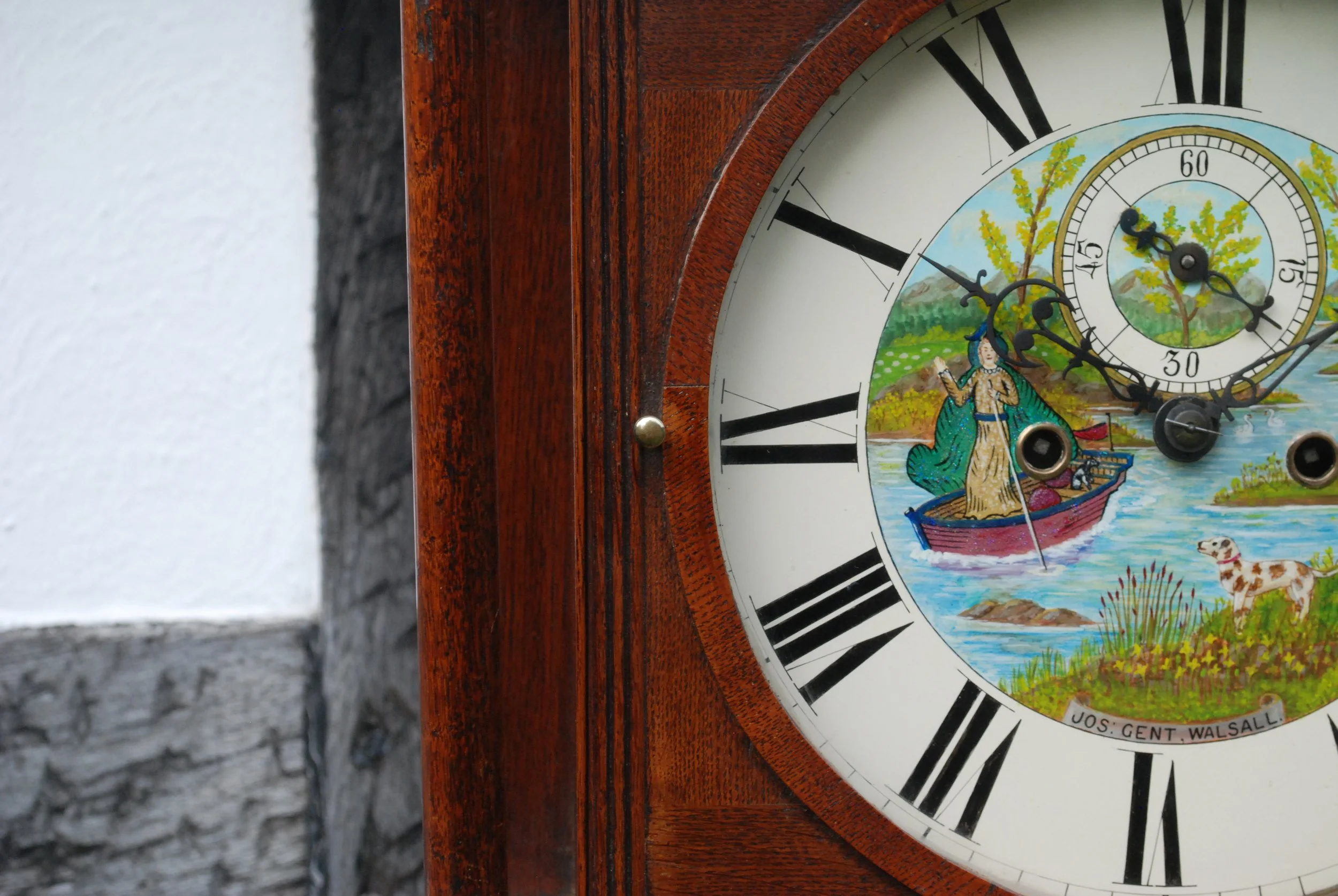
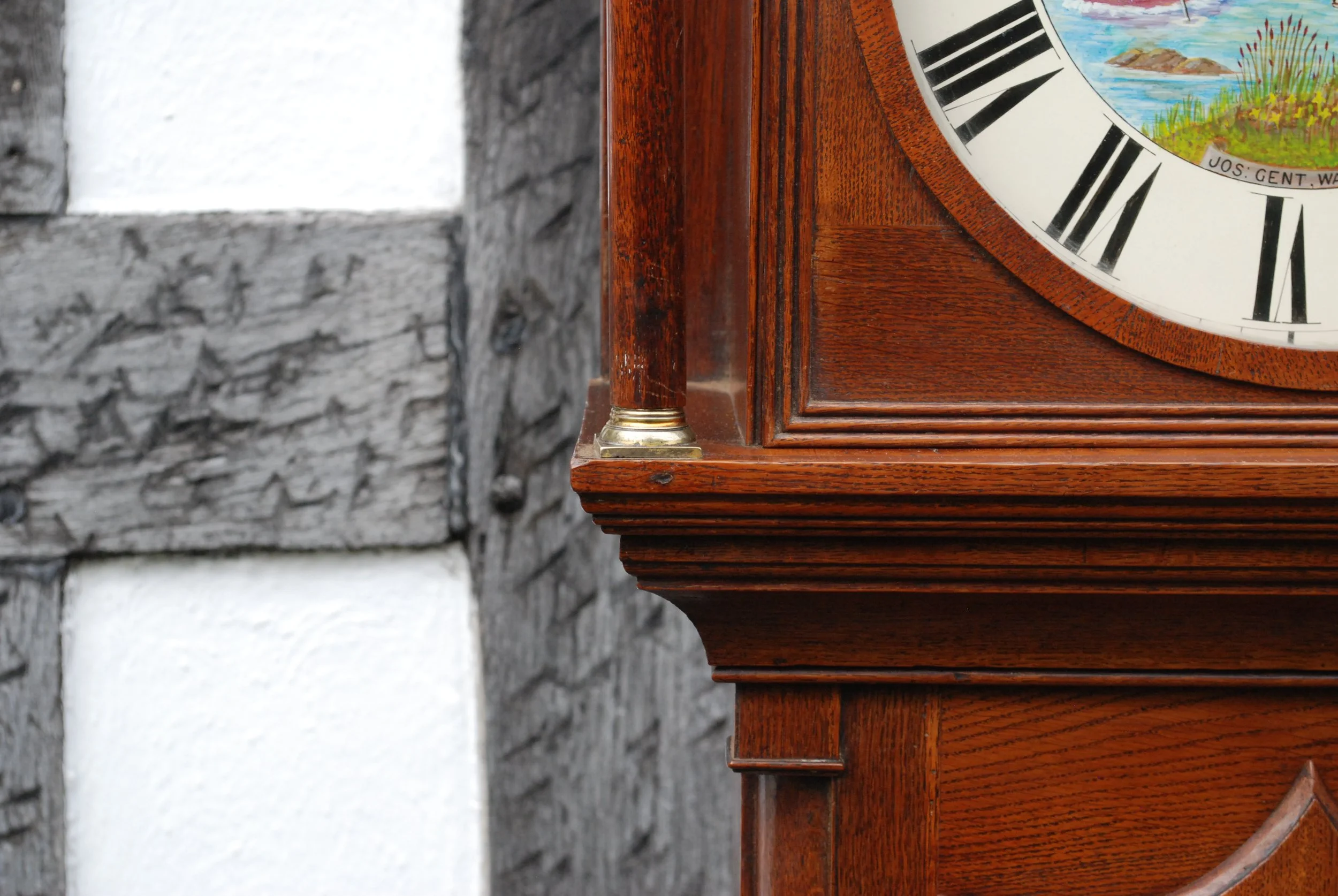
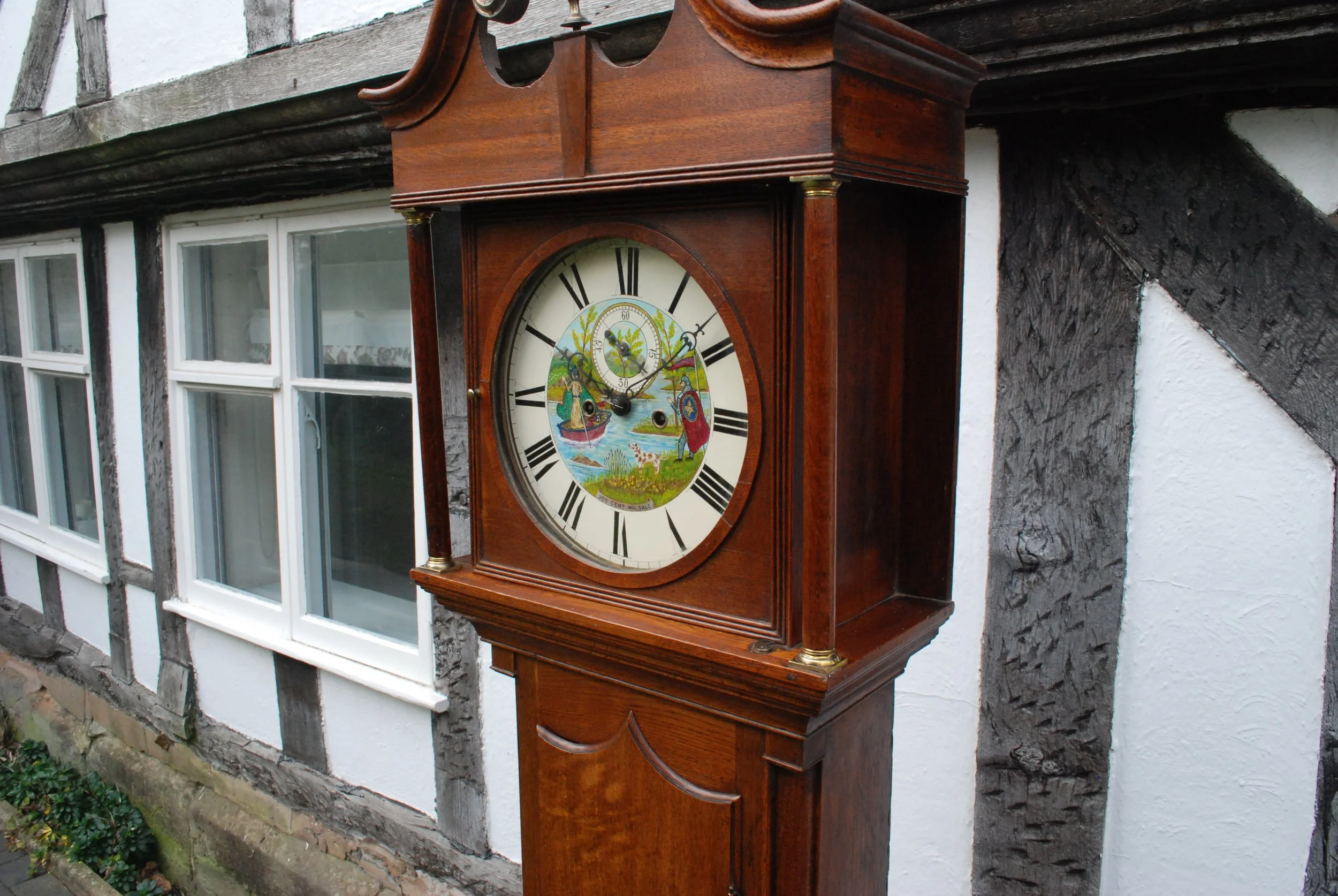
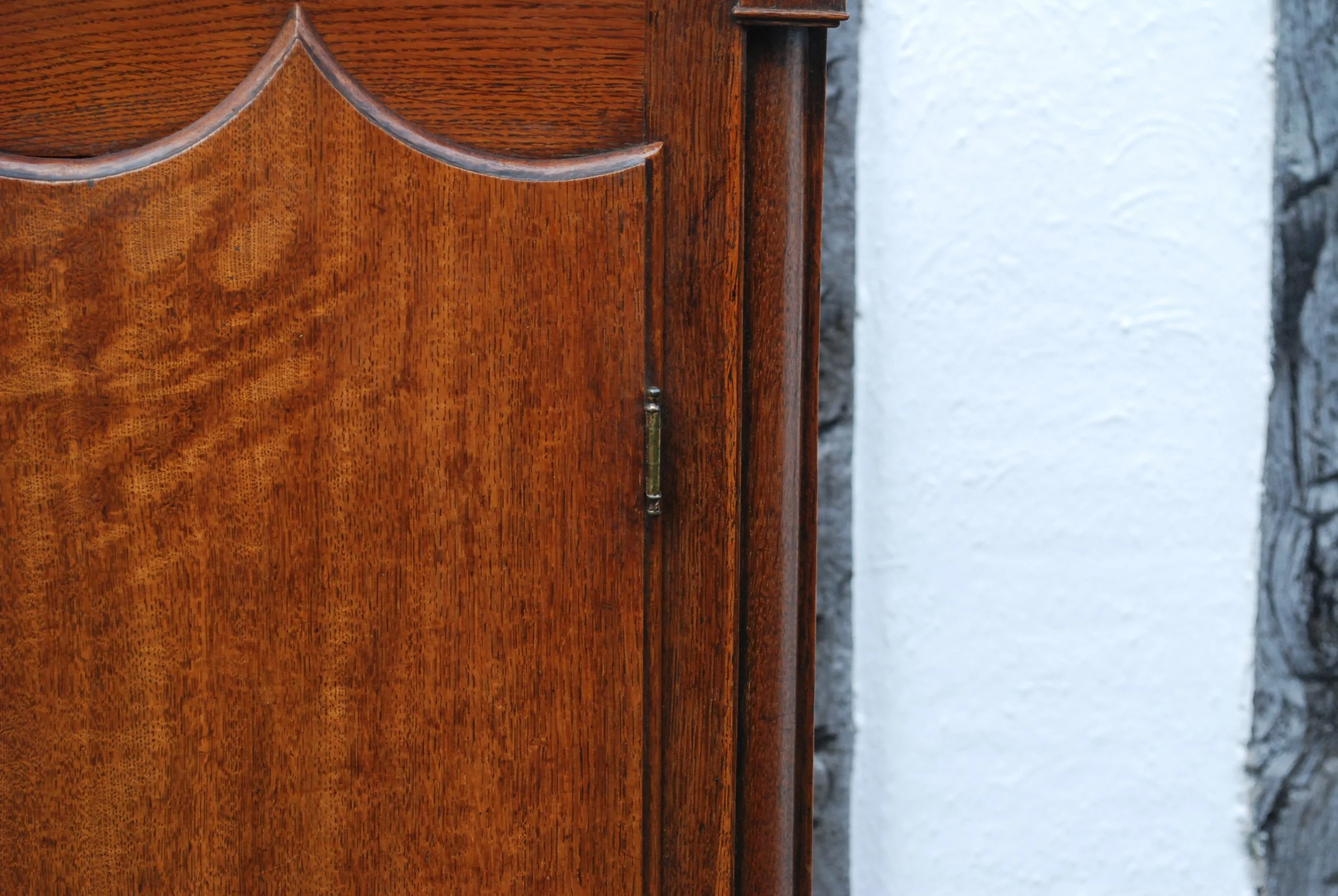
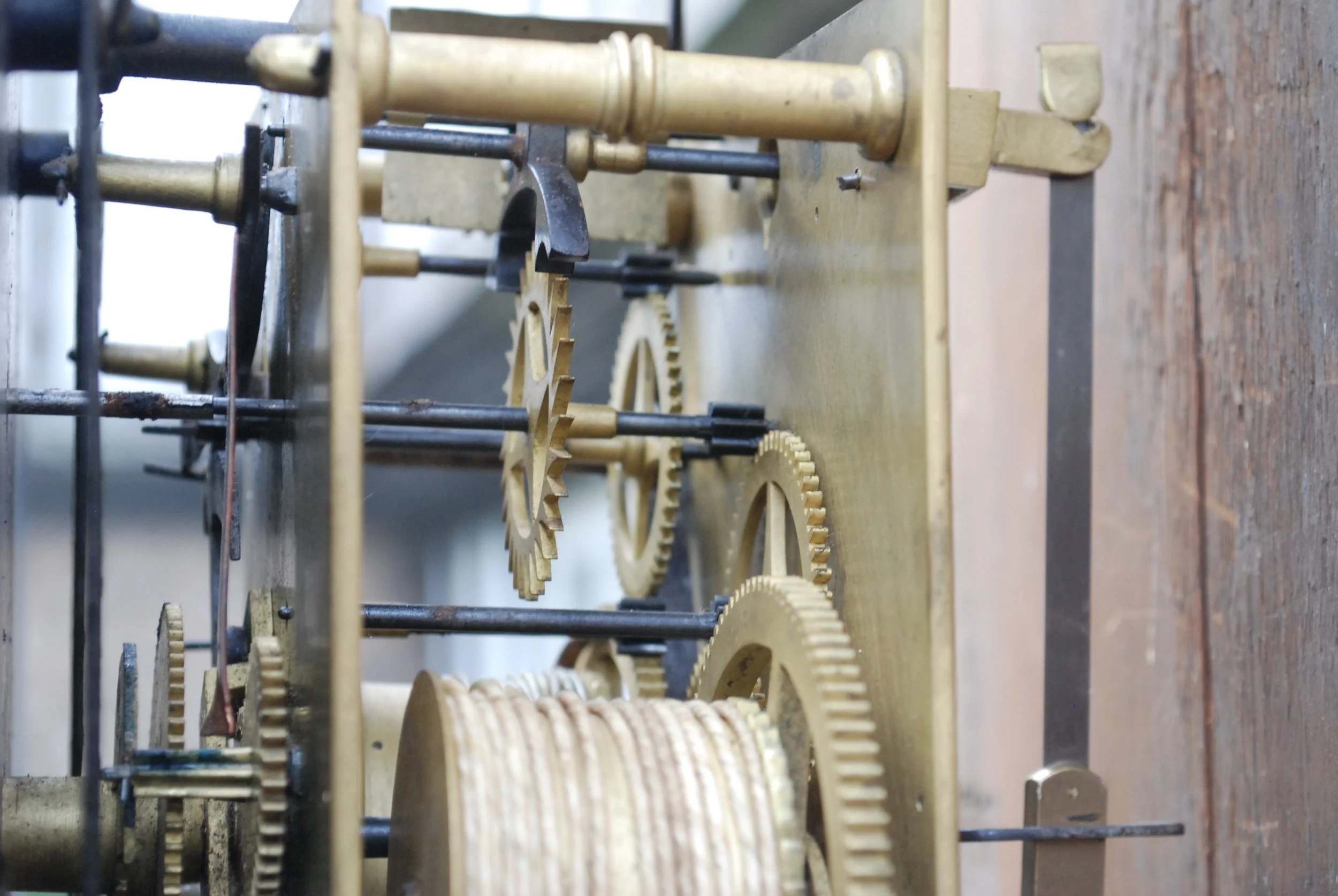
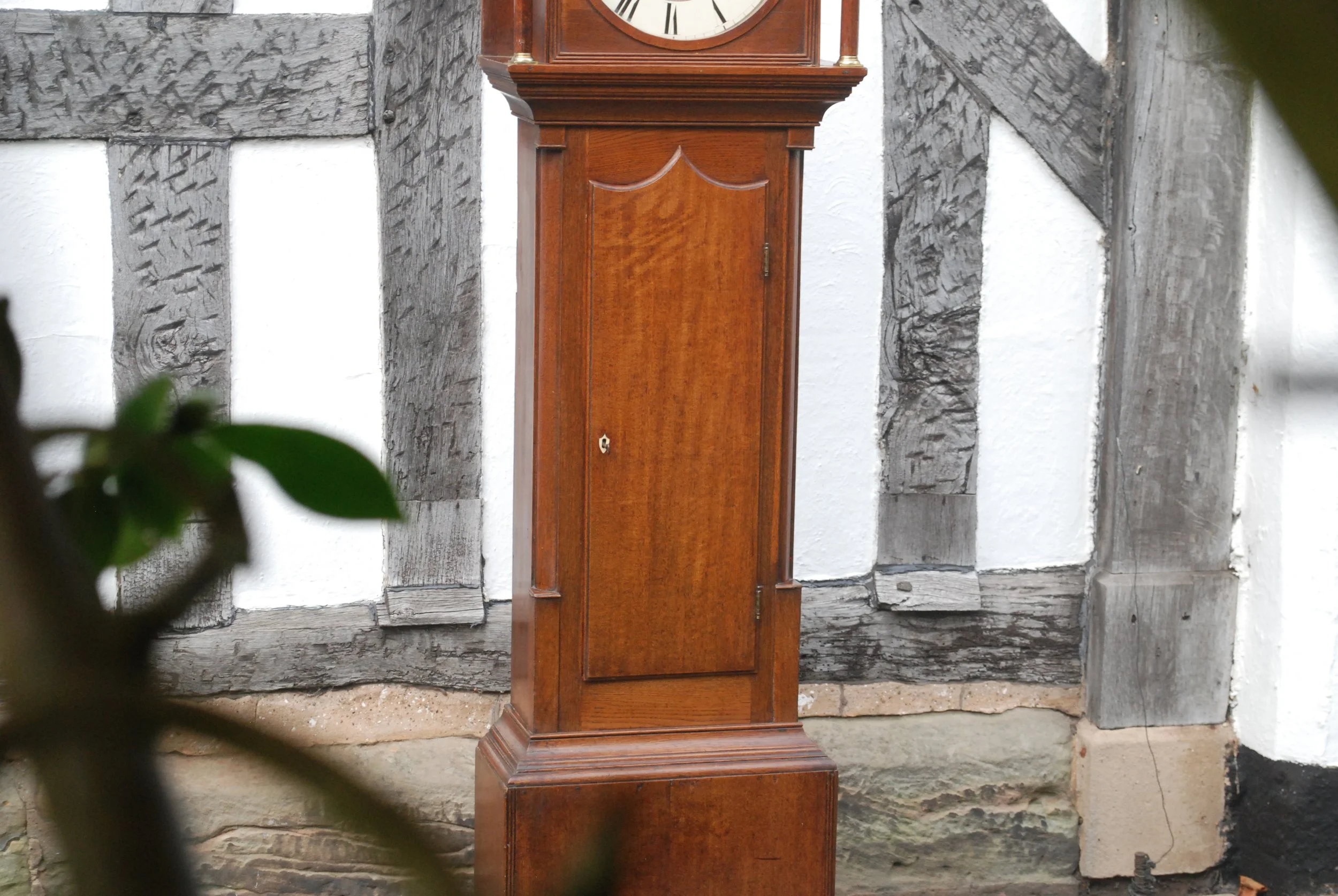
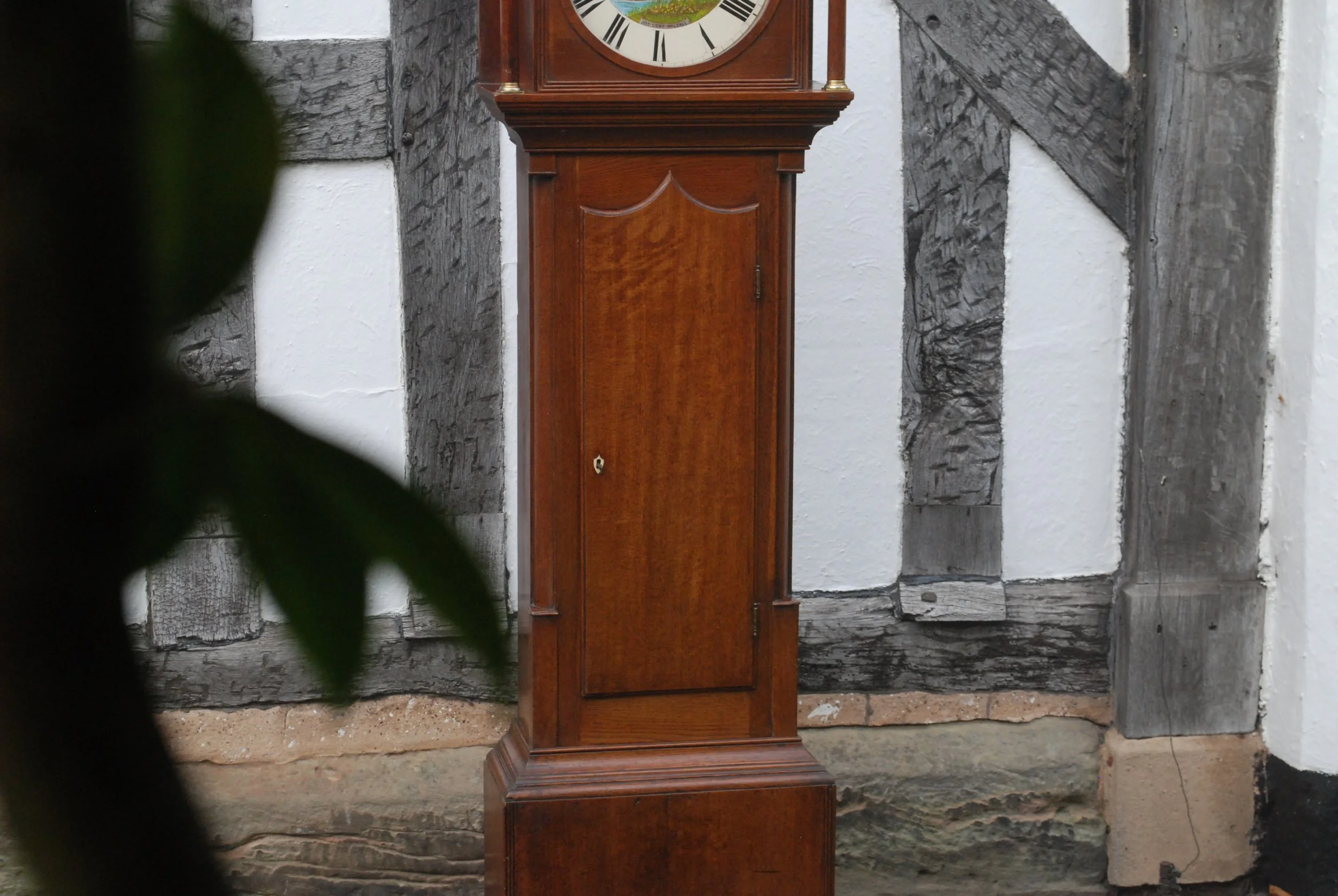
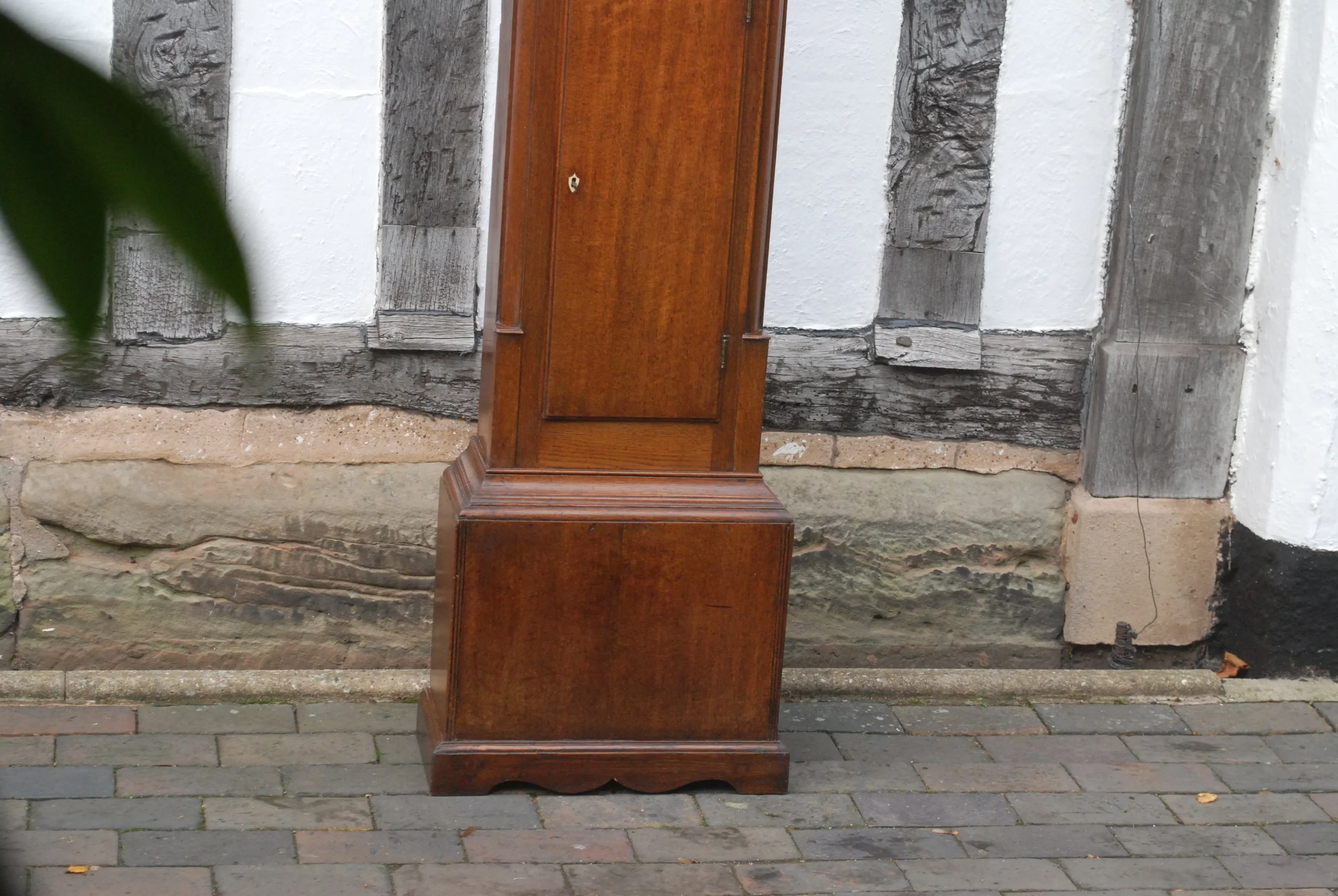
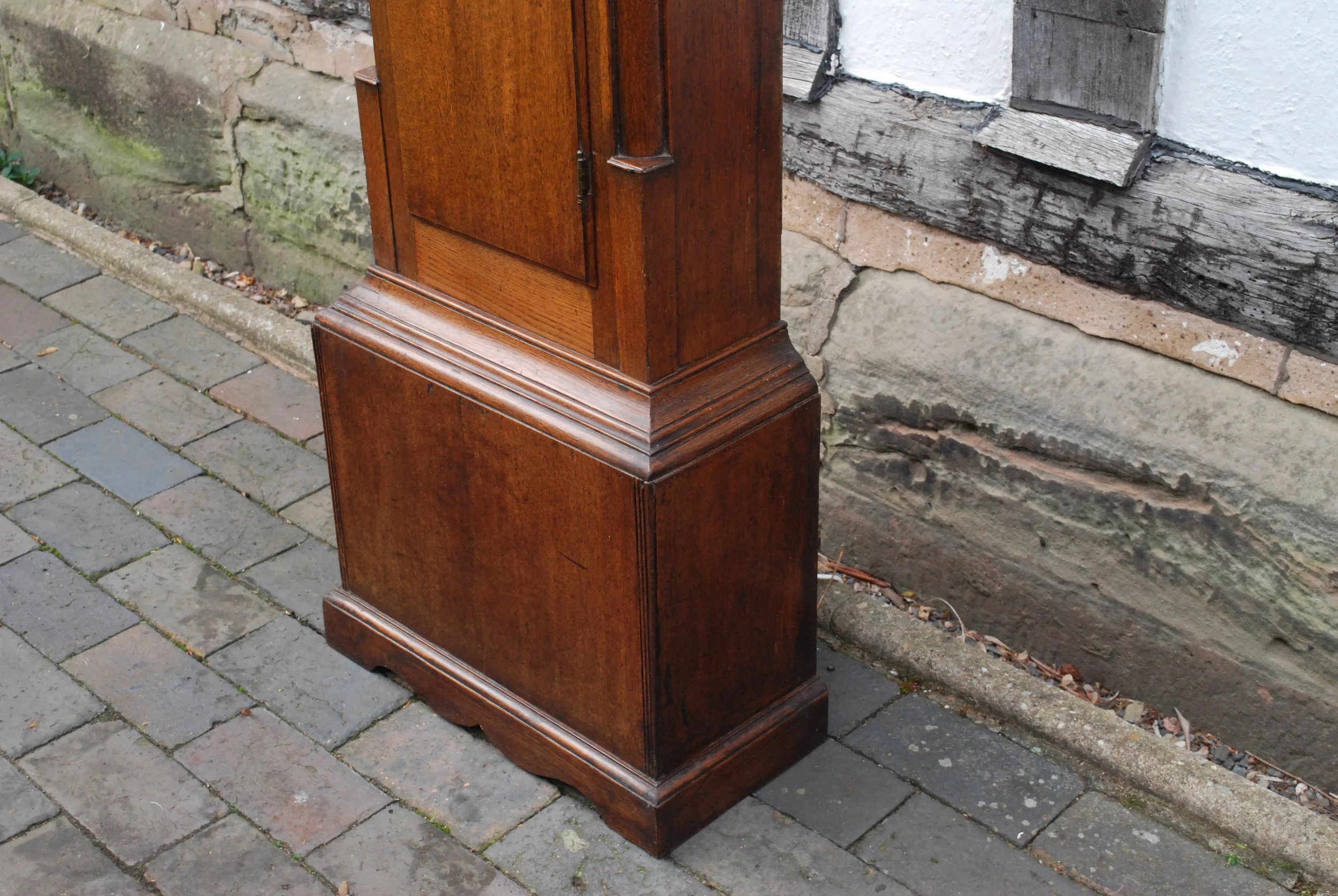

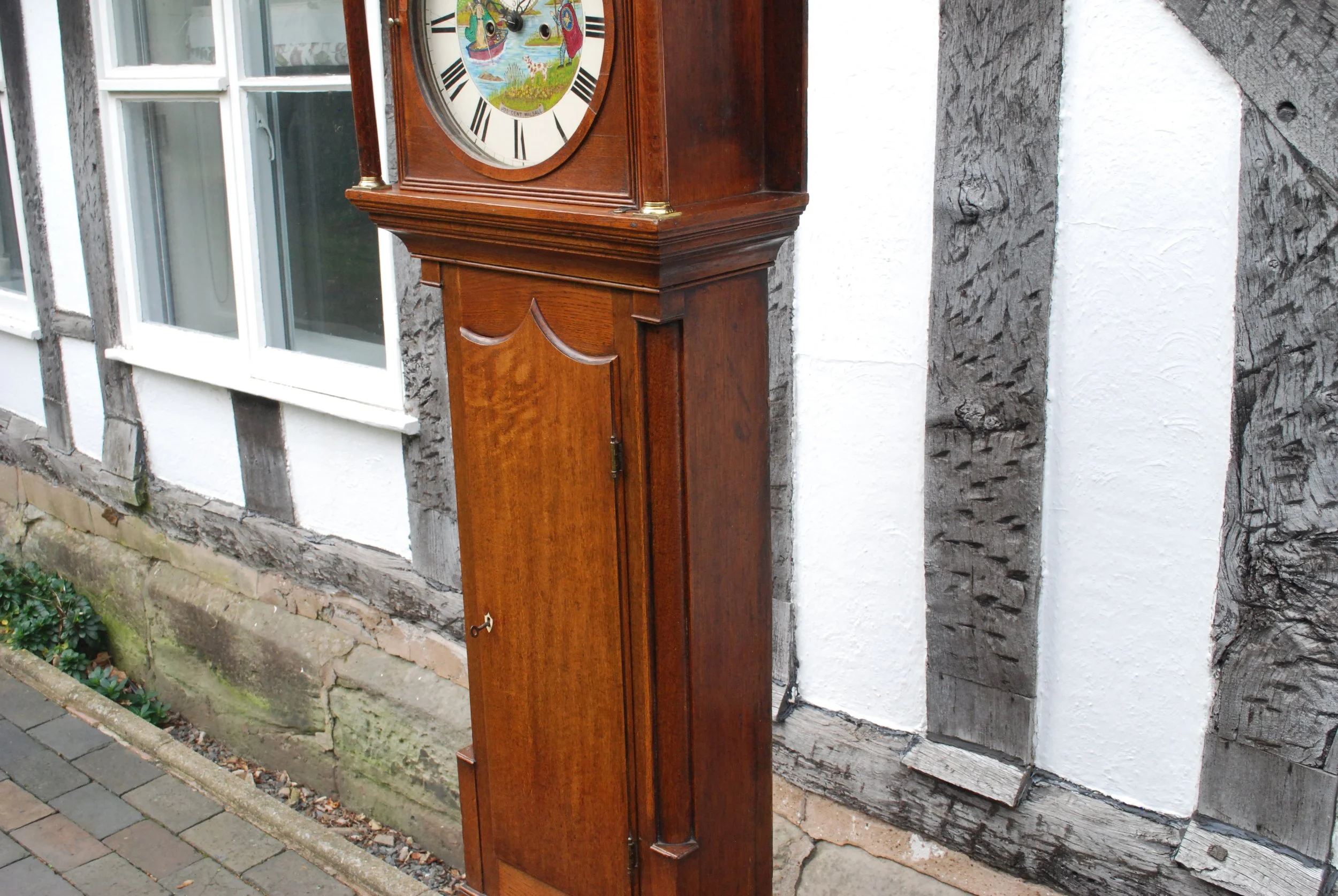
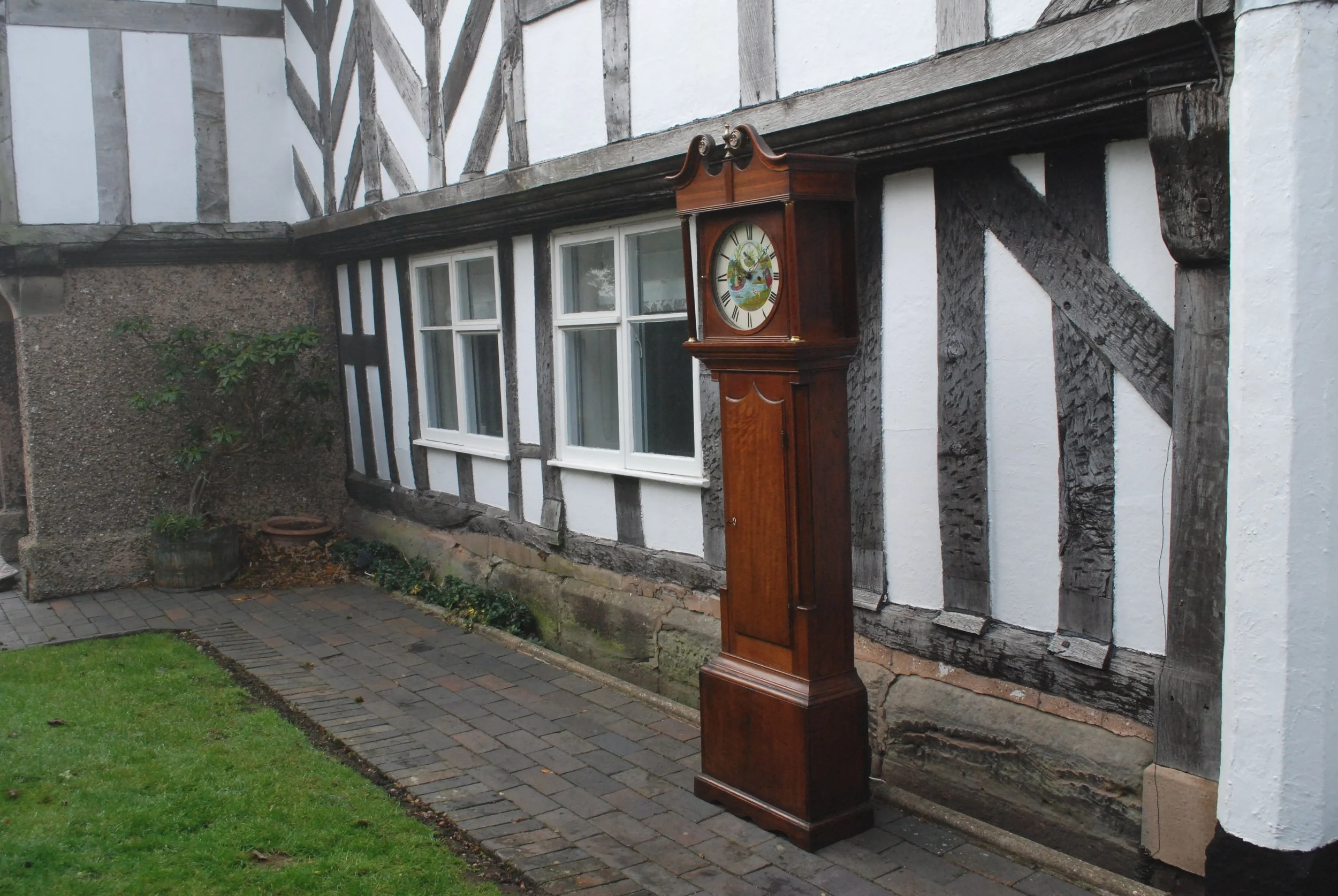
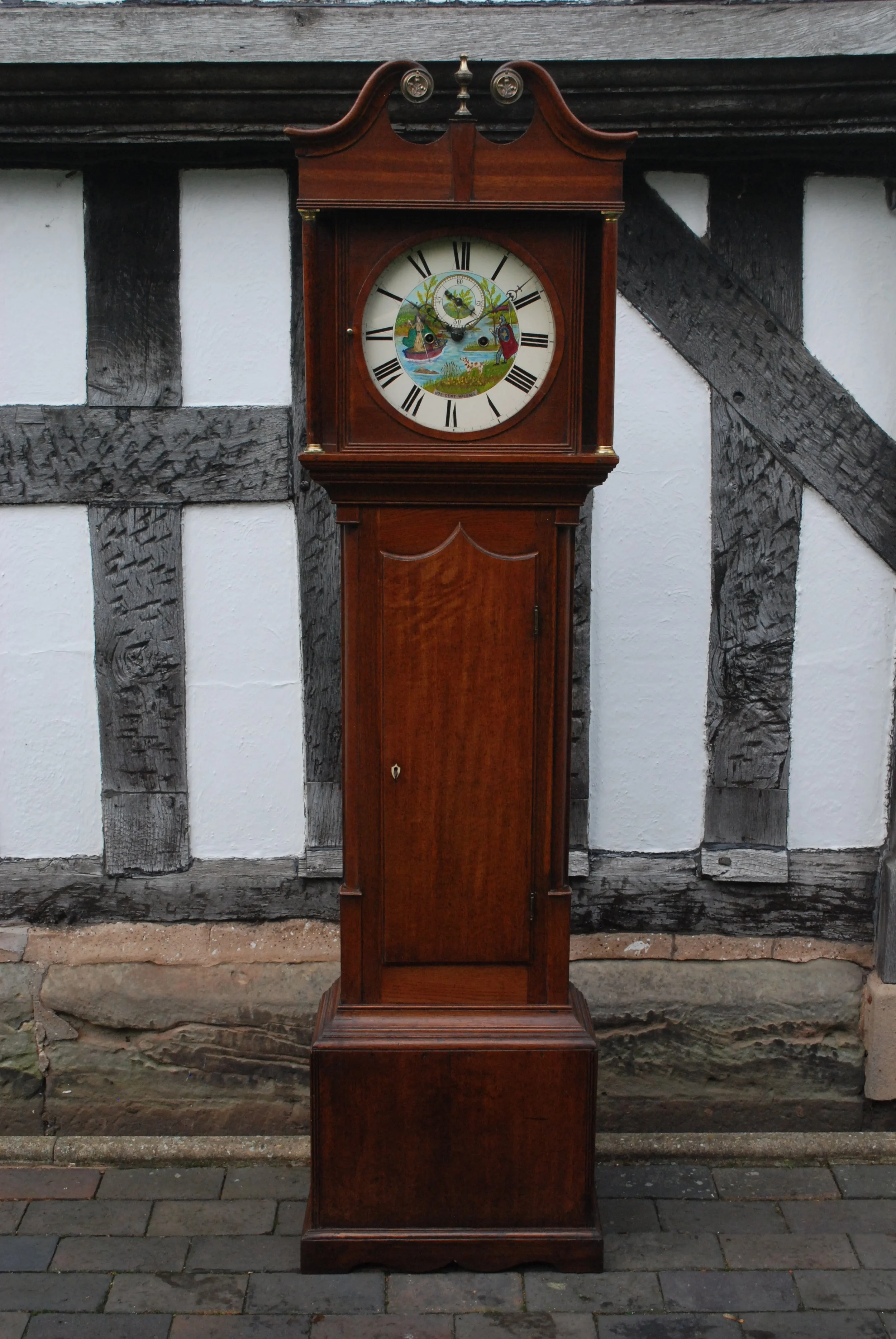
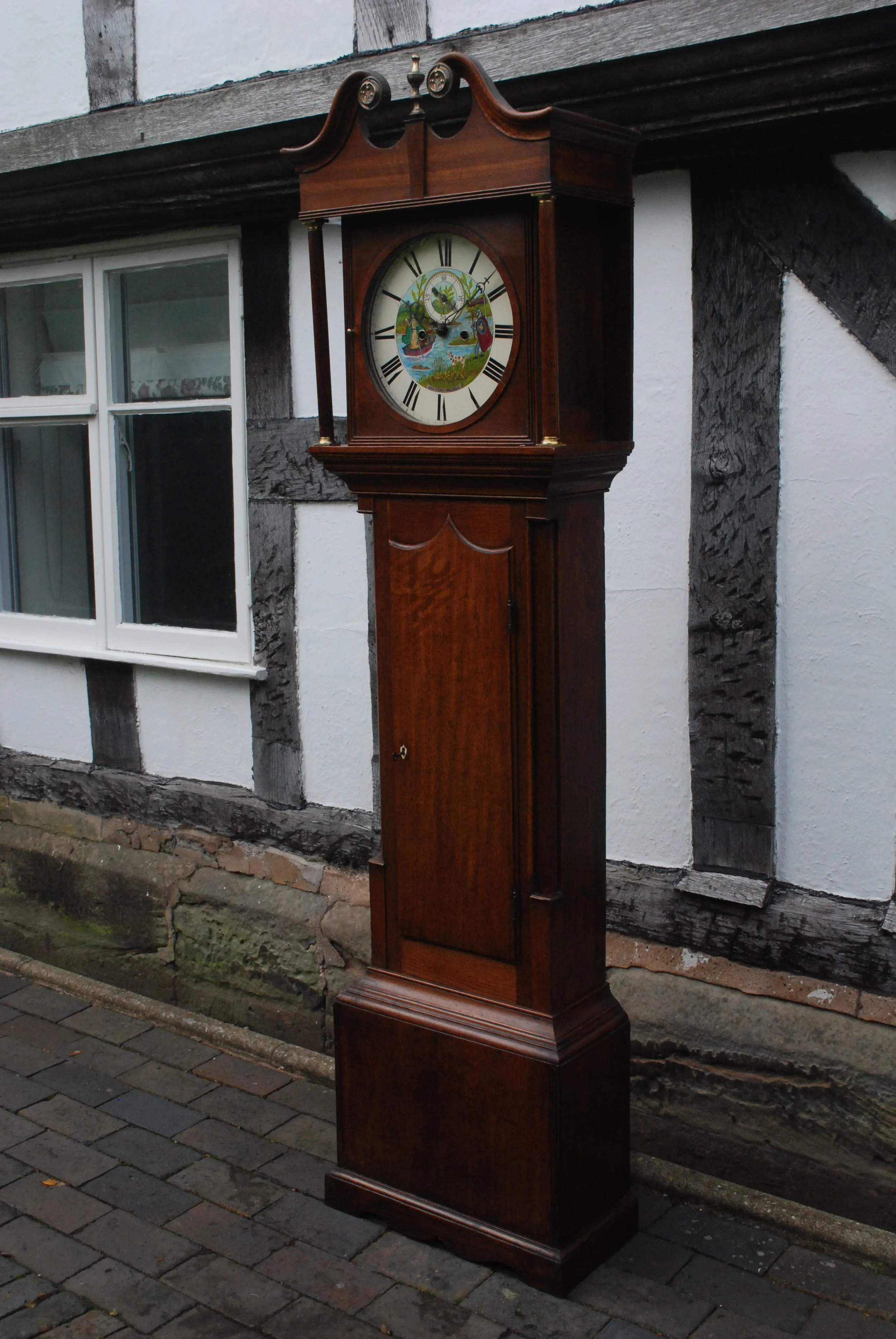
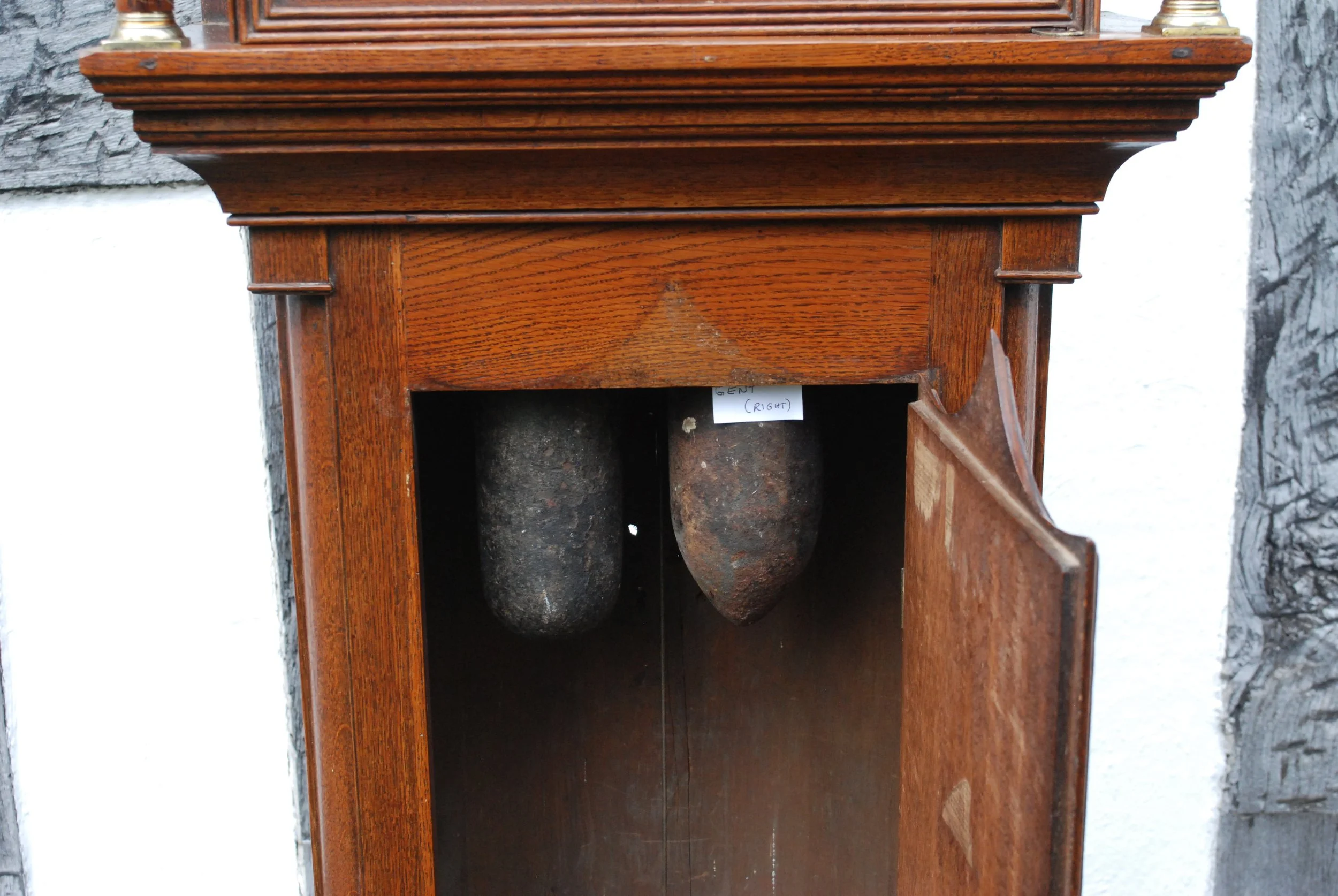
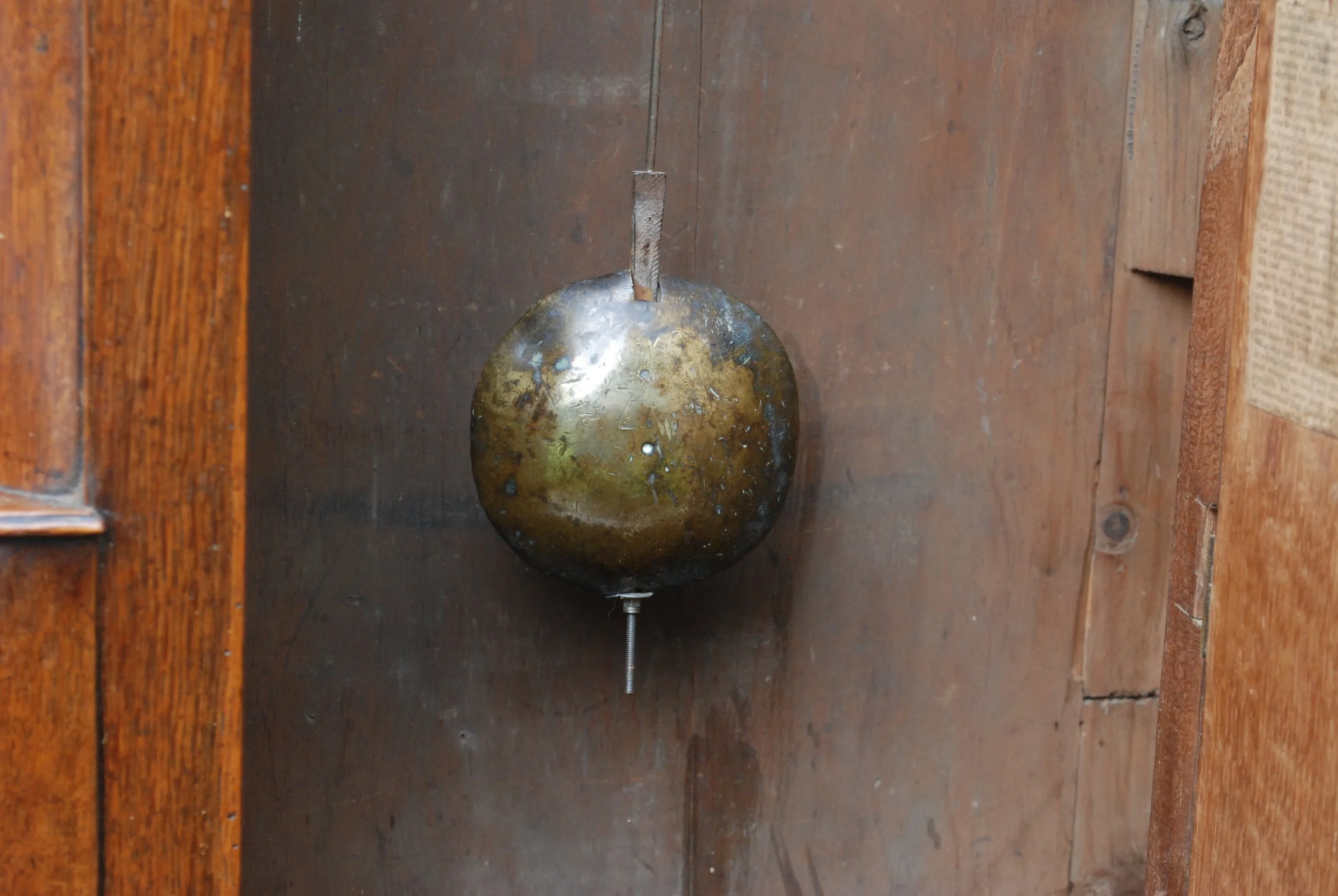
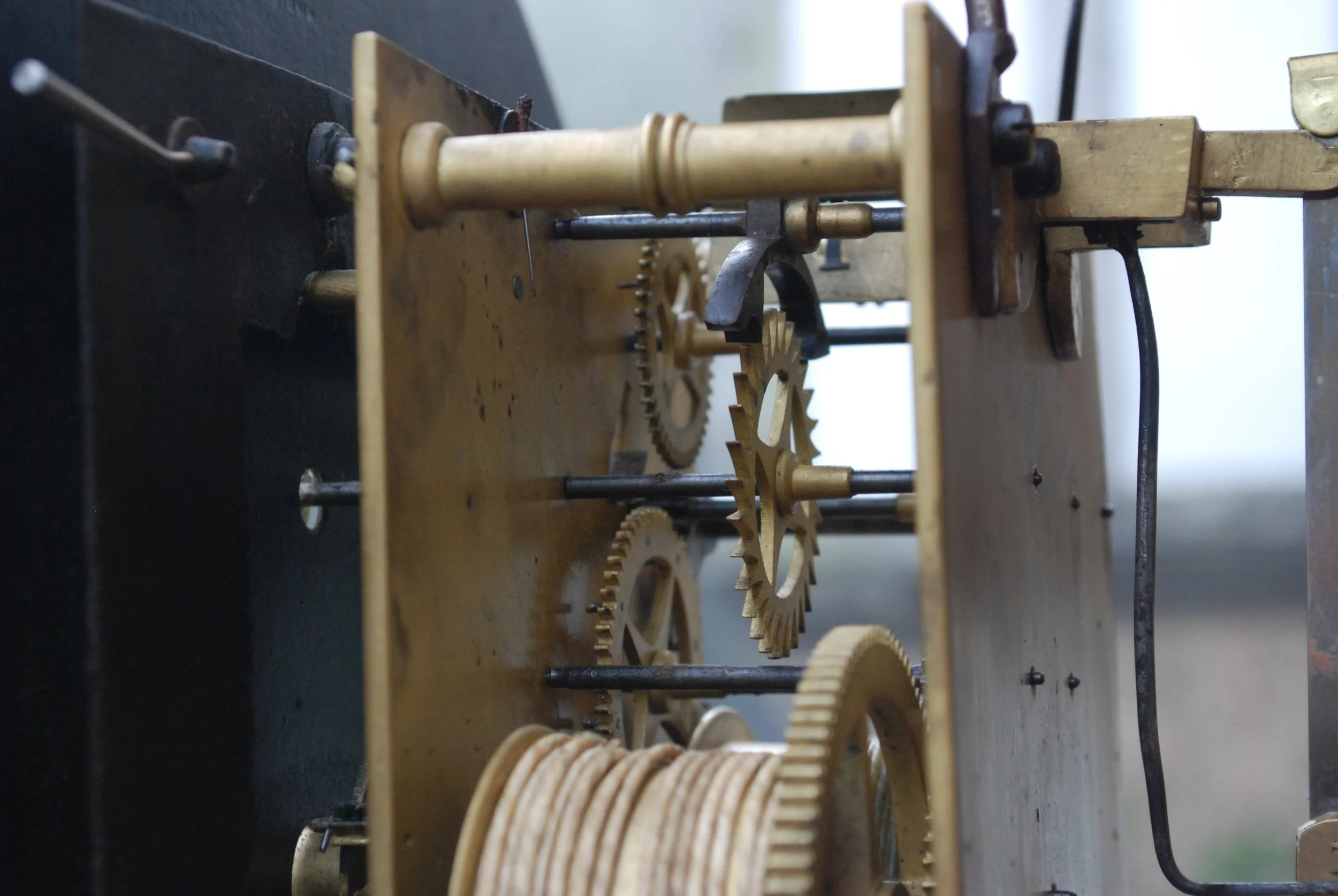
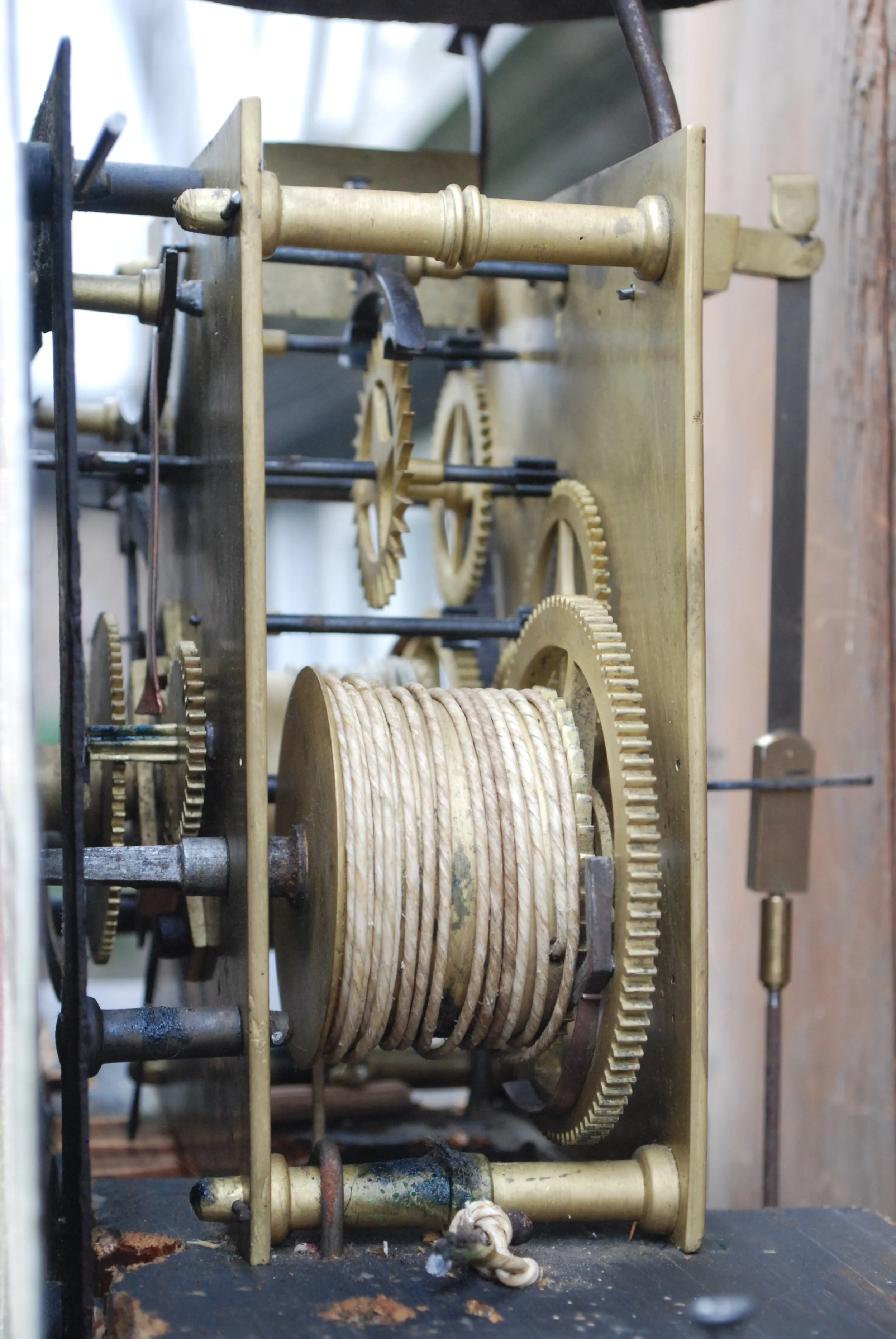
This is a circular dial 8-day painted face clock of relatively diminutive height,
housed in a medium-oak case.
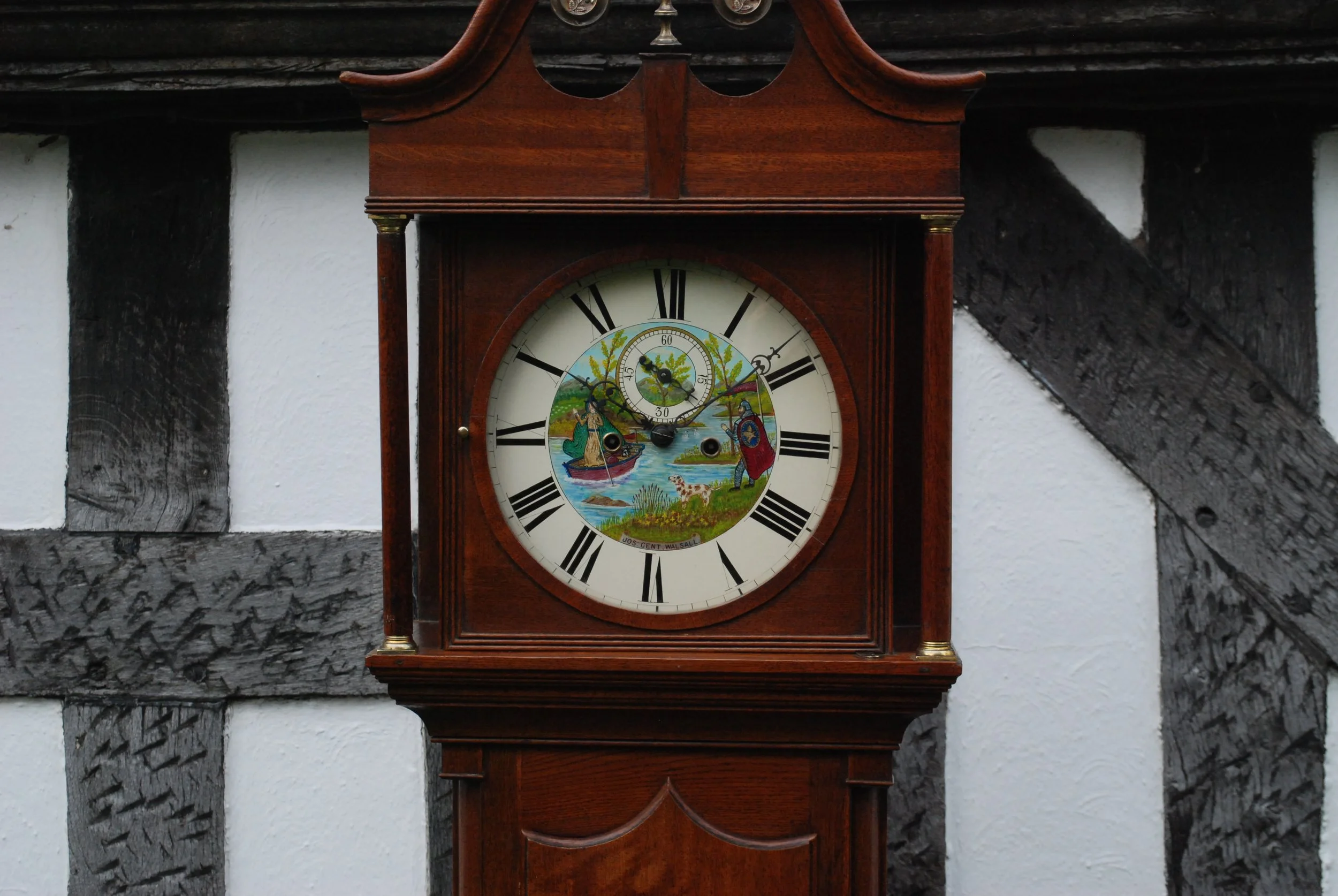
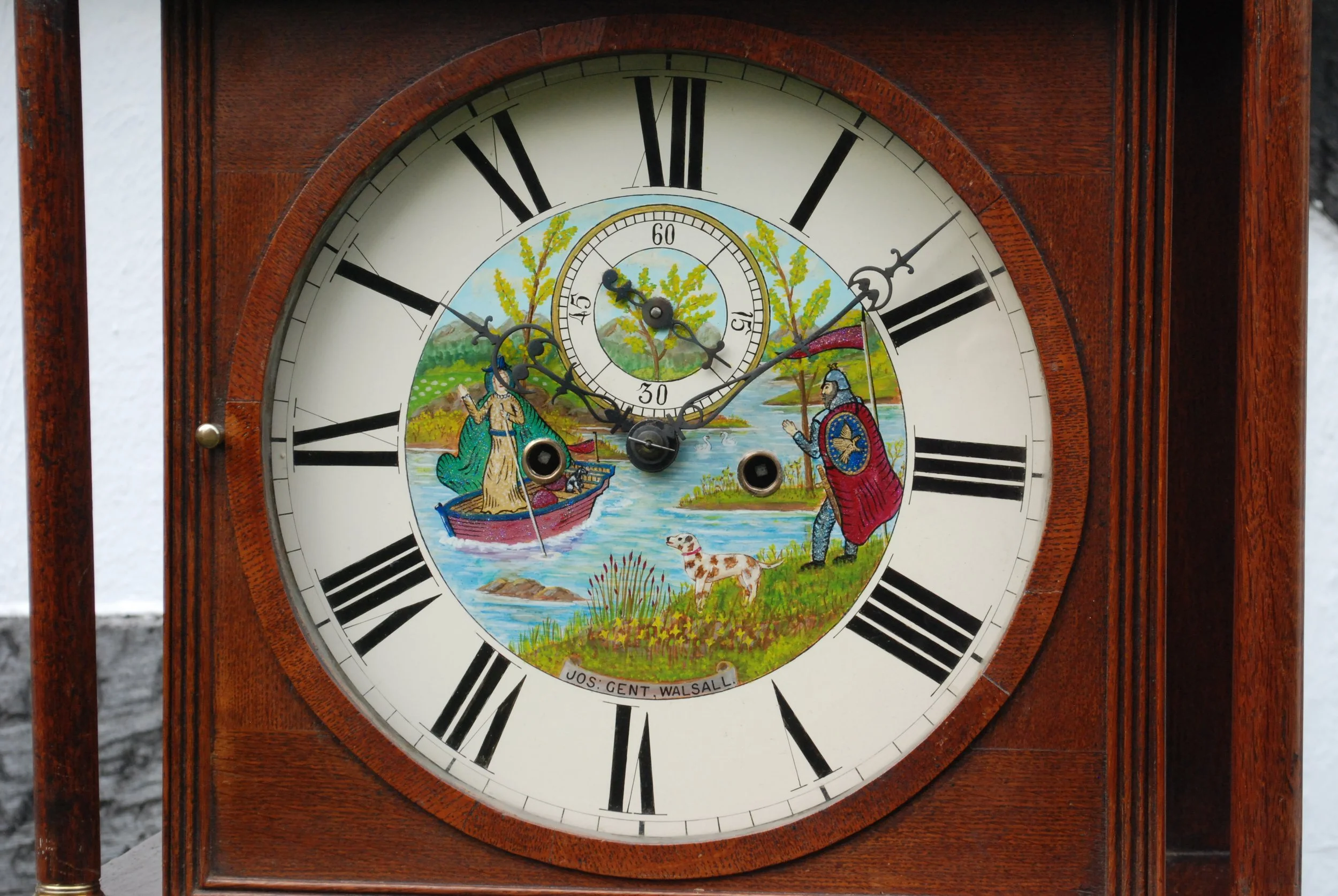
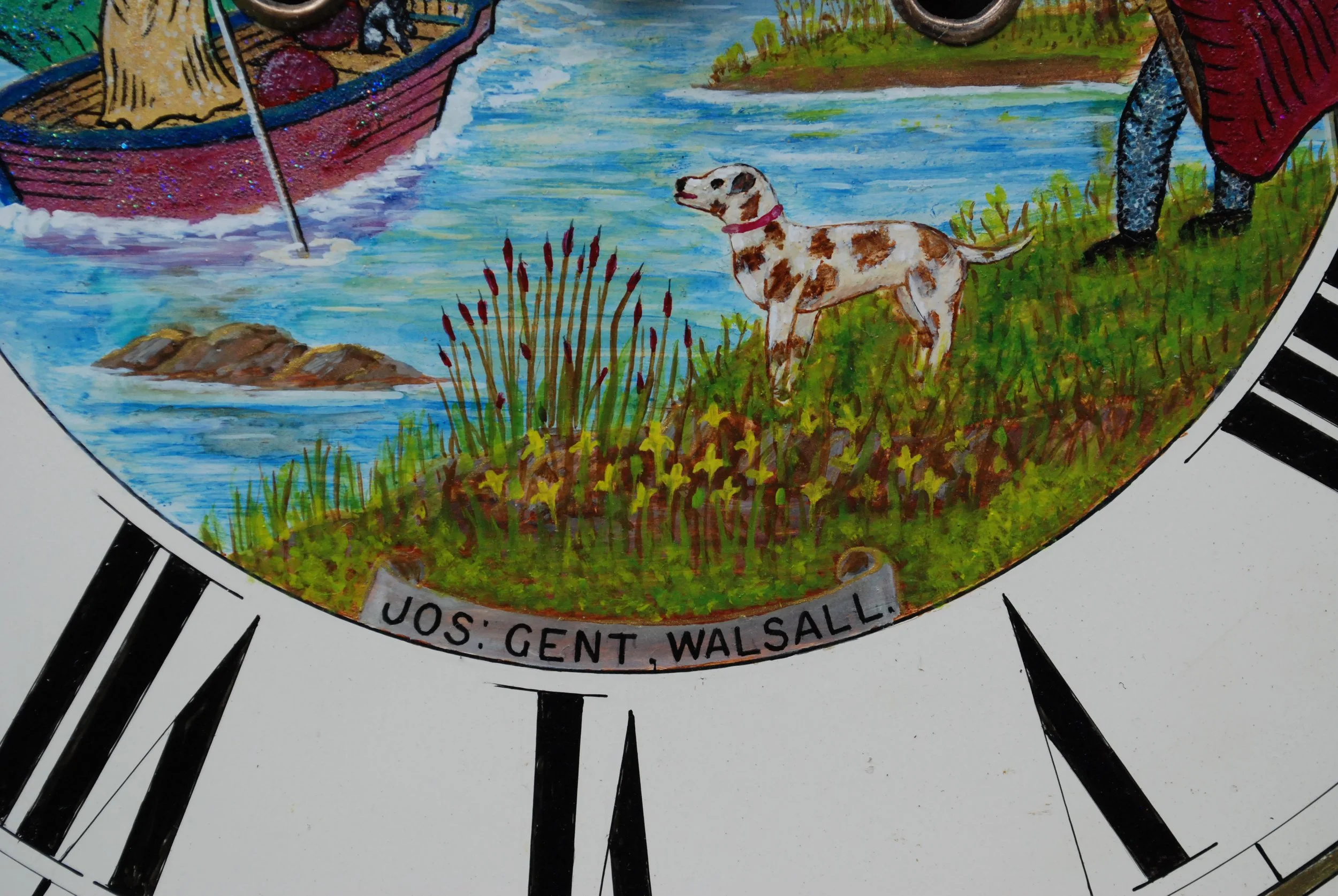
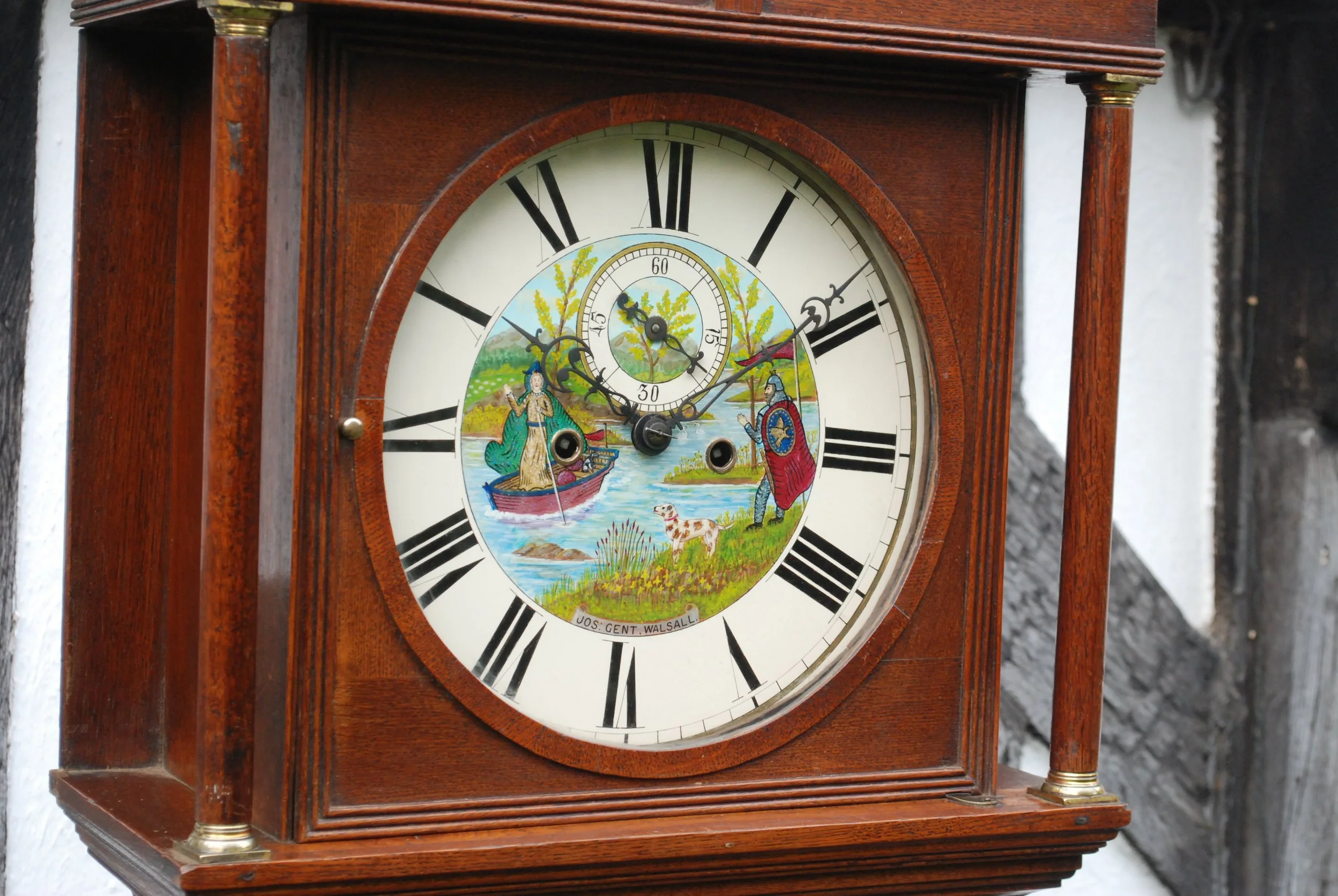
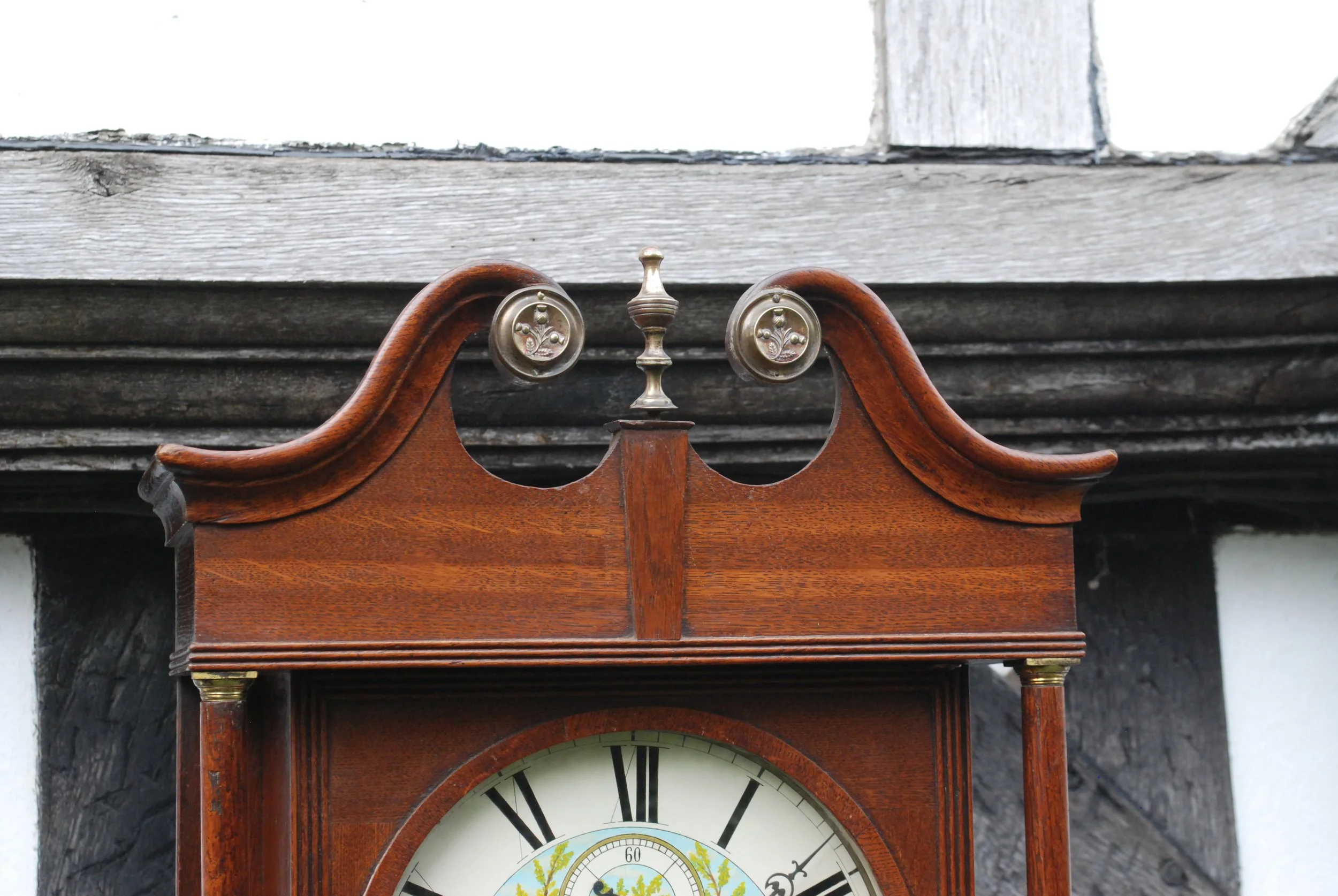
The quality painted face depicts a medieval river scene with a female in a punt and a male dressed in armour on the bank.
It has Roman numerals for the hours and Arabic numerals for the seconds dial.
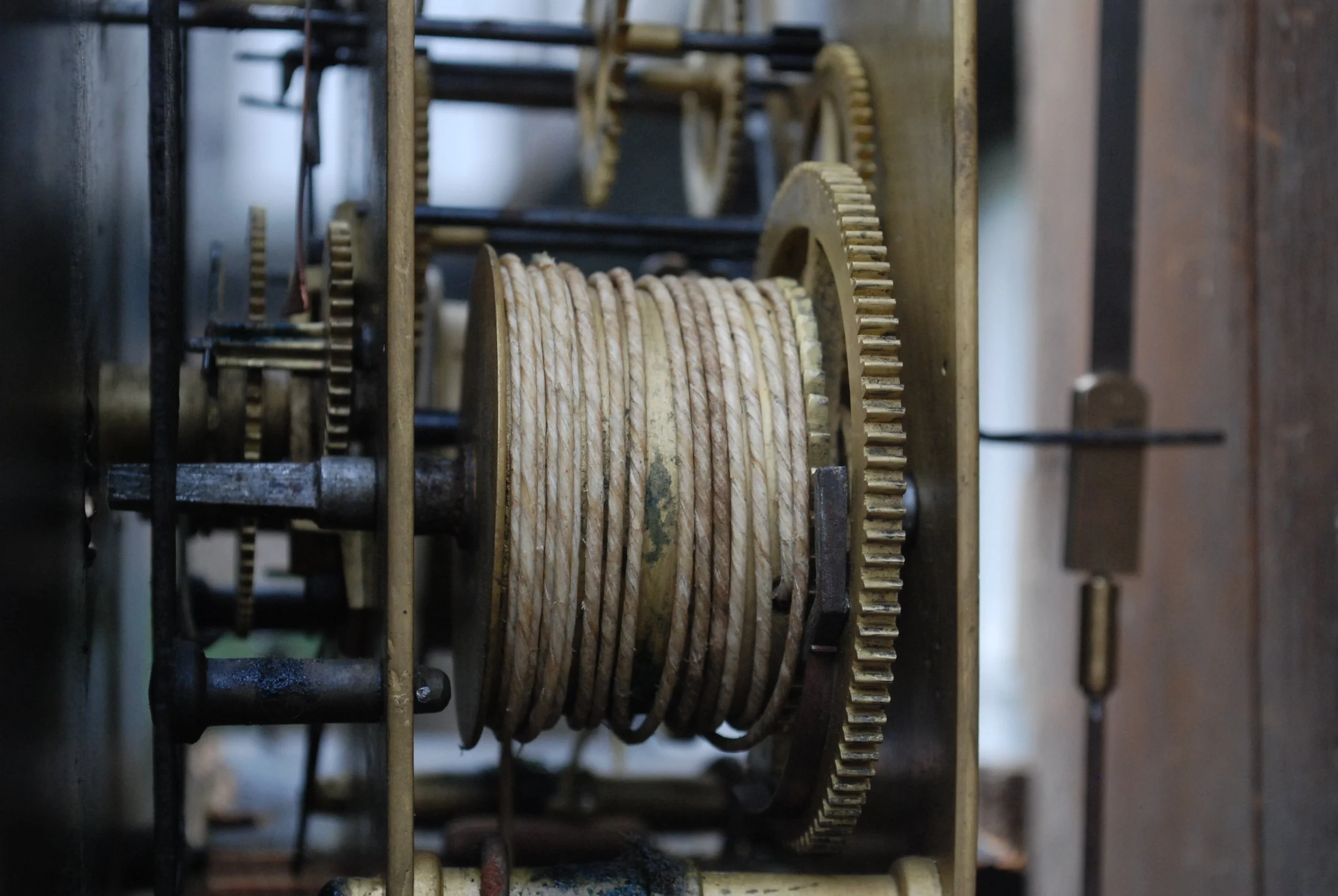
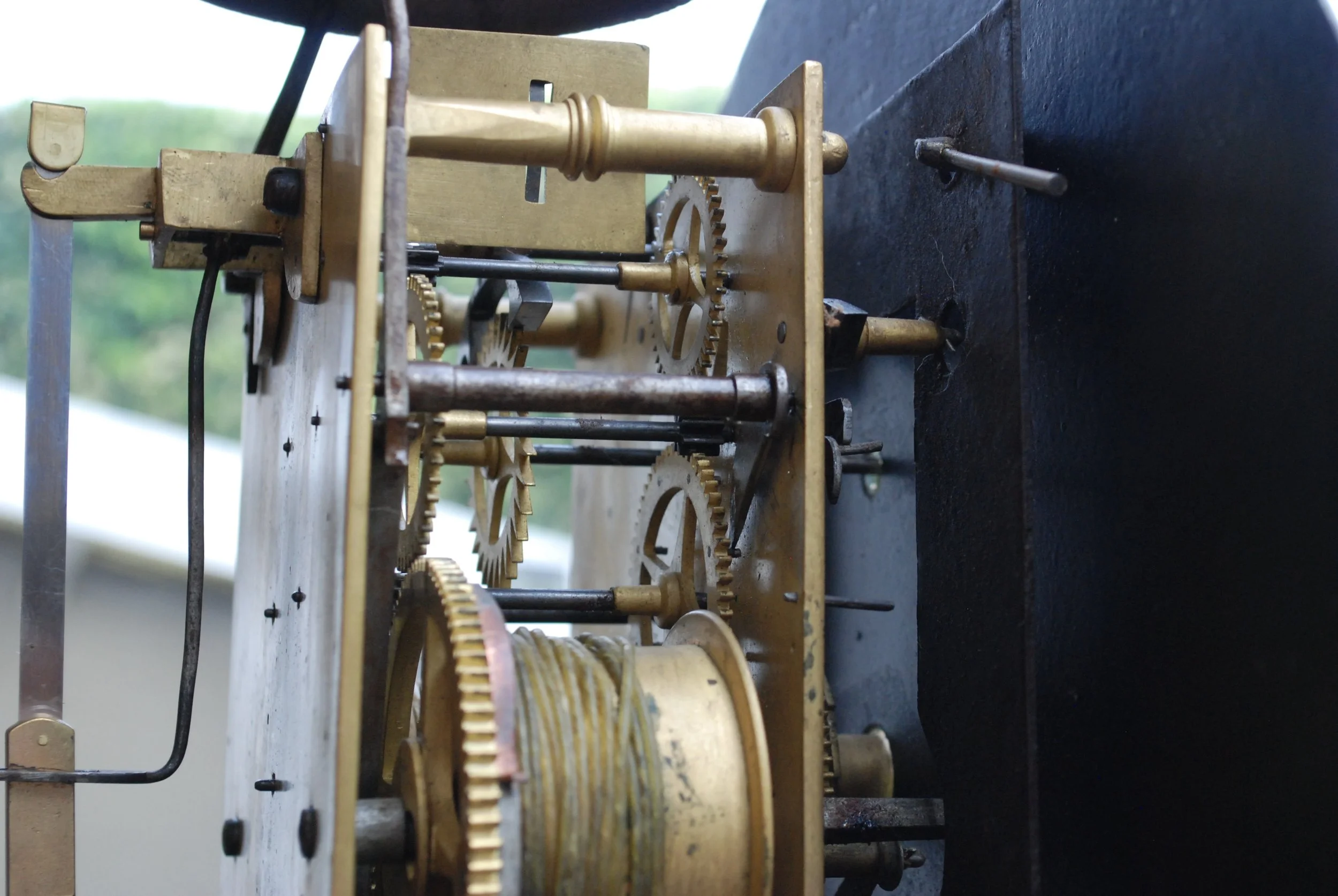
The movement is clean and keeps good time. It rings to the hour on a bell.
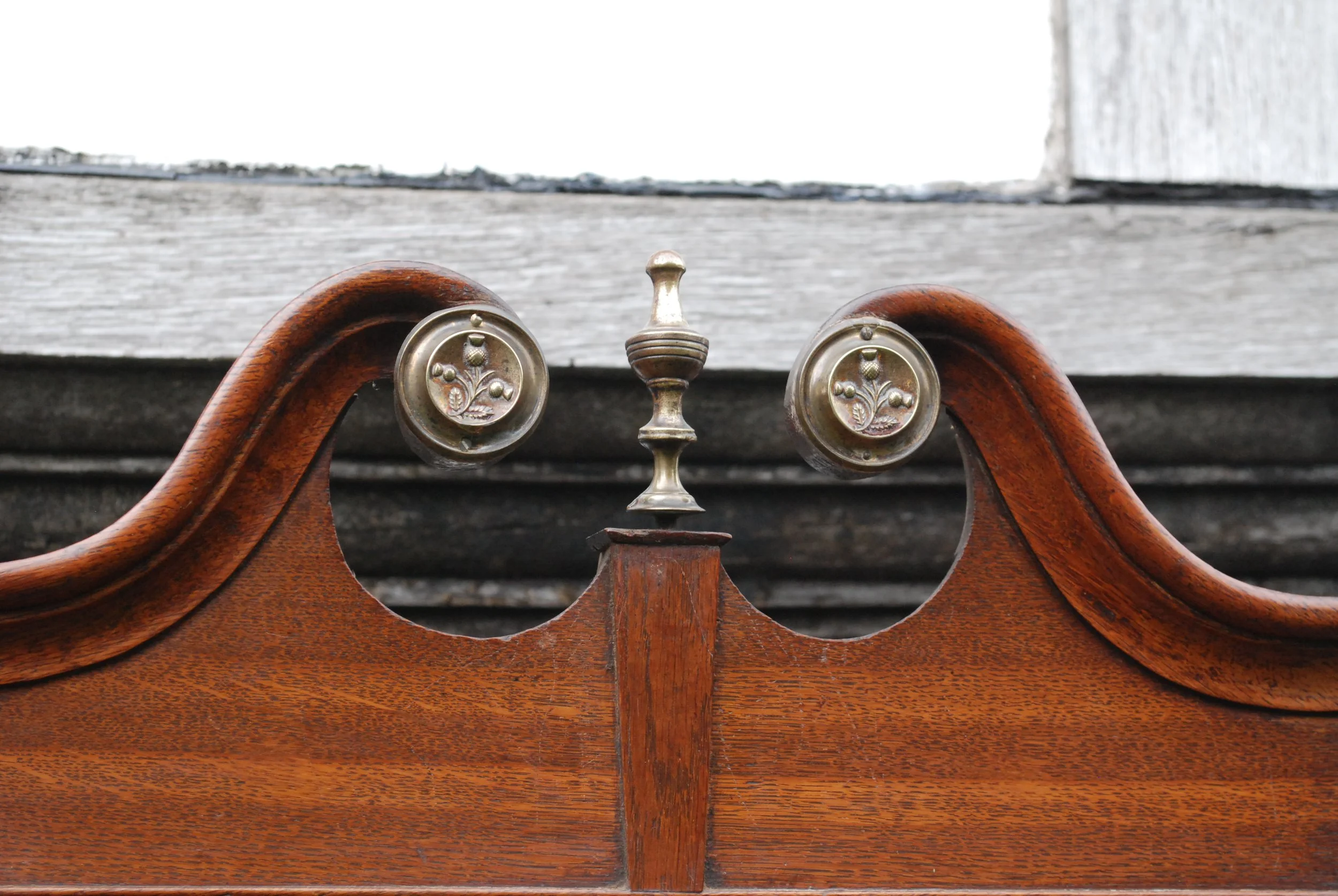
The hood has a broken arch weith central brass finial. The emblems on the arches are of Scottish thistles.
The hood is supported on wooden pillars with brass cappings.
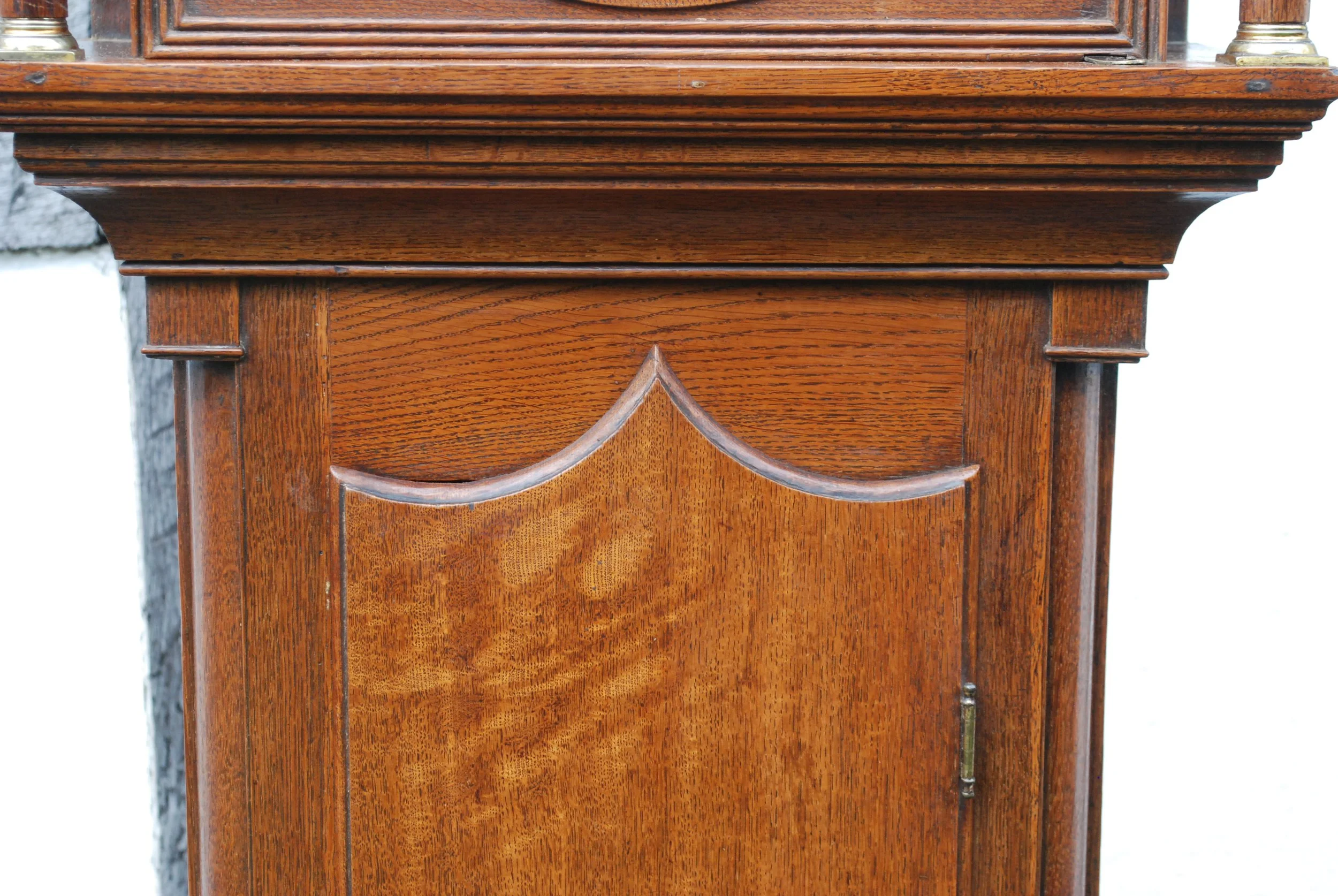
The medium-oak trunk has quarter-round pillars to the front.
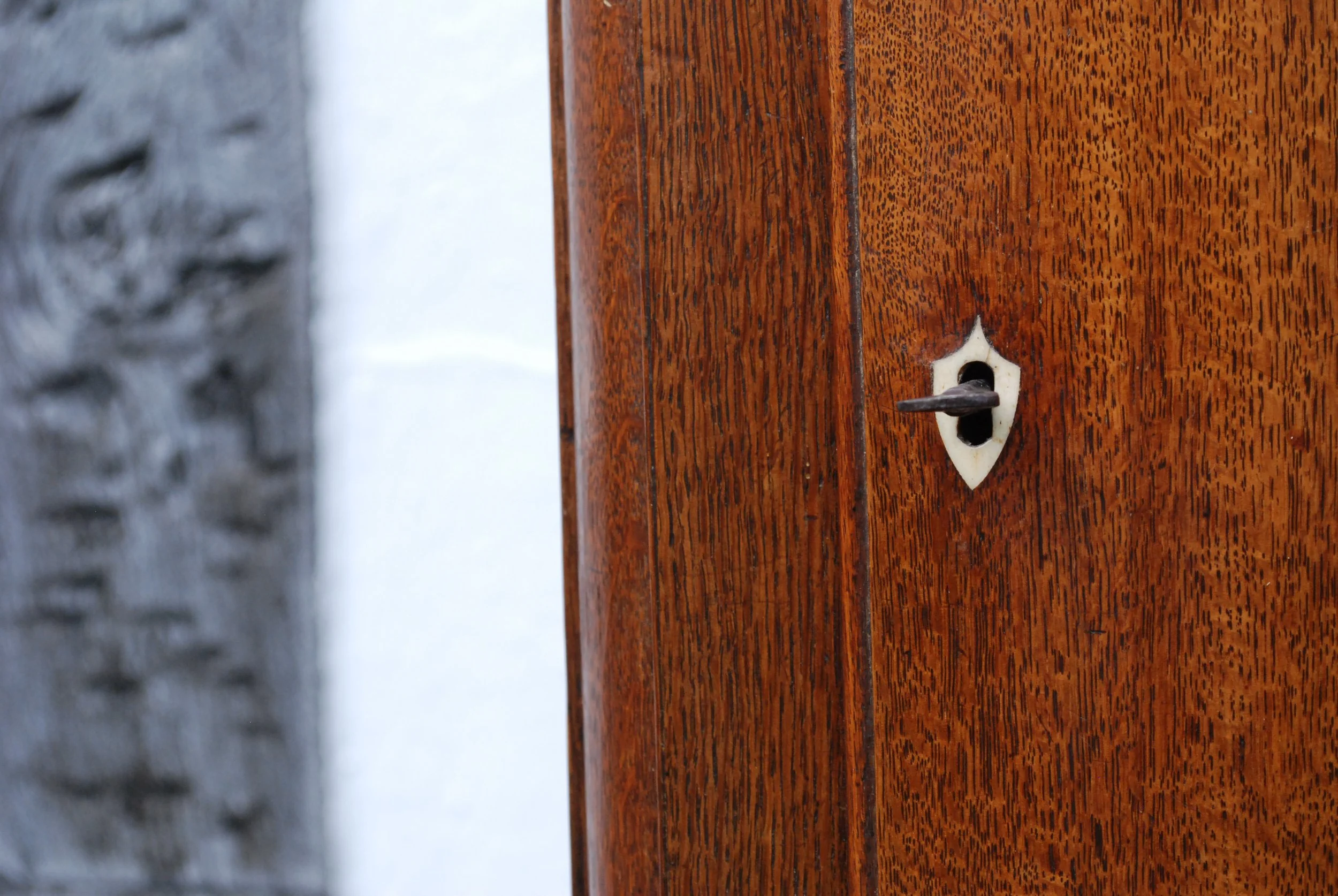
The door has a shaped top and beading to the edges; it has a working lock and key.
H = 78” W = 20.5” D = 9.5”
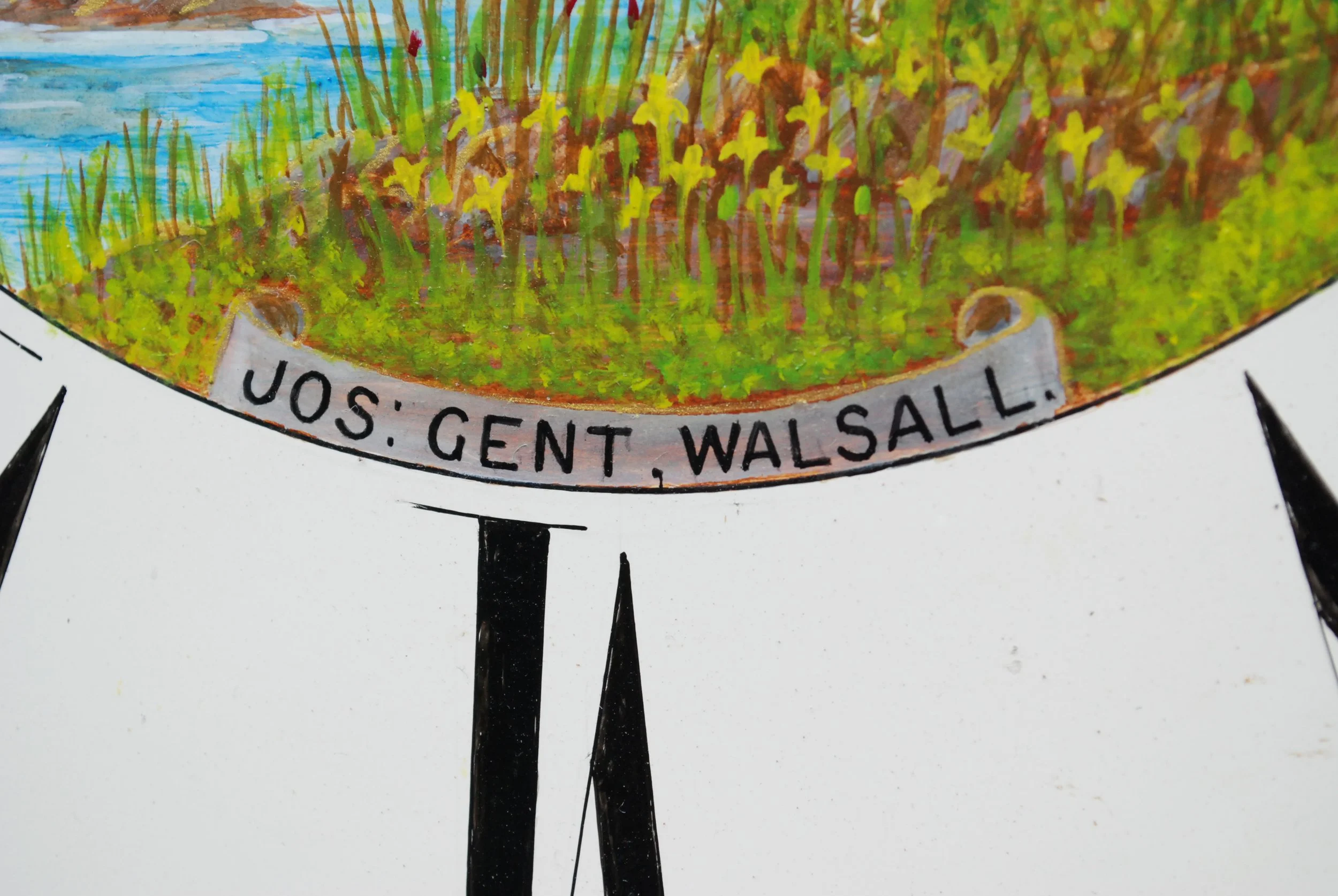
Joseph Gent is recorded as working in Walsall from 1805-50 and was the son of the maker John Gent.
James Wilson is believed to be, along with his partner Thomas Osborne, the earliest recorded maker of painted dials for longcase clocks having, in September 1772, placed an advert in Aris's Birmingham Gazette to announce 'White clock dials in Imitation of Enamel, in a manner entirely new' at an age when Wilson was only seventeen and Osborne nineteen. Their dials, and those of Wilson after the dissolution of the partnership in 1777, are considered some of the finest made with superb decoration. Wilson continued
at 11, Great Charles Street and would have used a number of artists on his dials – perhaps including the Gents. Wilson died in 1809, aged 54.